
N.S. open to conversations about projects on protected land, minister says
Advertisement
Read this article for free:
or
Already have an account? Log in here »
We need your support!
Local journalism needs your support!
As we navigate through unprecedented times, our journalists are working harder than ever to bring you the latest local updates to keep you safe and informed.
Now, more than ever, we need your support.
Starting at $15.99 plus taxes every four weeks you can access your Brandon Sun online and full access to all content as it appears on our website.
Subscribe Nowor call circulation directly at (204) 727-0527.
Your pledge helps to ensure we provide the news that matters most to your community!
To continue reading, please subscribe:
Add Brandon Sun access to your Free Press subscription for only an additional
$1 for the first 4 weeks*
*Your next subscription payment will increase by $1.00 and you will be charged $20.00 plus GST for four weeks. After four weeks, your payment will increase to $24.00 plus GST every four weeks.
Read unlimited articles for free today:
or
Already have an account? Log in here »
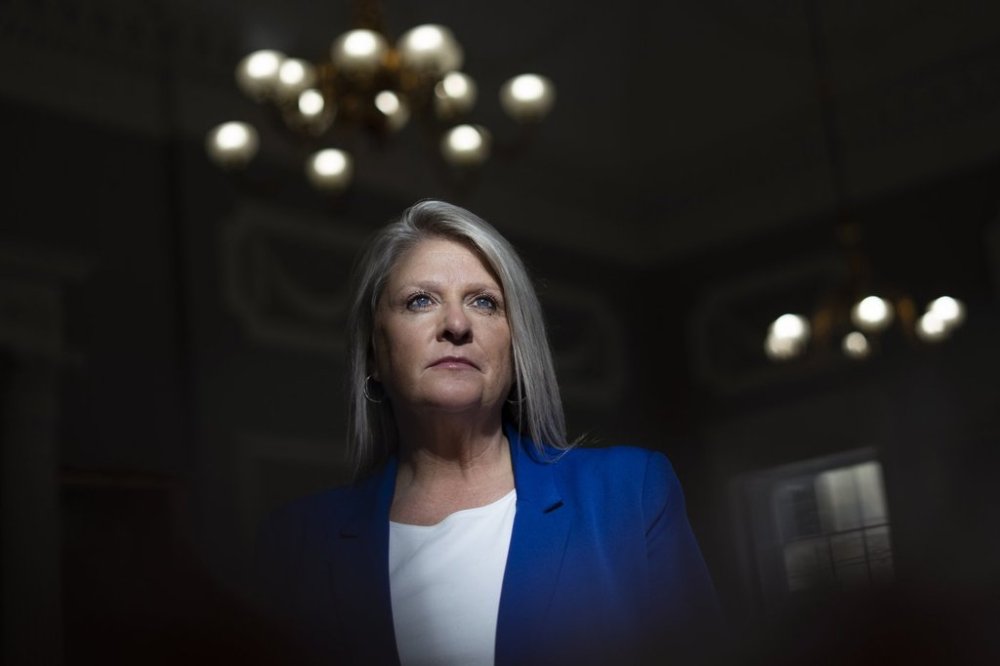
HALIFAX – A Nova Scotia minister says she has no interest in allowing a world-renowned golf developer to build a course in a Cape Breton provincial park, but remains open to discussing other projects on protected land.
The comments by Natural Resources Minister Kim Masland on Thursday drew criticism from the Opposition, who said she appeared to be talking out of both sides of her mouth.
“We saw (Masland) double down on the idea that she’ll have a conversation with anyone, presumably any company or corporate interest about any provincial park, and then say (the land is) protected at the same time,” NDP Leader Claudia Chender told reporters.
Cabot, a Toronto-based company that develops golf courses around the world, has tried three times to build on Cape Breton’s West Mabou Beach.
Premier Tim Houston has said Cabot’s pitch to build in the park was unreasonable and not in the best interests of Nova Scotians. On Thursday, Masland said even if the company were to make adjustments to its West Mabou golf course proposal, she is “not interested in it.”
However, she said a responsible government is one that’s open to having conversations about a range of potential development proposals — including ones on protected land.
“As a minister, from the very beginning, (I) have been open to conversations with Nova Scotians. And we look at each proposal case by case. Just because you listen to someone, doesn’t mean you agree with them,” Masland said after a cabinet meeting.
Asked whether land can really be considered protected if government is open to hearing out development proposals, Masland said “absolutely.”
“It’s protected, but we can still have conversations. It doesn’t mean that it’s going to change the (protected) designation, but you can still have a conversation.”
A Nova Scotia environment and climate change website says a protected area is defined as “a clearly defined geographical space, recognized, dedicated and managed, through legal or other effective means, to achieve the long-term conservation of nature.”
Chender, meanwhile, said the minister’s position is contradictory — shutting down the potential for golf development on West Mabou Beach but keeping other protected areas open for consideration.
The NDP leader is calling for legislative changes to further solidify Nova Scotia’s protected land rules to ensure they remain conserved.
“We need to understand that parks are in fact protected, and we didn’t really get assurance (from Masland) on that,” Chender said.
Liberal member Derek Mombourquette told reporters Thursday if protected lands are up for development discussion, they aren’t truly protected.
“We protect lands for a reason,” he said. “This government has shown multiple times that they’re willing to reverse that, which is very problematic.”
The government committed in 2021 to protect 20 per cent of Nova Scotia’s land and water by 2030, and as of July 2024, the province said that 13.6 per cent of Nova Scotia was protected.
On Nov. 5, the province announced it would designate an additional 12.7 square kilometres of land in 16 parks and wilderness areas as protected.
This report by The Canadian Press was first published Dec. 1, 2025.