
Rise in self-service tech may diminish sense of community
Advertisement
Read this article for free:
or
Already have an account? Log in here »
We need your support!
Local journalism needs your support!
As we navigate through unprecedented times, our journalists are working harder than ever to bring you the latest local updates to keep you safe and informed.
Now, more than ever, we need your support.
Starting at $15.99 plus taxes every four weeks you can access your Brandon Sun online and full access to all content as it appears on our website.
Subscribe Nowor call circulation directly at (204) 727-0527.
Your pledge helps to ensure we provide the news that matters most to your community!
To continue reading, please subscribe:
Add Brandon Sun access to your Free Press subscription for only an additional
$1 for the first 4 weeks*
- Enjoy unlimited reading on brandonsun.com
- Read the Brandon Sun E-Edition, our digital replica newspaper
*Your next Free Press subscription payment will increase by $1.00 and you will be charged $20.95 plus GST for four weeks. After four weeks, your payment will increase to $24.95 plus GST every four weeks.
Read unlimited articles for free today:
or
Already have an account? Log in here »
Hey there, time traveller!
This article was published 26/04/2023 (1299 days ago), so information in it may no longer be current.
Automation, once hidden behind closed doors in factories, is increasingly moving into public view. Customers can pay for groceries or clothing at a self-checkout machine, order fast food from a touchscreen kiosk or even pickup coffee from a “robo-café.”
These technologies, which substitute human contact for robot-based interactions, are examples of self-service technologies — innovative public-facing automation which “enable customers to perform entire services on their own without direct assistance from employees.”
While self-service technologies have the potential to improve efficiency, reduce costs and improve user experience, these technologies raise complex economic and political questions.
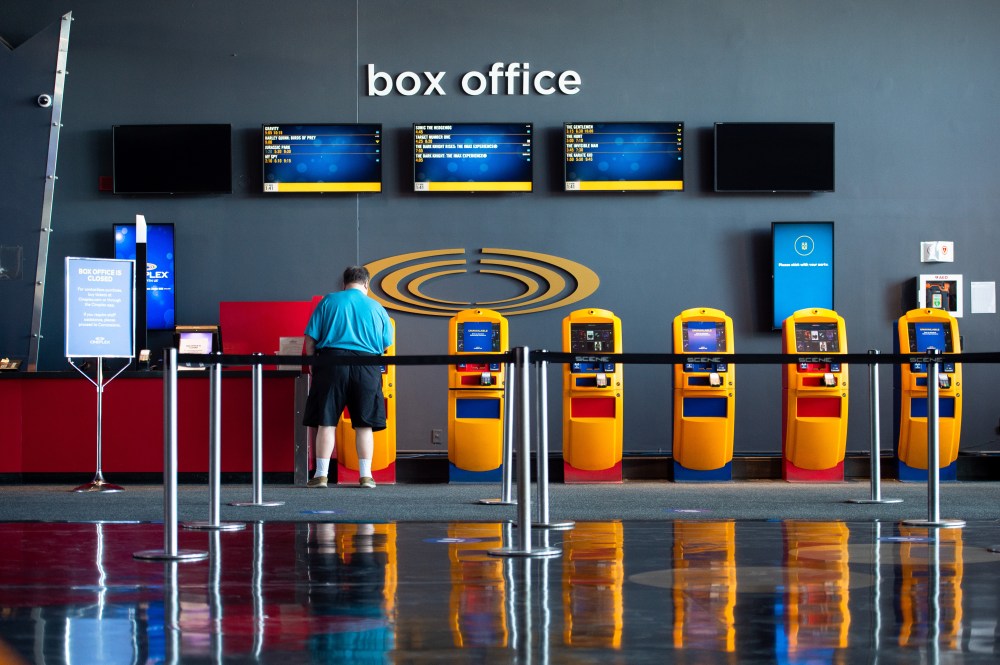
Much has been written from an economic perspective about whether automation will eliminate jobs, decrease wages, contribute to job growth, or “create as many jobs as it destroys over time.” However, less attention has been given to thinking about how these technologies will affect our politics.
Whether these new technologies replace jobs, relegate existing positions to non-public facing roles or create new employment opportunities, they will result in us interacting with fewer people than we have historically.
Experiences with strangers can shape how we define our community and politics. If we no longer encounter cashiers or fast food employees, many of whom are temporary foreign workers, will our beliefs about immigration policies or minimum wage change? What do bike couriers think about bike lanes? How does a dental office receptionist feel about universal dental care, or a corner store clerk about crime rates?
However fleeting, exposure to people outside of your own socio-demographic groups affect attitudes positively. Existing research demonstrates that “actual face-to-face interaction…typically reduces intergroup prejudice.”
Exposure effects are also related to how we position ourselves within the world when compared to others. For instance, a recent South African study showed that “willingness to sign a petition that calls for higher taxes on the wealthy increases in the presence of a high-status car.” Just seeing a BMW 3-series car near the petitioner made people more likely to favour wealth redistributive policies.
Another study shows that being the victim of a crime increases political participation: “Rather than becoming withdrawn or disempowered, crime victims tend to become more engaged in civic and political life.”
We shape our politics based, at least partially, on what and who we have been exposed to.
We build our sense of civic identity and opinions about government through social interactions. Political scientist Robert D. Putnam, who has studied civic engagement since the 1960s, argues Americans are less engaged in politics than they used to be and are more isolated, spending less time with friends, family and neighbours.
Our social capital — which Putnam defines as the overarching belief about society that facilitates co-operation — diminishes when we lose opportunities to engage with people outside of our regular social networks.
This decline in social capital can be traced to changes in work and society more generally. Society, in other words, is becoming increasingly individualistic.
Public-facing automation may further diminish our social capital by decreasing our interactions with other people. As we pay for parking at parking machines, rent bowling shoes and lanes through an app, or order food from touchscreen kiosks, we interact less with the people who work these jobs.
The impact of public-facing automation on social inequality also requires further study. Self-service technologies, particularly in the food services industry, may exacerbate social inequalities by limiting job opportunities for certain groups, such as those with different educational backgrounds or already-marginalized communities.
As public-facing automation shifts workers away from public view, wages which reflect professional skill and customer service expectations may disappear. In the grocery industry, for instance, we may see a widening pay gap between technicians hired to upkeep self-checkout machines and the employees hired to stock shelves.
The effects of increasing public-facing automation may not be well understood for years. In the meantime, as we seek to better understand the intersection between technology and society, we should ask: how will our sense of community and our political preferences change when we interact less with the people who work the jobs that self-service technologies replace?
Blake Lee-Whiting, PhD Candidate, Interim Managing Director at PEARL, University of Toronto
This article is republished from The Conversation under a Creative Commons license. Read the original article.