
What COVID’s downgraded status means for the world
Advertisement
Read this article for free:
or
Already have an account? Log in here »
We need your support!
Local journalism needs your support!
As we navigate through unprecedented times, our journalists are working harder than ever to bring you the latest local updates to keep you safe and informed.
Now, more than ever, we need your support.
Starting at $15.99 plus taxes every four weeks you can access your Brandon Sun online and full access to all content as it appears on our website.
Subscribe Nowor call circulation directly at (204) 727-0527.
Your pledge helps to ensure we provide the news that matters most to your community!
To continue reading, please subscribe:
Add Brandon Sun access to your Free Press subscription for only an additional
$1 for the first 4 weeks*
- Enjoy unlimited reading on brandonsun.com
- Read the Brandon Sun E-Edition, our digital replica newspaper
*Your next Free Press subscription payment will increase by $1.00 and you will be charged $20.95 plus GST for four weeks. After four weeks, your payment will increase to $24.95 plus GST every four weeks.
Read unlimited articles for free today:
or
Already have an account? Log in here »
Hey there, time traveller!
This article was published 06/05/2023 (1245 days ago), so information in it may no longer be current.
World Health Organization (WHO) experts have officially declared that COVID no longer constitutes a public health emergency of international concern (Pheic). This coincides with the WHO’s new strategy to transition from an emergency response to longer-term sustained COVID disease management.
This may not change too much practically. COVID will still have pandemic status, and countries will continue to have their own authority as to whether to treat COVID as an emergency within their territories (some countries, including the US, have already declared an end to the national emergency).
For the global public health community, however, this is an event of monumental importance, drawing to a close the emergency response period which commenced on January 30 2020.
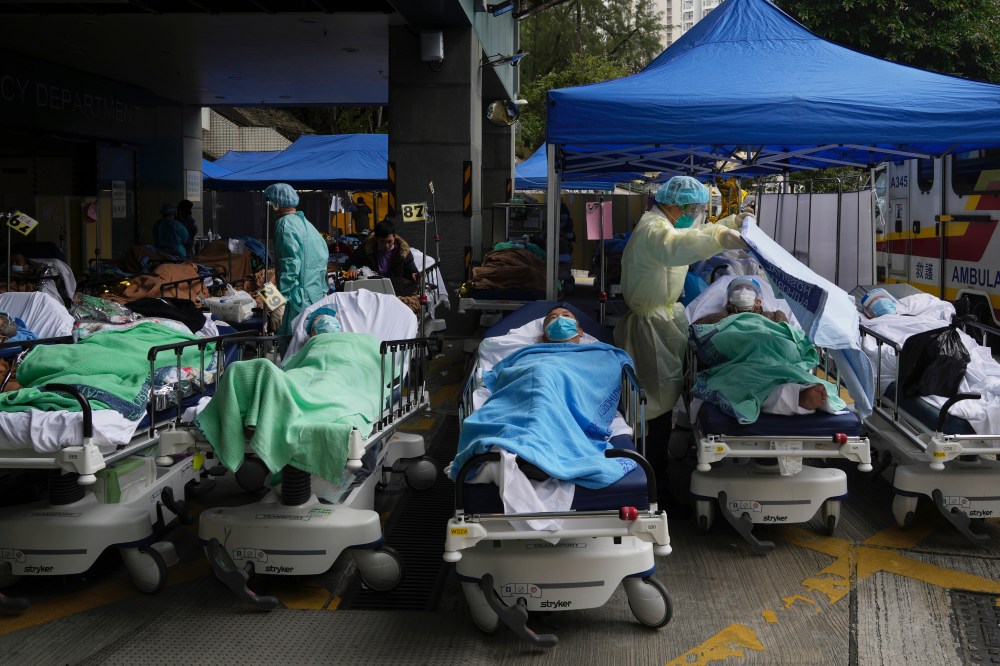
At the same time, for a large portion of the general public, it may well pass by relatively unnoticed. For many people, it’s been a long time since they viewed COVID as an emergency. In the UK for example, COVID no longer features in the regular Office for National Statistics public opinion survey that asks people what they think the key issues facing the country are. Even a year ago, only two in five Britons were very or somewhat worried about COVID, according to the survey.
Along with other behavioural scientists, I have been following public experiences of the pandemic for the past three years. The results have yet to be peer reviewed but by summer 2022, many participants in our research described the pandemic as being like “a distant memory” or like it “never happened”.
As we move into this next phase, it’s time to consider what we’ve learned about human behaviour during the pandemic, and what happens next.
In the early days of the pandemic, many behavioural scientists, myself included, wondered whether some of our pandemic habits were here to stay. Would face masks become a regular wardrobe staple? Would people stop “soldiering on” and going into work when unwell?
It turned out that for most people, the pandemic hasn’t permanently changed our behaviour and habits or created a “new normal”. Looking again at the UK, face mask use has consistently declined, with figures from last month suggesting that fewer than one in six adults had worn a face mask recently. Regular use is likely much less common.
Social distancing has long since disappeared, except for a relatively small proportion of the public, in particular those most vulnerable to COVID.
The COVID pandemic has taught us how adaptive behaviour can be, in particular how much people were willing to change their behaviour to keep themselves and others safe. Most people followed the rules during the height of the pandemic, no matter how difficult. COVID has reminded us how resilient we humans can be.
These pandemic adaptions, and the fact that our pre-pandemic behaviour bounced back so quickly, shows how important social cues and social norms are to behaviour. Putting on a mask or keeping our distance from others were habits – actions triggered automatically in response to contextual cues, such as seeing signs with pictures of people socially distancing.
Social norms – what we think others are doing – were key to vaccine uptake and to our uptake of preventative measures in general. As these contextual cues disappeared and the social norms started to change, and as vaccine coverage increased and the risk to the majority decreased, our behaviour changed.
The pandemic has also demonstrated how important social connections and social, especially physical, contact can be. This is something we have already argued COVID couldn’t keep at bay forever. According to social safety theory, which sees stress and wellbeing as a product of biological, psychological and social factors, COVID posed a threat to the “social fabric that makes humans resilient and keeps us alive and well”.
It’s unsurprising that life satisfaction and happiness were lowest during lockdowns, and recovered as people started to mix socially again.
As we mark the end of the emergency phase it’s important to remember the nearly seven million lives lost due to COVID since 2020.
And of course, we must consider that for some, especially those who are clinically vulnerable, the emergency is not yet over, and may never be.
Although it’s no longer a Pheic, as the WHO reminds us, COVID is still responsible for millions of infections and thousands of deaths each week around the world. Also, thanks to long COVID, hundreds of millions of people are in need of longer-term care.
In the future, we need to move from relying on the resilience of individuals to building resilience in our institutions. We can all take measures to continue to protect ourselves and those around us from COVID and other respiratory viruses (such as by hand washing and keeping up to date with vaccinations). But responsibility for preventing public health emergencies shouldn’t rest solely in the hands of the public
Actions that governments, employers and health authorities can take now could protect against future public health emergencies. Systematically tackling misinformation, improving ventilation in schools, workplaces and other public indoor spaces, and making longer-term improvements to paid sick leave are all good ways to start building more resilient societies in preparation for the next pandemic. Hopefully this is something we will never see in our lifetimes.
Simon Nicholas Williams, Lecturer in Psychology, Swansea University
This article is republished from The Conversation under a Creative Commons license. Read the original article.