
Elections a time to look inward as well
Advertisement
Read this article for free:
or
Already have an account? Log in here »
We need your support!
Local journalism needs your support!
As we navigate through unprecedented times, our journalists are working harder than ever to bring you the latest local updates to keep you safe and informed.
Now, more than ever, we need your support.
Starting at $15.99 plus taxes every four weeks you can access your Brandon Sun online and full access to all content as it appears on our website.
Subscribe Nowor call circulation directly at (204) 727-0527.
Your pledge helps to ensure we provide the news that matters most to your community!
To continue reading, please subscribe:
Add Brandon Sun access to your Free Press subscription for only an additional
$1 for the first 4 weeks*
- Enjoy unlimited reading on brandonsun.com
- Read the Brandon Sun E-Edition, our digital replica newspaper
*Your next Free Press subscription payment will increase by $1.00 and you will be charged $20.95 plus GST for four weeks. After four weeks, your payment will increase to $24.95 plus GST every four weeks.
Read unlimited articles for free today:
or
Already have an account? Log in here »
Hey there, time traveller!
This article was published 14/10/2023 (1068 days ago), so information in it may no longer be current.
Election night is always an exciting evening in the Docherty household.
As a political scientist, I have never understood anyone who complains about too many elections. To me that is like saying, “We have too much democracy.” With last year’s municipal elections, this recent provincial election, the current Sioux Valley election, a school board byelection around the corner, and a federal election in the near future, I’m in a good place. We could have different elections every couple of months, and I would say “no problem.”
The reality is however, that there are problems and our democracy isn’t in a good place. Our last election was in 2019, approximately five months before COVID-19 hit North America with force. Think about what has changed in those past four years. We experienced sudden closures and restrictions on gatherings, huge new pressures on our health-care systems, the early deaths of loved ones, as we couldn’t be with them in their final moments. We also experienced the miracle of vaccines and the conspiracy theories behind them, the violent challenges to authority in Washington and a flouting of the rule of law in Ottawa. All of this occurred on a planet whose own health is not great.
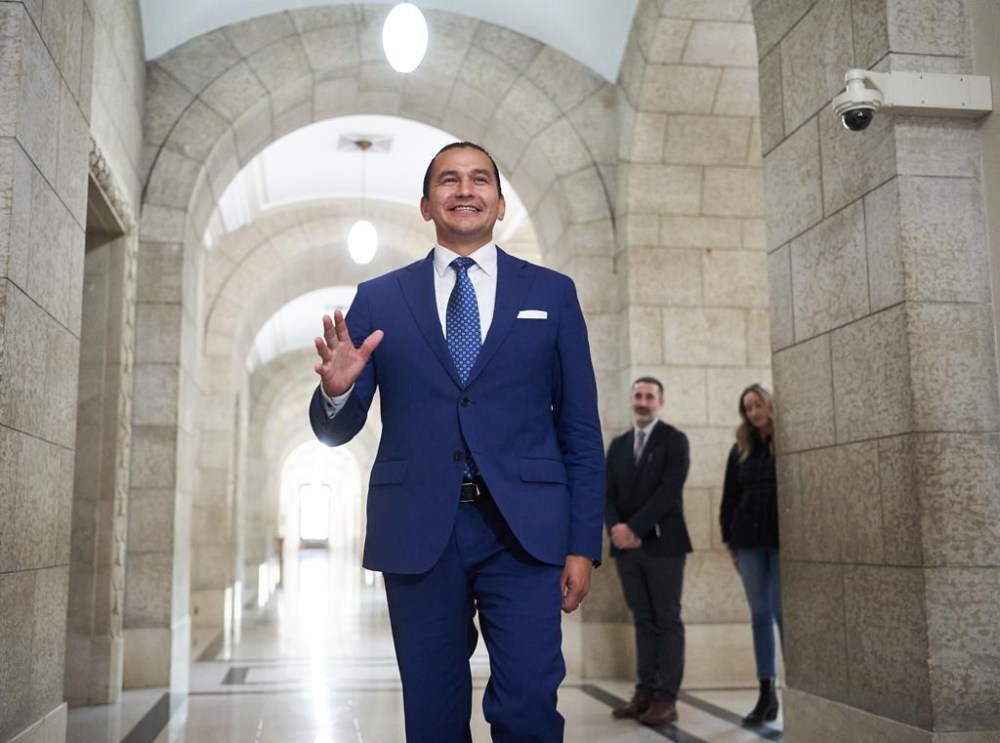
Through all of this, elected officials were front and centre. Sometimes as a reassuring presence, other times as a target. But either way, it was abundantly clear that politicians play a major role in guiding our society — even to people who normally would be inclined to tune out the daily partisan back-and-forth.
Despite this, voter participation in Manitoba actually dropped since 2019. Only 55 per cent of eligible voters came out to exercise their franchise this year. It is too early to dig deep into any demographic differences in voter turnout, but if trends continue I will become increasingly worried. Many studies of voting indicate that if you don’t cast your first ballot before you turn 25 there is a good chance you’ll never vote. This makes me think that lowering the voting age to 16 may make more sense. Teenagers are smart and engaged, they are enthusiastic about the democratic process, and they have the most years ahead of them for politicians’ actions to affect.
Myself, I tend to vote for the local candidate and am not overly partisan or ideological. Some local races were closer than expected. Brandon West, where I live, was not called for a day and a half. I had worked with Wayne Balcaen in his capacity as Brandon chief of police, and Quentin Robinson and I go to the same church (he is a far better guitar player than I am), so I was torn. Turns out that this sentiment was evident across the constituency.
After the thrill of the election, the hard work of governing begins. I am quite excited to be working with this new government with a shared goal of providing excellence in education to all Manitoba learners. Just as we need more people participating in elections, we need more Manitobans participating in post-secondary education. When it comes to college and university, Manitobans are second-last in the country. There’s so much room to grow — and every grad helps grow our economy as well. We will work with the provincial government on a province-wide strategy to improve. Even bringing us up to the national average would have a profound impact on our skilled workforce.
Some years back I wrote an academic paper on the conditions necessary for an opposition party to evolve from a capacity to oppose to a capacity to govern. It’s easy to be critical, much more challenging to be constructive. Some of the factors I examined were the length of time in Opposition, previous experience in government, and size of the caucus going into the election. On these scores the Manitoba New Democratic Party is starting off in great shape. Much better, for example, than the Alberta NDP who won in 2015 (and had never previously been in power).
By contrast, the incoming Manitoba NDP held government as recently at 2016. Many of the incoming members of the Manitoba government have been MLAs previously, meaning they have had at least four years to learn their policy areas and meet people across the province. In Alberta, the NDP went into the 2015 election with four incumbents and came out with 54. Cabinet ministers who had never been in the legislature before were in charge of multi-million dollar ministries.
Despite these challenges the NDP government in Alberta did a lot of things right, including introducing multi-year funding commitments that they lived up to and increasing the minimum wage to help those at the lower end of the income scale.
Given their advantages of experience, numbers, and time in office, the new Manitoba government should be able to hit the ground running. They shouldn’t require time to evolve from opposition to government and should be ready to address our most pressing needs now. That’s critical — there are many pressing needs in this province, and without tooting our own horn too much, BU researchers and BU itself can play a vital role in helping address them. We look forward to working with the new government.
» David Docherty is president and vice-chancellor of Brandon University.
Opinion
LOAD OPINION ARTICLES