
Is the Sainte-Marie scandal a turning point?
Advertisement
Read this article for free:
or
Already have an account? Log in here »
We need your support!
Local journalism needs your support!
As we navigate through unprecedented times, our journalists are working harder than ever to bring you the latest local updates to keep you safe and informed.
Now, more than ever, we need your support.
Starting at $15.99 plus taxes every four weeks you can access your Brandon Sun online and full access to all content as it appears on our website.
Subscribe Nowor call circulation directly at (204) 727-0527.
Your pledge helps to ensure we provide the news that matters most to your community!
To continue reading, please subscribe:
Add Brandon Sun access to your Free Press subscription for only an additional
$1 for the first 4 weeks*
- Enjoy unlimited reading on brandonsun.com
- Read the Brandon Sun E-Edition, our digital replica newspaper
*Your next Free Press subscription payment will increase by $1.00 and you will be charged $20.95 plus GST for four weeks. After four weeks, your payment will increase to $24.95 plus GST every four weeks.
Read unlimited articles for free today:
or
Already have an account? Log in here »
Hey there, time traveller!
This article was published 20/11/2023 (1035 days ago), so information in it may no longer be current.
Who is the real Buffy Sainte-Marie? The recent scandal raises questions about not only identity, race and culture; but also the news, the media and the truth.
First: the background. Buffy Sainte-Marie is an American folk singer, songwriter, social activist and spokesperson for Indigenous causes. She was born in 1941 and grew up in Massachusetts. Starting out as a singer in the early 1960s in New York City, she began identifying as an Indigenous person.
Sainte-Marie later said that she had been born on the Piapot First Nation in Saskatchewan, taken from there and raised by a family in Massachusetts. Building on her story of being born at Piapot, Sainte-Marie met people there and was adopted as an adult into the family of Emile and Clara Piapot.
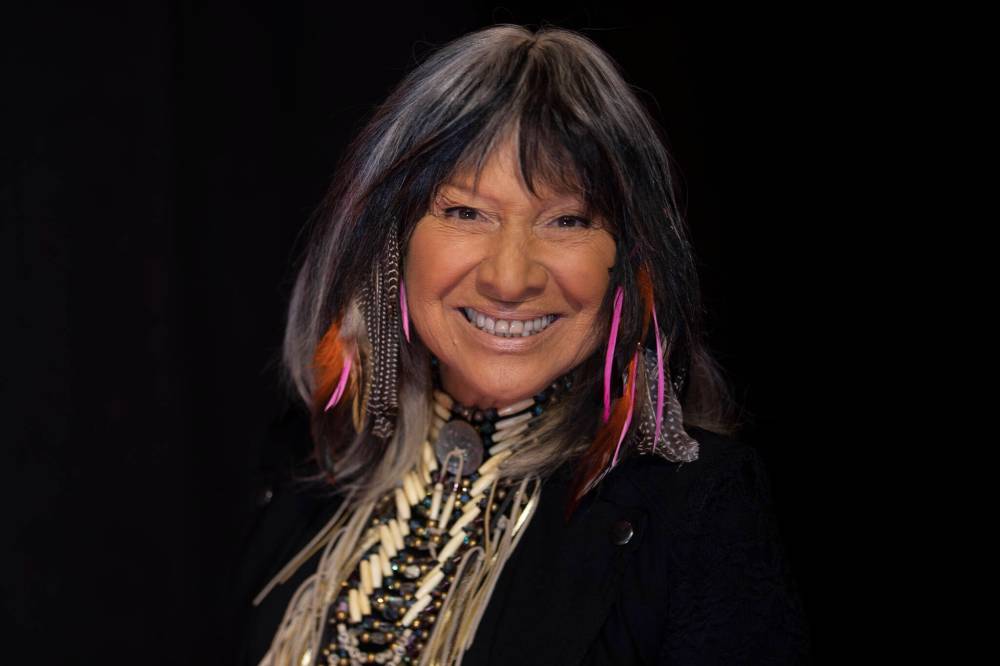
Columnist David McConkey writes there are several lessons to be drawn from the Buffy Sainte-Marie controversy, in which the CBC demonstrated there was no basis for Sainte-Marie's longstanding claims of being Indigenous but faced backlash from her supporters nonetheless. (File)
Sainte-Marie had roles and won awards dependent on being Indigenous and/or Canadian. For several years, she was an Indigenous representative on “Sesame Street.” Distinctions that she received included Junos, Canadian Music Hall of Fame, Governor General’s Award and Order of Canada.
Then: the scandal. The CBC, in their TV program “The Fifth Estate,” revealed that Sainte-Marie’s story was untrue. The reality: she had been born in Massachusetts and raised by her natural, Italian-American parents. Sainte-Marie had created a stage persona, which became embedded in her work and her life. For 60 years, Sainte-Marie perpetrated a fraud.
When the CBC revelations became public, there was widespread disbelief of the news about Sainte-Marie. This skeptical reaction fits our times. Many of us distrust the media. We also develop deep bonds with charismatic celebrities; we resist accepting the frailties of those we admire. Furthermore, we have grown accustomed to the notion that there are many “truths.”
Plus, the whole thing seemed suspicious. The CBC showed how Sainte-Marie’s Indigenous-from-Canada story never made sense. So why wasn’t Sainte-Marie’s falsehood exposed years ago? Why — with all the problems in the world — is the CBC choosing now to take down a beloved, supposedly Indigenous Canadian icon?
Echoing the responses of many Canadians is this letter to the editor of the Toronto Star published on the newspaper’s website. Notice the word “indisputable” — the refusal to believe the CBC, the refusal to doubt Sainte-Marie.
“The indisputable fact is that Buffy Sainte-Marie identifies with her Indigenous heritage and has represented it beautifully to the world … Shame on the media.”
The CBC was widely criticized. Two members of the Piapot family stated that the accusations against Sainte-Marie were “harmful, ignorant, colonial — and racist.” For the Piapots, “Buffy is our family. We chose her and she chose us.”
“The CBC’s report was a truly devastating story,” wrote Lori Campbell on an online academic forum, The Conversation. Campbell is Associate Vice President (Indigenous Engagement) at the University of Regina.
“Since this story broke, I have read Indigenous expressions of hurt, trauma, pain, betrayal and disbelief,” Campbell continued. “I ask the CBC: How are you supporting Indigenous peoples as our families and communities deal with the impact of your story?”
This Buffy Sainte-Marie moment raises a host of questions. I wonder if this controversy reflects a turning point in Canadian culture. I would like to offer seven conclusions and lessons that occur to me.
First, Sainte-Marie from the start could have been truthful and avoided this mess. She could have acknowledged her inspiration from Indigenous cultures, instead of creating the falsehood of an Indigenous Canadian background. If Sainte-Marie had developed a truth-based relationship with an Indigenous family that led to their adopting her as an adult, Sainte-Marie could have added that to her identity. She still, however, would not have been eligible for some of her roles and awards.
Second, even though some of our public figures have feet of clay, we can still benefit from their contributions. But we have the responsibility to keep a healthy perspective.
Third, “race” is a social construct that can do much to limit us and divide us. Events like this invite us to remember the race we belong to: the human race.
Fourth, cultures are available for us to be enriched by and to borrow from. For that, we are stronger, and our communities are stronger. Consider terms such as “cultural appropriation” and “culturally appropriate” as not being useful.
Fifth, there is objective truth. We should strive to find it, but some is obscured and some may never be found.
Sixth, we benefit from accessing different media sources. We should try to obtain the best information and also to have our assumptions challenged. We should be ready to change our minds with new facts. And we should not look to the media to comfort us.
Seventh, our understandings of identity and authenticity — such as race, culture and gender — are evolving. Let’s be gentle with our fellow citizens as we all explore how to live our best selves.