
Housing is a human right
Advertisement
Read this article for free:
or
Already have an account? Log in here »
We need your support!
Local journalism needs your support!
As we navigate through unprecedented times, our journalists are working harder than ever to bring you the latest local updates to keep you safe and informed.
Now, more than ever, we need your support.
Starting at $15.99 plus taxes every four weeks you can access your Brandon Sun online and full access to all content as it appears on our website.
Subscribe Nowor call circulation directly at (204) 727-0527.
Your pledge helps to ensure we provide the news that matters most to your community!
To continue reading, please subscribe:
Add Brandon Sun access to your Free Press subscription for only an additional
$1 for the first 4 weeks*
*Your next subscription payment will increase by $1.00 and you will be charged $20.00 plus GST for four weeks. After four weeks, your payment will increase to $24.00 plus GST every four weeks.
Read unlimited articles for free today:
or
Already have an account? Log in here »
Hey there, time traveller!
This article was published 11/12/2023 (874 days ago), so information in it may no longer be current.
December is Universal Human Rights month, the same month that the Universal Declaration of Human Rights (UDHR) was signed in 1948. The Declaration heralded and protected the fundamental rights of every person with 30 articles that promoted freedom, equality and dignity.
Canada was one of the 48 countries that voted to ratify the declaration. According to Article 25, Everyone has the right to a standard of living and adequate health and well-being. This includes food, clothing, housing and medical care and necessary social services.
According to Statistics Canada, 25,216 people in a single day experienced homelessness in 2018. Seventy-five years after the UDHR was established there are still many people without a sufficient standard of living.
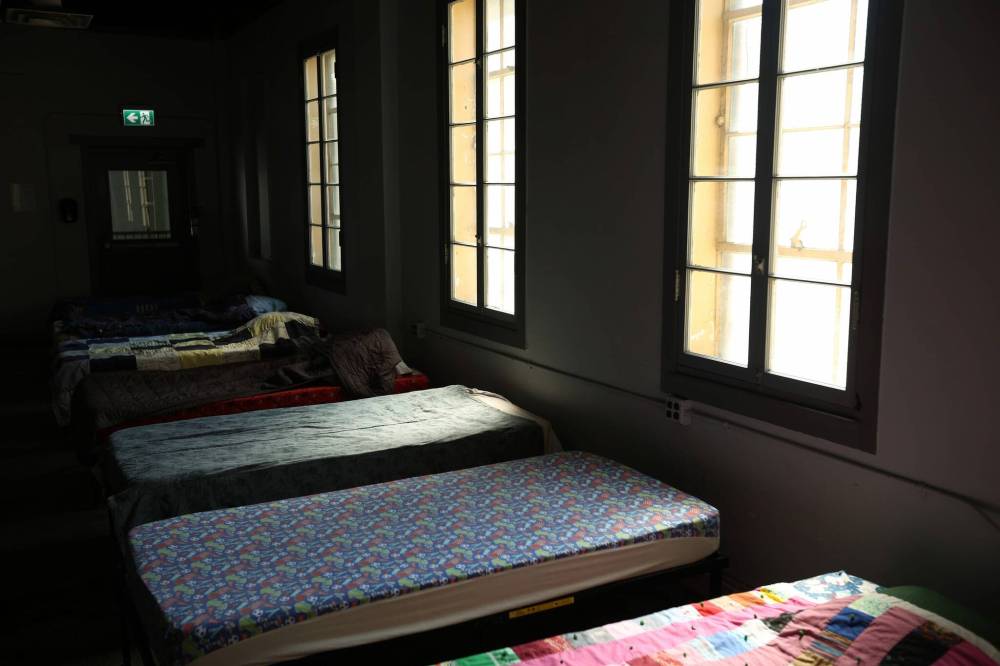
A recent photo of beds at the Samaritan House Ministries Safe and Warm Shelter. École secondaire Neelin High School student Colin Shaw shares a recent interview with Mayor Jeff Fawcett on the subject of addressing homelessness in Brandon. (File)
Even Brandon has been touched considerably by this issue. There are many people who require shelter. For example, 475 people attended the Safe & Warm Shelter in 2022, and 30 per cent of these people lack access to basic needs like hygiene, food, and clean water. In Brandon, 72 per cent of the homeless are without a home either because of an abusive or unhealthy relationship or through eviction.
However, homeless people aren’t merely statistics; they are real people suffering without suitable housing conditions. Contrary to popular belief, most homeless people don’t live on the streets; they continually move from place to place, living temporarily with friends and family or attending shelters. It is absolutely crucial to provide the necessary support to these individuals. Housing is the foundation of safety and security; thriving and functioning in society is unattainable without this. I sat down and talked with Mayor Jeff Fawcett about this problem and what Brandon is doing to address it.
Q: What is Brandon doing to solve the problem of homelessness?
A: Well, right now we are working very extensively with the City of Winnipeg and the Province of Manitoba on an initiative brought forward by Mayor Gillingham in Winnipeg, and so we’re working together because we have to take it on as a whole; it’s a provincial issue taking place in all our local communities. But Winnipeg and Brandon being two of the larger centres, Thompson is also suffering from this quite a bit too. So, the model that [Mayor Gillingham] has been working on is based out of Houston and Housing First plays a big role, and fortunately in Brandon we have a very good Housing First model, which does put people in housing all the time. We don’t talk about it very much at all because the city of Brandon doesn’t do housing, like as a corporation, but Housing First gets money for housing, [and] puts lots of people in housing regularly. So hopefully, with our discussions going forward, the provincial government can help enhance the ability to do more. I did just meet with Minister (of Housing) (Bernadette) Smith, and (Winnipeg’s senior advisor on homelessness) Jarred Baker who works out of the mayor’s office in Winnipeg; we’ve been meeting with him. It is a top priority for a lot of us. There’s lots of things we’re working on.
Q: What is the biggest roadblock to housing the homeless?
A: One of the biggest roadblocks is space; there isn’t housing, so we have people right now in some hotels. There were people that we had living in tents and such and they are currently housed in a hotel. You know, people have the choice to stay if they want, they have the right to leave and not be housed. We can’t force people [into housing]. But we do have all kinds of groups working to get people into housing. We got federal financed repair work to one of our shelters just this past week to make sure there was housing available. There was some disruption because of a leak, and so there was a bunch of people getting out of the other housing and they were going to get those repairs done right away.
Q: How can we prevent the stigmatization of homeless people?
A: Well, I do have a book club that is coming out to the library that does book readings [about] how to see people, [and] it does talk about talking with people. For myself, I think that actually discussing that stuff with people [is helpful]. I’m downtown all the time, and homelessness is not just downtown, but I am downtown all the time and I talk to people all the time. There shouldn’t be any stigma attached; everybody’s got reasons [for] how they got there. So, like anything, communicating, talking with people, treating people like humans, saying hello, smiling, you can destigmatize things.
Q: What is the status of the affordable housing units at the former Fleming School?
A: Now again, that’s a private project with provincial money so the city isn’t involved other than the property, but other than that it’s being built; I would assume early in the spring maybe it would be ready. I don’t know their timelines but it’s in the process.
Q: When you were in Scandinavia, what initiatives did you observe, and can they be applicable to Brandon?
A: Well, we talked about [homelessness] a lot, we didn’t see it, we were doing a lot of different things. I was there with the mayor from Guelph, councils from Oshawa, [and the] mayor of Saskatoon. So, there were all kinds of other people, and we did note that they didn’t appear to have a lot of homelessness in Malmö and Copenhagen, the two main places that we were. They do have a bit more social structure. They also have different housing models that we don’t have over here where a family just takes over housing if they can afford it or not; it is a different model. But we did ask a few of those questions. They also have a massively high tax rate which is accepted over there, and they have significantly more faith and trust in their governments, which seems to make a big difference; they believe that when the government says they’re going to do stuff they do it, and they trust them. We noticed that. But it was also noticeable that there wasn’t a lot [of homelessness], whereas if you were to tour Edmonton, Vancouver, Winnipeg, Hamilton, you can’t help but see homelessness.
Q: What initiatives are you expecting from the new provincial government?
A: I actually have high expectations. Minister Smith and I have met already, a few times. Just minutes ago, we planned a meeting again, right away. She was just heading back to Winnipeg; I was just with her. The fact that the provincial government created that new ministry, which is a ministry that has housing, homelessness, addiction, mental health, all into the same ministry so you’re not having to jump between different ministers and that can take time if nothing else [is a positive step]; they consciously made this [decision] knowing that our homelessness and addiction issues need to have our wraparound services; you needed one place to deal with lots of this. So that’s very good but also her collaboration with the City of Winnipeg and respecting the fact that they are really going to try to take this on and work with us and Winnipeg in particular. I am very optimistic that it can really make some difference.
Q: Any other thoughts you would like to add?
A: Again, working together collaboratively is extremely important. So even today [Nov. 30], I am going to meet with Dr. McKenzie who is the PhD that works through Brandon Neighbourhood Renewal Corporation. She has all the data that a person could need. She’s actually in town right now doing discussions with people out in the street. This is what she specializes in, and we are utilizing her and her data with our meetings with Winnipeg, who don’t have great data collection because they don’t necessarily have right now as good as collaboration and a community to work together. Whereas Brandon has always been very fortunate that our service groups that do deal with people in these situations, they work together, they work together really well, and Brandon has some of the best HIFIS data (Homeless Individuals and Families Information System). The HIFIS data is as good as anywhere in the country and so with that, with assistance from Winnipeg and the province we may be able to capitalize on that a bit more. I expect we will try to do some initiatives in Brandon in the next year or so that will hopefully make a significant difference. I also want to note that we are doing our community wellness plan right now through Manitoba Justice. It was trialed in Thompson a year ago. They are starting to get this plan laid out and it will make a big difference I believe. So, these are things that are going on right now. It is a high priority for our government, provincial government and everyone in the area.
Q: What can we as individuals do to help?
A: Well, one of the things I always tell people is to be good human beings, treat other people well. If you see people you could talk to them. You know, actually smile to people, smile back. That’s one thing when I’m out I do know, and I use downtown because I am downtown a lot. I’ve got lots of people I know, and I’ve known them for years and they’ll yell to me, “Hey mayor, I want to talk about this,” and next thing you know we’ll be talking about stuff, and they are people who don’t have a home, but they want to talk about issues in the community. A lot of them go to the library; they’re well read — they always know what’s going on. I have great discussions with them. But there are all the volunteer things that everybody can do, that’s helpful. There [are times] when the city does have to do things, like address taxation, when the provincial government has to do these kinds of things that hopefully help out by addressing things that are tied to together like addiction and housing and that, like those do cost us, and so if the public can be a little bit more supportive and give us time to show that we’re making a difference, that would be great. But people always get worried when you have money attached to things and we do need some money to address these things.
Brandon is trying very hard to guarantee the right to housing to everyone. It is very important that we work together as a community to realize the plans currently being implemented. With the new provincial government’s wraparound services, Brandon’s collaboration with local organizations, and with what Mayor Fawcett said Brandon is doing, there is reason for optimism. Hopefully in the future everyone will have sufficient housing and living conditions. Everyone will then have access to the full rights in the Universal Declaration of Human Rights.
» Colin Shaw is a Grade 10 student at École secondaire Neelin High School