
What does the Russia attack mean, globally?
Advertisement
Read this article for free:
or
Already have an account? Log in here »
We need your support!
Local journalism needs your support!
As we navigate through unprecedented times, our journalists are working harder than ever to bring you the latest local updates to keep you safe and informed.
Now, more than ever, we need your support.
Starting at $15.99 plus taxes every four weeks you can access your Brandon Sun online and full access to all content as it appears on our website.
Subscribe Nowor call circulation directly at (204) 727-0527.
Your pledge helps to ensure we provide the news that matters most to your community!
To continue reading, please subscribe:
Add Brandon Sun access to your Free Press subscription for only an additional
$1 for the first 4 weeks*
- Enjoy unlimited reading on brandonsun.com
- Read the Brandon Sun E-Edition, our digital replica newspaper
*Your next Free Press subscription payment will increase by $1.00 and you will be charged $20.95 plus GST for four weeks. After four weeks, your payment will increase to $24.95 plus GST every four weeks.
Read unlimited articles for free today:
or
Already have an account? Log in here »
Hey there, time traveller!
This article was published 25/03/2024 (905 days ago), so information in it may no longer be current.
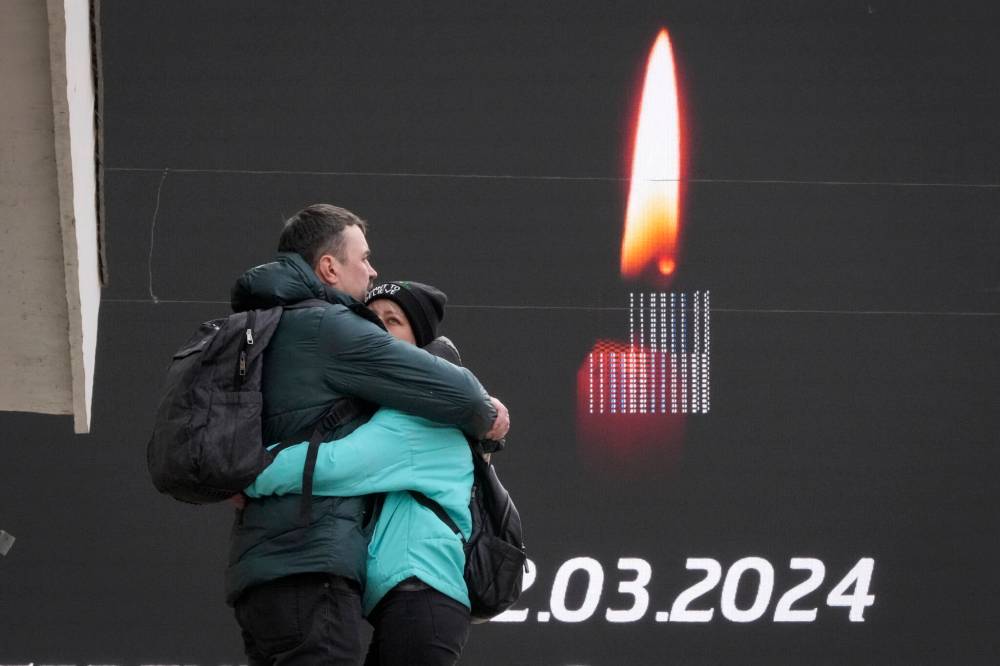
It appears almost certain the brutal assault on a Russian crowd settling down to watch a rock concert in Moscow on Friday night was an Islamist terrorist attack.
At least 133 people were left dead and scores more were injured after gunmen with automatic weapons stormed the Crocus City Hall in Moscow and opened fire, triggering a stampede.
Islamic State claimed responsibility for the attack, initially through its Amaq media channel and then directly. The modus operandi of the attack also fits with previous Islamic State attacks.
It has been widely reported the attack was the work of Islamic State Khorasan (ISIS-K), a branch established in 2015 in Afghanistan.
So who is this group, why would they attack Russia and what does this mean for the broader terrorism threat?
WHAT IS ISIS-K?
ISIS-K is the Islamic State branch that has most consistently and energetically attempted terrorist attacks across Europe, including in Russia. ISIS-K has planned some 21 attacks in nine countries in the past year, up from eight the previous year.
ISIS-K had been under tremendous pressure from the Afghan Special Forces and American troops before the United States fully withdrew from the country in 2021. Although that pressure has continued under Taliban rule, ISIS-K has grown in strength in recent years, with several thousand fighters now operating in almost every one of Afghanistan’s 34 provinces.
If ISIS-K is indeed responsible for the Moscow attack, we should prepare for further attempted attacks – not just in Russia but across Europe.
European authorities have arrested ISIS-K operatives on multiple occasions. After years of warnings that Islamic State was rebuilding the capacity and resolve to resume an international terrorist campaign, Friday’s attack shows the threat is immediate and substantial.
Earlier this month, the U.S., together with five other nations, had shared intelligence they had of ISIS-K planning for attacks in Moscow. But these warnings were, as recently as last week, rejected by President Vladimir Putin and the Kremlin as being part of an attempt to discredit Russia.
The attack comes at the worst possible moment for Russia’s despotic leader, in the wake of his successful “election campaign” to claim a mandate for a further six years in power.
And it is perhaps for this reason that Putin’s five-minute televised address on Saturday, in which he directed blame toward Ukraine, came so late.
We don’t yet know whether the Kremlin will continue to blame Ukraine or the West for the attack, or if it will pivot to accept Islamic State was responsible.
Either way, it’s likely to respond with a wave of violence, cracking down on Russia’s Muslim minority communities in the North Caucasus region and beyond.
WHY WOULD THEY TARGET RUSSIA?
Both Islamic State in general, and ISIS-K in particular, have long proclaimed their intention of striking Russia.
They have cited Russia’s earlier military occupation of Afghanistan in the 1980s and its long history of crackdowns on Muslim communities in Russia, particularly in the North Caucasus. They have also cited Russia’s role in providing a lifeline to the brutal regime of Bashar al-Assad in Syria.
But it was also likely opportunity and personnel that led the group to select a soft target in Moscow, as much as anything else.
Islamic State carried out multiple attacks in Russia from 2016–19, while several more plots were disrupted from 2021–23.
Many of the ISIS-K militants arrested across Europe, including in Russia, over the past two years have been Russian nationals and people from Central Asia with links to Russia.
The most recent arrests occurred this month when Russian authorities claimed they prevented a planned attack on a synagogue in Moscow.
And last month, a Russian national accused of having Islamic State links was arrested in Poland, while another was arrested working at a nuclear facility under construction in Turkey.
In recent years, the vast majority of successful ISIS-K attacks have been in Afghanistan, with many targeting the minority Shia Muslim Hazara community.
For instance, the group launched a massive suicide bombing outside the Kabul airport in August 2021, in the midst of the chaotic evacuation of Kabul, which resulted in around 170 civilians and 13 US military personnel being killed.
ISIS-K also carried out a bombing of the Russian Embassy in Kabul in September 2022, killing at least six.
In January of this year, ISIS-K launched a massive suicide bombing in Kerman, Iran, killing nearly 100 people at a ceremony to mark the fourth anniversary of the assassination of General Qassem Soleimani.
WHAT NEXT FOR PUTIN AND THE BROADER TERRORISM THREAT?
Terrorist attacks, including those in brutal regimes like Iran or Russia, are tragic assaults on ordinary people who are not to blame for the politics of policies of the governments they are forced to live under.
When attacked, authoritarian regimes tend to respond with brutal reprisals that are likely to lead to cycles of violence, with less restraint and accountability than is typically the case with counter-terrorism operations in open societies.
Friday night’s attack in Moscow was nightmarish, but sadly the horror is likely to be just the beginning.
Regardless of how Putin and the Kremlin choose to respond, the attack comes as a reminder that the threat of terrorism posed by groups like Islamic State and al-Qaeda is now on the rise again. After five years of mostly operating in western Asia, the Middle East and Africa, these groups now pose a renewed threat to the West.
The continued growth of both ISIS-K and al-Qaeda under Taliban rule in Afghanistan should concern us much more than we have been acknowledging.
Friday’s attack is a clear reminder we should not look away and continue to wash our hands of any attempt to improve things in Afghanistan. There are no easy answers, but turning away and doing nothing will only make the situation worse.
» Greg Barton is chair in Global Islamic Politics, Alfred Deakin Institute for Citizenship and Globalisation; scholar -in-residence, Asia Society Australia, Deakin University.
» This column was originally published at The Conversation Canada: theconversation. com/ca.