
New approach needed for the Hudson Bay Railway
Advertisement
Read this article for free:
or
Already have an account? Log in here »
We need your support!
Local journalism needs your support!
As we navigate through unprecedented times, our journalists are working harder than ever to bring you the latest local updates to keep you safe and informed.
Now, more than ever, we need your support.
Starting at $15.99 plus taxes every four weeks you can access your Brandon Sun online and full access to all content as it appears on our website.
Subscribe Nowor call circulation directly at (204) 727-0527.
Your pledge helps to ensure we provide the news that matters most to your community!
To continue reading, please subscribe:
Add Brandon Sun access to your Free Press subscription for only an additional
$1 for the first 4 weeks*
- Enjoy unlimited reading on brandonsun.com
- Read the Brandon Sun E-Edition, our digital replica newspaper
*Your next Free Press subscription payment will increase by $1.00 and you will be charged $20.95 plus GST for four weeks. After four weeks, your payment will increase to $24.95 plus GST every four weeks.
Read unlimited articles for free today:
or
Already have an account? Log in here »
Hey there, time traveller!
This article was published 08/04/2024 (896 days ago), so information in it may no longer be current.
This is a tale of two railways and different approaches to economic development.
Both rail lines are about 1,500 kilometres long and have lacked sufficient traffic to be self-sustaining. Their market hinterlands are thinly settled, and the populations have chronically low incomes. Governments have been called upon many times to assist in their survival. Governments have responded, but this is where the comparison diverges in scope and scale.
The two railways are the Hudson Bay Railway (HBR) running from The Pas to Churchill, and the Tren Maya in the Yucatan now running from Cancun to the pyramids of Palenque.
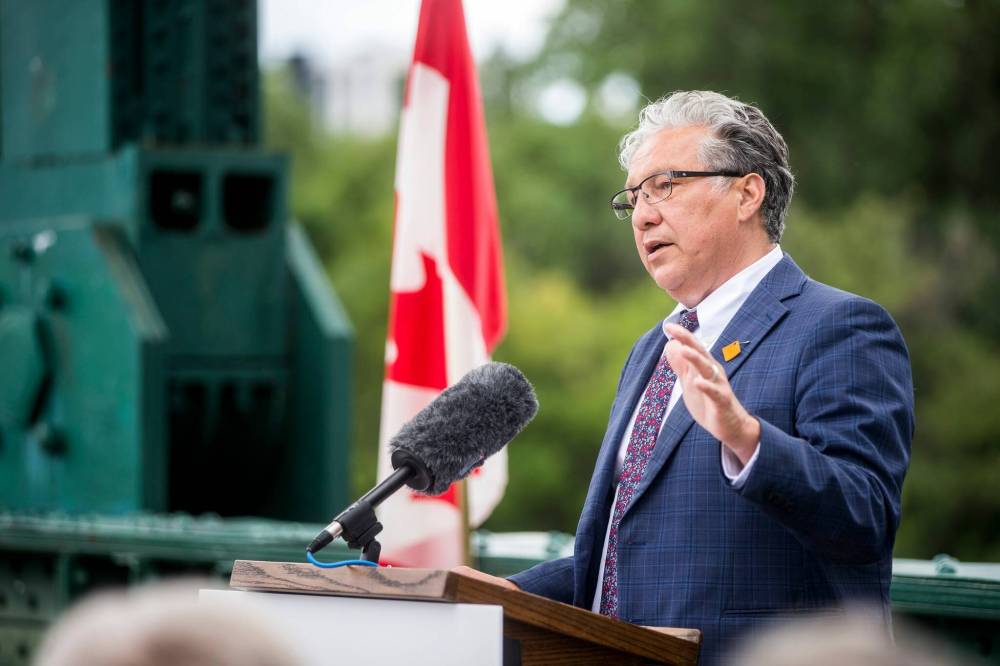
MP Dan Vandal speaks on Aug. 3, 2022 at a funding announcement for the Arctic Gateway Group Partnership Limited to rebuild and repair the Hudson Bay Railway tracks. Funding has allowed the railway to remain open, Barry E. Prentice writes, but a meaningful investment could make it an economic generator for years to come. (File)
The Mexican freight rail line as far as Merida was built over 150 years ago and been unprofitable for much of that time. Tren Maya is a reinvention of this underused rail line as a modern passenger service that could change the economy of southern Mexico.
When completed, the rail system will carry tourists around the Yucatan Peninsula. The first section consists of 1,500 km of new track and 14 new stations connecting important centres like Cancun, Merida, Campeche, with stops at the major Mayan pyramids.
Transportation investments are known to be powerful drivers of economic development. The building of the transcontinental railways through Western Canada is a classic example. The Tren Maya is designed to attract travellers into the interior of southern Mexico and to bring economic development to this low-income region.
In addition to rebuilding the old rail line, 400 kilometres of new track was constructed through the jungle to connect with a large terminal at the Cancun airport. In February, I had an opportunity to examine this new transportation system first-hand. The train stations are attractive with lots of space for retail, restaurants, and seating.
The quality is evident. The trains are built in Mexico by Alstom to European standards, and the ride is as smooth as glass. Currently only a single-track rail line exists, but all the bridges, stations, and roadbed are designed for double track. The crossings are grade separated to allow the train to travel at 150 km/h. Speeds will likely increase when the second track is completed.
Investment in new transportation infrastructure requires vision and daring. Economic development of southern Mexico is the legacy President Andrés Manuel López Obrador (ALMO) hopes to leave. The current public investment in Tren Maya is estimated to be US$20 billion.
So how does this compare with the develop- ment of the HBR? Both Cancun and Churchill have tourism, but the HBR has too little to justify much improvement.
Rather than passengers, the future of the HBR must be freight and this trade corridor has emerging opportunities. Climate change is permitting a longer navigation season that could permit year-round shipping.
Unlike the past, when the Hudson Bay trade corridor relied solely on grain exports, the potential exists for more diversified traffic. In addition to grain, the corridor could move raw materials like potash, sulfur, LNG/Hydrogen, lumber, and metal concentrates. A container facility at Churchill could provide two-way traffic and higher revenues to support the HBR.
Over the past five years, governments have invested about $250 million in the Hudson Bay corridor. This has allowed the HBR to remain open, but it is insufficient to create self-sustaining growth. Like the Tren Maya, or the Trans Mountain pipeline, the Hudson Bay corridor needs serious investment. About 270 kilometres of the HBR may need to be relocated, but his is a long-term national investment that can produce viable economic development in a very large hinterland for generations to come.
The financing of the Tren Maya may provide another example that can be applied in Canada. President ALMO used the Mexican army to be the agent for financing and building the new railway. This may have been a pragmatic solution to his lack of Congressional support, but in Canada’s case, it would be a great means of showing our NATO partners that we can reach the two per cent of GDP spending on the military.
After all, the HBR is acknowledged as a key instrument of Canada’s Arctic defence.
Reducing the cost of transport to export markets would improve Canadian productivity, which according to the Bank of Canada, is lagging. The Prairies deserve a shorter, more efficient transportation access to world markets via the Atlantic. Developing the “East Coast” of the Prairies would have widespread benefits for the region and positive economic returns for Canada.
The Prairie region has a larger population than Denmark, Finland, or Norway. If the Prairies were a country, an effective trade corridor to tide water would certainly have been constructed a long time ago.
Vision and courage are needed to make bold changes. Mexico is trying to reach its full potential, shouldn’t Canada try to reach its full potential, too?
» Barry E. Prentice is a professor and the director of the University of Manitoba Transport Institute. This column previously appeared in the Winnipeg Free Press.