
Bee kind to bees
Advertisement
Read this article for free:
or
Already have an account? Log in here »
We need your support!
Local journalism needs your support!
As we navigate through unprecedented times, our journalists are working harder than ever to bring you the latest local updates to keep you safe and informed.
Now, more than ever, we need your support.
Starting at $15.99 plus taxes every four weeks you can access your Brandon Sun online and full access to all content as it appears on our website.
Subscribe Nowor call circulation directly at (204) 727-0527.
Your pledge helps to ensure we provide the news that matters most to your community!
To continue reading, please subscribe:
Add Brandon Sun access to your Free Press subscription for only an additional
$1 for the first 4 weeks*
*Your next subscription payment will increase by $1.00 and you will be charged $20.00 plus GST for four weeks. After four weeks, your payment will increase to $24.00 plus GST every four weeks.
Read unlimited articles for free today:
or
Already have an account? Log in here »
Hey there, time traveller!
This article was published 22/04/2024 (711 days ago), so information in it may no longer be current.
Today, is Earth Day, which falls during Earth Month. The most common topics covered during Earth Month include recycling and waste reduction. But what about our struggling local ecosystem, and the animal populations that are suffering as a result, for example, bumblebees?
The importance of bumblebees cannot be overstated. Ninety per cent of all flowering plants rely on these pollinators to reproduce. That includes most of the fruits and veggies in your fridge, and even the coffee in your morning beverage. However, bumblebee populations in Canada have declined at an alarming rate since the mid 2000s.
The primary reason for the decline in wild bee population is habitat loss. Habitat loss is a huge issue in Manitoba, because of our dependence on agriculture. Many don’t realize that Manitoba is naturally home to native prairie grasslands – one of the most endangered ecosystems in the world. Bumblebees call the grasslands home. But after 90 per cent of native grasslands in Manitoba have been lost, the bees no longer have a safe location to nest. Bumblebee populations are also threatened by invasive species such as the small hive beetle, which spread diseases, invade hives, and outcompete native bees for food. Another challenge for bee populations stems from the overuse of insecticides in both agricultural and urban settings.
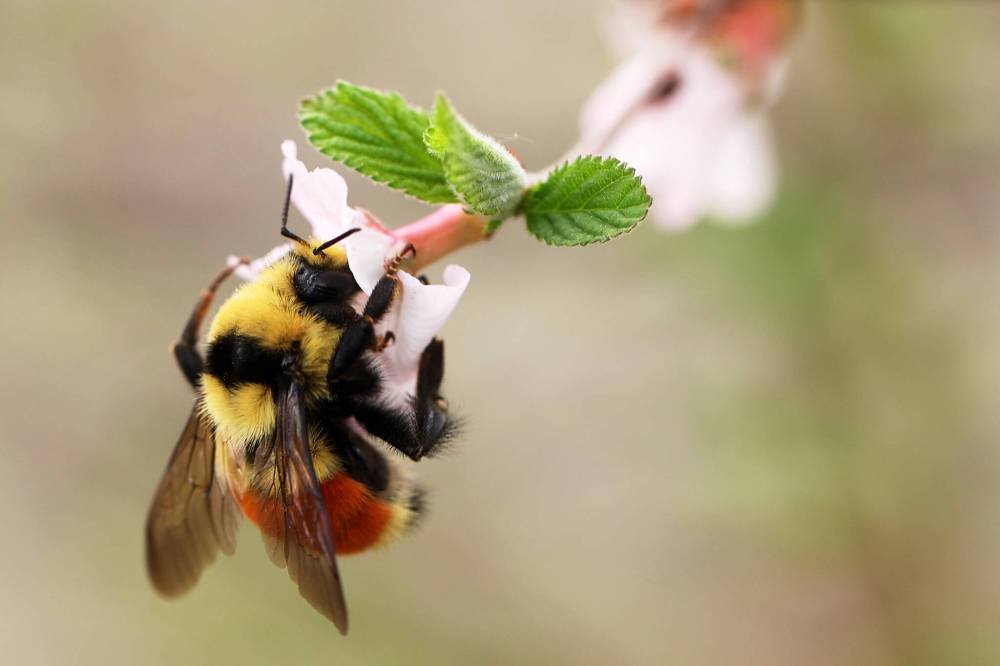
A bumblebee collects nectar from a cherry blossom in Brandon’s south end. Bees are crucial to Manitoba’s natural ecosystem and our lifestyle, so consider planting a pollinator garden this spring, École secondaire Neelin High School writer Sophie Henderson suggests. (File)
Luckily, there are many opportunities to help our fuzzy striped friends here in Brandon. Did you know that we even have an official bee? It’s the Orange-belted bumblebee! Brandon is a Bee City – the first one in Manitoba. Bee City Brandon is a committee of volunteers who are dedicated to protecting the local bumblebee population. Their goal is to educate Brandonites on the importance of bees and build beautiful habitats pollinators can thrive in across the city. One of their current projects is the ongoing transformation of Eleanor Kidd Park. Bee City Brandon is clearing the desolate flood site and restoring it to its former glory by planting a huge garden filled with native prairie flora. With the help of the City of Brandon, local experts, and plenty of volunteers, the hope is to create a safe haven for pollinators such as bees and butterflies. Keep an eye on Bee City Brandon’s website, Beecitybrandon.com, to keep up to date with any news of new projects, events, or volunteering opportunities.
Another bee hotspot is Brandon University. The university’s five-year project “Bee-U” aims to benefit Brandon’s biodiversity and bee population through exploration of urban honeybee hives, right on campus. In the summer of 2023, there were four hives set up on top of the Knowles-Douglas Student Union building. These hives are maintained by a professional beekeeper. They provide students with the opportunity to learn to care for bees, while also harvesting fresh honey for use around campus and to distribute in the community.
It’s also the perfect time of the year to start planting seeds. Consider starting a pollinator garden in your backyard this spring. A pollinator garden is any garden designed with the intent of attracting pollinators, with nectar- and pollen-producing plants. Growing a pollinator garden has countless benefits for the natural ecosystem as well as for you. When you plant native plants in your garden, they’re already adapted to the environment, so they’re quite low-maintenance and easy to care for. The pollinators your plants attract will boost the productivity of your garden and those of your neighbours, not to mention improve curb appeal by filling your yard with beautiful flowers.
Bees are vital to Manitoba’s natural ecosystem and our lifestyle. Remember, as the bugs start to return that bees are our friends, not dangerous or pests. Bees are peaceful creatures that are happy to mind their own business as long as we mind ours. This Earth Month, consider taking a step towards protecting our precious pollinators.
» Sophie Henderson is a Grade 10 student at École secondaire Neelin High School.