
Eco-anxiety rising amid climate change
Advertisement
Read this article for free:
or
Already have an account? Log in here »
We need your support!
Local journalism needs your support!
As we navigate through unprecedented times, our journalists are working harder than ever to bring you the latest local updates to keep you safe and informed.
Now, more than ever, we need your support.
Starting at $15.99 plus taxes every four weeks you can access your Brandon Sun online and full access to all content as it appears on our website.
Subscribe Nowor call circulation directly at (204) 727-0527.
Your pledge helps to ensure we provide the news that matters most to your community!
To continue reading, please subscribe:
Add Brandon Sun access to your Free Press subscription for only an additional
$1 for the first 4 weeks*
- Enjoy unlimited reading on brandonsun.com
- Read the Brandon Sun E-Edition, our digital replica newspaper
*Your next Free Press subscription payment will increase by $1.00 and you will be charged $20.95 plus GST for four weeks. After four weeks, your payment will increase to $24.95 plus GST every four weeks.
Read unlimited articles for free today:
or
Already have an account? Log in here »
Hey there, time traveller!
This article was published 26/04/2024 (885 days ago), so information in it may no longer be current.
We get lots of anxious messages these days about everything from global warming and ecological crises, to wars, famine and drought. In fact, there are so many big problems in the news that some days I want to turn off and tune out.
Eco-anxiety is no longer a theoretical possibility. It has become a diagnostic category, especially in the lives of younger people. For them, living past 2050 is a normal expectation of their middle age, responsible for raising their families. (A child born today would be 26.) For the fortunate ones among their elders, however, 2050 means assisted living in a seniors’ home, where someone else does the cooking.
But as our systems continue to mass produce, so that our society can continue to mass consume, the only future in sight for us right now is unpleasant.
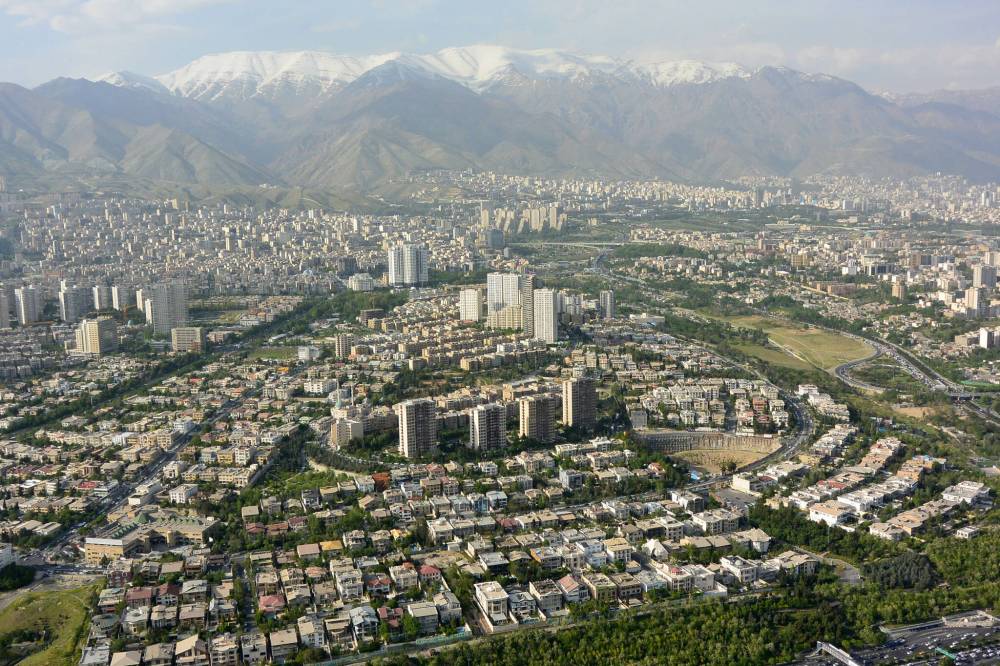
A photo of Tehran, Iran, taken from the Milad Tower during the Earth Day Weekend in 2016. (Peter Denton)
Compared to today, the world in 2030 will likely still be recognizable, but I’m not so sure about 2050. That mid-century milestone is a potential nightmare, full of good reasons to be anxious, should you expect to live that long. (Among other things, by 2050, scientists expect there will be as much plastic as fish in the world’s oceans.)
You don’t need to be a scientist, however, to know that what we are doing now isn’t working. Whatever changes or improvements are taking place, they are neither enough, nor happening fast enough, to alter the world’s curve toward ecological self-destruction.
Add to these woes the idiocies of war and its enthusiasts and the picture gets darker, faster. You have lots of company if, like me, you greeted Earth Day with more anxiety than usual this year.
I was going to use the rest of this column to chastise the Manitoba government for being focused on 2027, and not on 2050. They are apparently planning to do little about the climate crisis that might be unpopular with voters in strategic constituencies, for fear of derailing their plans for re-election. In other words, they are willing to throw future Manitobans under the (diesel) bus, in order to get a second term.
But as I fumed, I was also preparing to teach a new course on militarism in the modern world this summer. The sound of rattling sabres deflected my intentions here, as Iran and Israel exchanged direct hits on each other’s territory.
For me, this Earth Day was made more poignant by the fact that, eight years ago, I spent the Earth Day weekend in a peaceful Tehran, not worried about death from the sky.
Without major changes in how we live together, the Earth as we know it will not exist in 2050. But disaster will be upon us much sooner, if we keep fighting stupid, unnecessary wars, wasting trillions of dollars a year on militaries and armaments.
Israeli Prime Minister Benjamin Netanyahu’s continued offensive in Gaza and elsewhere will further isolate Israel, while recruiting fighters for Hamas for the foreseeable future. You can’t eliminate an ideology with bombs, shells or bullets. But you can keep political power by placating the religious extremists who hold the keys to your coalition.
It is ironic that the same motives no doubt drive the current government in Iran. When I went there in 2016, the president was Hassan Rouhani, a moderate, who wanted to improve the lot of ordinary Iranians by bringing down the walls of sanctions that crippled the Iranian economy. (I heard him give a powerful, compelling speech.)
Continued hostile attitudes from the West, fostered by former U.S. president Donald Trump, undermined Rouhani and his party, however, and they had to step aside. Their successors have repressed and alienated many of their own people, unnecessarily creating a simmering opposition. So, a limited shooting war between Iran and Israel serves the purpose of extremists on both sides, uniting their countries against an external enemy, when domestic forces are threatening their grip on power.
The people who suffer, always, are the ordinary folks, who simply want to raise their families in safety, security, and peace — in Gaza, Israel or Iran.
My weekend in Tehran was spent with about two dozen visitors from around the world, with Iranian scholars, for the Second International Seminar on Environment, Culture and Religion: Promoting Intercultural Dialogue for Sustainable Development, co-sponsored by UNESCO, UNEP and Iran. We crossed many boundaries of language, culture and religion, and had meaningful and respectful dialogue throughout. I was sponsored as a delegate from UNEP and chaired the final plenary panel, as well as giving a paper.
My interpreter was a young man finishing a master’s degree in environmental science. We talked little about politics, domestic or global. He was more worried about climate change, especially heat and drought, and how it was already affecting his family’s small saffron farm. Like young Manitobans today, he was anxious about a future that his elders were either ignoring or making worse.
This has to change. Everywhere.
» Peter Denton writes from his home in rural Manitoba. This column previously appeared in the Winnipeg Free Press.