
NDP must not wait for perfect solution
Advertisement
Read this article for free:
or
Already have an account? Log in here »
We need your support!
Local journalism needs your support!
As we navigate through unprecedented times, our journalists are working harder than ever to bring you the latest local updates to keep you safe and informed.
Now, more than ever, we need your support.
Starting at $15.99 plus taxes every four weeks you can access your Brandon Sun online and full access to all content as it appears on our website.
Subscribe Nowor call circulation directly at (204) 727-0527.
Your pledge helps to ensure we provide the news that matters most to your community!
To continue reading, please subscribe:
Add Brandon Sun access to your Free Press subscription for only an additional
$1 for the first 4 weeks*
*Your next subscription payment will increase by $1.00 and you will be charged $20.00 plus GST for four weeks. After four weeks, your payment will increase to $24.00 plus GST every four weeks.
Read unlimited articles for free today:
or
Already have an account? Log in here »
Hey there, time traveller!
This article was published 10/05/2024 (694 days ago), so information in it may no longer be current.
Is Manitoba’s NDP government running out of time to find its perfect answer to the opioid crisis?
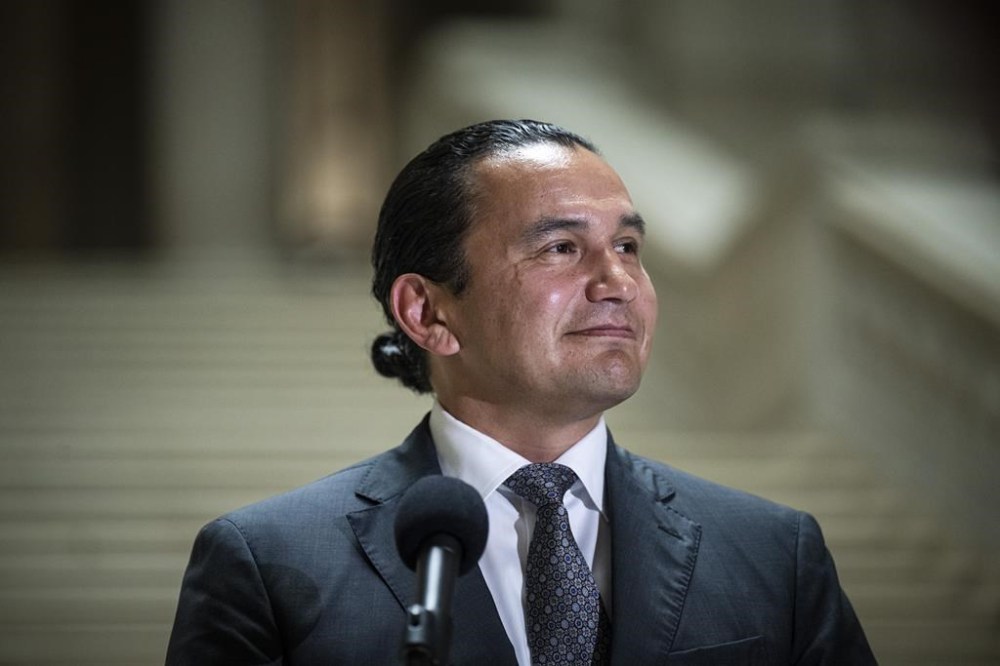
Since being elected, in part on a pledge to establish the province’s first supervised consumption site, Premier Wab Kinew and his government have opted to take a slow, cautious and deliberate approach.
Kinew and cabinet ministers have said that a site is coming, but not right away — more time is needed to look at a variety of models, designs and locations.
While the government contemplates its options, developments in public health and politics strongly suggest there may not be enough time to pursue what could be called the “more perfect” solution.
On the public health side, the carnage continues to escalate.
Manitoba had 56 drug overdose deaths in January, very near the tragic record of 57 deaths in August 2021. Even worse, health officials are starting to see the increasing presence of drugs that are resistant to naloxone, the principal tool used to reverse a drug overdose.
Public health officials noted this week that most of the opioid deaths involve “down,” a cocktail of drugs that commonly contains substances such as methamphetamine and fentanyl.
More recently, “down” has featured desalkylgidazepam, a new designer strain of the depressant benzodiazepine that was found in toxicology reports on 18 of the deaths in January.
First detected by the RCMP in 2022, it has become increasingly prevalent in the illegal drug supply; last year, police seized more than 500 drug samples containing desalkylgidazepam.
The presence of a new and potentially fatal street drug should serve as an air-raid siren for the NDP government. Help is needed and it’s needed now.
But the presence of new, lethal drugs is not the only threat to Manitoba’s plans.
The politics of the debate over how to combat overdoses has become as toxic as the drugs themselves. No one has been more toxic on the subject than Conservative Leader Pierre Poilievre, who is trying to turn deliberate ignorance of science and data into a political art form.
Poilievre is fundamentally opposed to harm reduction strategies, including supervised consumption and safer drug supply. In recent weeks, he has hammered Prime Minister Justin Trudeau for the federal government’s decision to allow British Columbia to partially decriminalize small amounts of illegal drugs, a condition for that province’s safer drug supply program.
(On Tuesday, public drug use in B.C. became illegal again after the federal government granted the province’s request to scale back the decriminalization pilot. Drug possession in private residences remains decriminalized).
A safer drug strategy has become a rallying cry of non-government groups desperate to address the overdose crisis. For politicians like Poilievre, safer supply is evidence the Trudeau government is killing vulnerable Canadians.
Poilievre has blamed the Trudeau government’s decision to authorize the B.C. program for the 2,500 overdose deaths in that province last year. Poilievre claims prescription drugs distributed through the program are being diverted into the rest of Canada and resulting in more deaths.
Police and public health officials in B.C., citing crime and public health data, have refuted Poilievre’s claim. But that has not stopped the man who would be prime minister from threatening to end supervised consumption and safer supply strategies if he wins the next election.
Remarkably, despite the growing public health and political threats, the Kinew government continues to pursue a made-in-Manitoba harm reduction strategy at a glacial pace.
Bernadette Smith, the minister of housing, addictions and homelessness, who is also the minister responsible for mental health, does not need to be convinced of the urgency. Smith lost her father to an overdose, and has often related her personal tragedy to the now daily tragedy of opioid fatalities.
In a recent interview on the Niigaan & the Lone Ranger podcast, Smith offered the most detailed description to date of what a made-in-Manitoba supervised consumption and harm reduction facility would look like.
In addition to supervised consumption, the province’s first harm-reduction facility would include a broad array of wraparound services: help with social assistance and employment insurance; access to housing; and primary health care, including mental health and addictions treatment.
“It’s about meeting people where they’re at and connecting them to the services that they need,” Smith said.
The solution Smith and others in her government envision is likely, when all is said and done, exactly what is needed. It’s not clear why the government is not acting on more interim measures in the meantime.
Sunshine House, Winnipeg’s only mobile supervised consumption site, continues to operate without any provincial funding, despite clear and irrefutable evidence it is saving lives.
It is easy to make a case the NDP government should immediately provide financial support to Sunshine House and look at putting additional supervised consumption vehicles on the streets.
It is often said that perfect cannot be the enemy of good. That is particularly true when faced with a real and immediate existential threat.
Build the more perfect solution, but until it’s ready, offer an emergency response to something that is most definitely an emergency.
» Dan Lett is a Winnipeg Free Press columnist. This column previously appeared in the Free Press.