
Campuses should be places of peacemaking
Advertisement
Read this article for free:
or
Already have an account? Log in here »
We need your support!
Local journalism needs your support!
As we navigate through unprecedented times, our journalists are working harder than ever to bring you the latest local updates to keep you safe and informed.
Now, more than ever, we need your support.
Starting at $15.99 plus taxes every four weeks you can access your Brandon Sun online and full access to all content as it appears on our website.
Subscribe Nowor call circulation directly at (204) 727-0527.
Your pledge helps to ensure we provide the news that matters most to your community!
To continue reading, please subscribe:
Add Brandon Sun access to your Free Press subscription for only an additional
$1 for the first 4 weeks*
*Your next subscription payment will increase by $1.00 and you will be charged $20.00 plus GST for four weeks. After four weeks, your payment will increase to $24.00 plus GST every four weeks.
Read unlimited articles for free today:
or
Already have an account? Log in here »
Hey there, time traveller!
This article was published 11/05/2024 (721 days ago), so information in it may no longer be current.
Since the October 2023 attack initiated against Israelis by Hamas, a surge in violence has engulfed not only Gaza but also the occupied West Bank and Israel.
The war Israel launched against Gaza has resulted in the loss of 34,000 civilian lives, including an unknown number of humanitarian workers, journalists and United Nations staff, according to the Hamas-run health office in Gaza.
Tensions have been exacerbated globally, with counter-terrorism and extremism experts flagging a rise in antisemitic hate crimes and anti-Muslim incidents, and the potential for nations like Iran or Russia to exploit the situation.
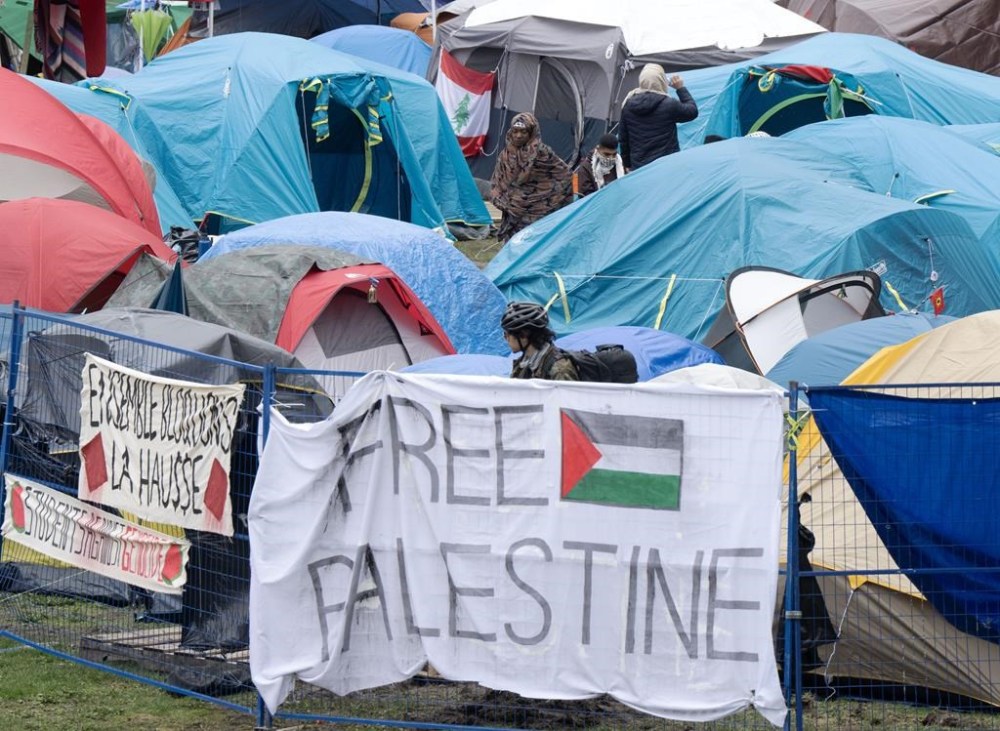
As a scholar of conflict resolution who has examined how young people can become radicalized into violent extremism, I am concerned about how this war has polarized global societies, including Canada’s.
It’s important for university leaders to find effective ways to communicate that university campuses should foster students’ commitments to peacemaking — not serve as venues for proxy wars.
Peacemaking, as discussed by former UN secretary-general Boutros Boutros-Ghali, is about emphasizing actions to support structures that tend to strengthen and solidify peace and address underlying conflict issues.
Push for peace can also mean rising extremism
Solidarity encampments in support of Palestinians have been established on university campuses.
Anti-war or anti-violence movements can yield much positive coalition-building toward peace. Pro-Palestinian student protest groups calling for a ceasefire in Gaza have representation from people of many backgrounds, including some Jewish students.
Yet, it is important for university leaders to consider that building coalitions focused on peace can also trigger backlash in the form of rising extremism, including increasing the support of war. In the 1960s, anti-war protests also triggered a boost in enrolment in pro-war groups like the Young Americans for Freedom and the founding of right-wing student newspapers like the Badger Herald.
Ensuring security through a police presence on campus is one way of protecting against violence and discrimination.
But such police involvement might lead to a rise in extremism since it could fuel resistance, or result in confrontations that strengthen the belief that a cause is just.
Insights for university leaders
While it is difficult to impart principles of non-violence and strategies for avoiding extremism in the current situation, here are some suggestions for university leaders to follow.
Set a leadership example. American peace and conflict studies scholar Gene Sharp’s 198 methods of non-violent action includes “social intervention” and fostering alternative communication systems.
For university presidents, this could mean physically being present among student protesters while publicly calling for calm among both groups. Leaders don’t have to take sides or fear for their jobs; they simply need to demonstrate leadership by denouncing extremism in any form on campuses. Communicating about conflict is the fundamental starting point for future actions.
Initiate a “community dialogue initiative” by convening pro-Israel and pro-Palestinian groups, along with influential community members, to serve as mediators for mutual expression of grievances. Engaging a professional mediator may prove beneficial.
University leadership should preside over these discussions, stressing the significance of peaceful protest and ensuring campus safety, while also indicating a readiness to enforce disciplinary measures to deter disorder.
Addressing pro-Palestinian grievances should be done judiciously, while balancing pro-Israeli sentiments by emphasizing a shared journey toward hope and co-existence.
Because divestment is the fundamental request from the pro-Palestinian groups and undoubtedly a potent method, it needs to be integrated into a more comprehensive plan that involves ongoing peace activism and a commitment to lasting peace in the Middle East.
Importance of communities feeling themselves heard
An important part of committing to community-focused counter-radicalization is identifying and addressing systemic factors in extremist violence and refusing to “other” one’s perceived enemies or deny their humanity.
University leaders will need to double down on efforts to communicate care about the larger context — without excusing or glorifying violence or justifying hate.
» Kawser Ahmed is an adjunct professor in the political science department at the University of Winnipeg. This column was originally published at The Conversation Canada: theconversation.com/ca