
Time to talk about menstrual and mental health
Advertisement
Read this article for free:
or
Already have an account? Log in here »
We need your support!
Local journalism needs your support!
As we navigate through unprecedented times, our journalists are working harder than ever to bring you the latest local updates to keep you safe and informed.
Now, more than ever, we need your support.
Starting at $15.99 plus taxes every four weeks you can access your Brandon Sun online and full access to all content as it appears on our website.
Subscribe Nowor call circulation directly at (204) 727-0527.
Your pledge helps to ensure we provide the news that matters most to your community!
To continue reading, please subscribe:
Add Brandon Sun access to your Free Press subscription for only an additional
$1 for the first 4 weeks*
*Your next subscription payment will increase by $1.00 and you will be charged $20.00 plus GST for four weeks. After four weeks, your payment will increase to $24.00 plus GST every four weeks.
Read unlimited articles for free today:
or
Already have an account? Log in here »
Hey there, time traveller!
This article was published 27/05/2024 (589 days ago), so information in it may no longer be current.
In May, awareness is brought to two of the most stigmatized topics in society: mental and menstrual health. One of the best ways to break stigma is through knowledge, understanding and open dialogue. Stigma around menstrual and mental health often perpetuates gender inequality and discrimination, which is why it is crucial to combat it. Additionally, menstruation and mental health struggles are normal and common and the ostracization creates a barrier to treatment for those who need it and can potentially heighten risks of depression and suicidal thoughts.
Good menstrual hygiene is an integral part of women’s health, and its absence can raise serious health concerns such as reproductive and urinary tract infections, which can cause infertility and birth complications. A healthy monthly cycle can provide useful information regarding a woman’s health, and, of course, prepares the menstruator for pregnancy. So, if menstruation is so important, why are we afraid to talk about it?
According to Always.com, 85 per cent of young people have tried to hide the fact that they are on their period from those around them. Unfortunately, this may be warranted as menstrualhygieneday.org has revealed that 42 per cent of women have experienced period-shaming in their lifetime, which makes sense, as Plan International reported that around 37 per cent of boys think that periods should be kept a secret.
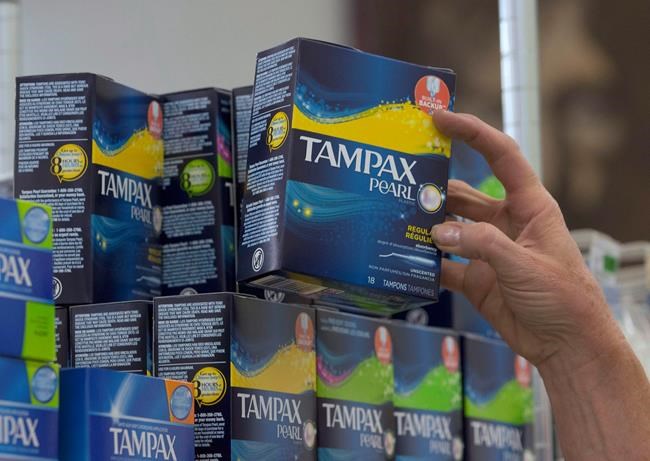
Stigma has followed mental health issues for centuries as well, especially regarding women. In the 1800s and 1900s, women were confined to mental institutions any time they expressed any kind of negative emotion which reflected their unfair positions in society. They were sent away with diagnoses like hysteria (a word the Greeks named after their word for uterus, which focused on the belief that the very presence of a uterus caused “uncontrollable emotional excess”), which taught women to hide away their emotions, a lesson that is still taught to most women today. In fact, the U.K.’s Mental Health Foundation reports that nearly nine out of ten people with mental health struggles say that stigma and discrimination have a negative impact on their lives, and, according to Time to Change research, 90 per cent of people with mental health problems experience some form of stigma from the people in their lives. Also, Canada.ca says that one in three Canadians will be affected by mental illness in their lifetime and the National Institutes of Health reports that around 57.8 million adults in the United States live with some form of mental illness today, demonstrating that they aren’t rare.
Given the importance of these issues, why then, is society still afraid to talk about them? Mainly because of a lack of understanding. This is why menstrual and mental health awareness is so important. The more we talk about menstrual and mental health and the more educated we get, the less discrimination we will see.
» Arden Hebert is a Grade 11 student at École secondaire Neelin High School