
Looking for the political will to fix Manitoba’s child care
Advertisement
Read this article for free:
or
Already have an account? Log in here »
We need your support!
Local journalism needs your support!
As we navigate through unprecedented times, our journalists are working harder than ever to bring you the latest local updates to keep you safe and informed.
Now, more than ever, we need your support.
Starting at $15.99 plus taxes every four weeks you can access your Brandon Sun online and full access to all content as it appears on our website.
Subscribe Nowor call circulation directly at (204) 727-0527.
Your pledge helps to ensure we provide the news that matters most to your community!
To continue reading, please subscribe:
Add Brandon Sun access to your Free Press subscription for only an additional
$1 for the first 4 weeks*
*Your next subscription payment will increase by $1.00 and you will be charged $20.00 plus GST for four weeks. After four weeks, your payment will increase to $24.00 plus GST every four weeks.
Read unlimited articles for free today:
or
Already have an account? Log in here »
Hey there, time traveller!
This article was published 03/07/2024 (619 days ago), so information in it may no longer be current.
I was the executive director of the Manitoba Child Care Association for more than two decades. In my experience, everyone from department staff to child-care facility employees did the very best they could with the information, resources and support available to them.
Early childhood educators, child-care assistants and family child-care providers care deeply about the children, families and service they provide.
There are many excellent centres and licensed homes that provide for the health, safety, well-being and early learning of children despite the many challenges the system throws at them. Manitoba has a reputation across Canada for being a leader due to our regulations, including staff training, group sizes and ratios — the “iron triangle” for child-care quality.
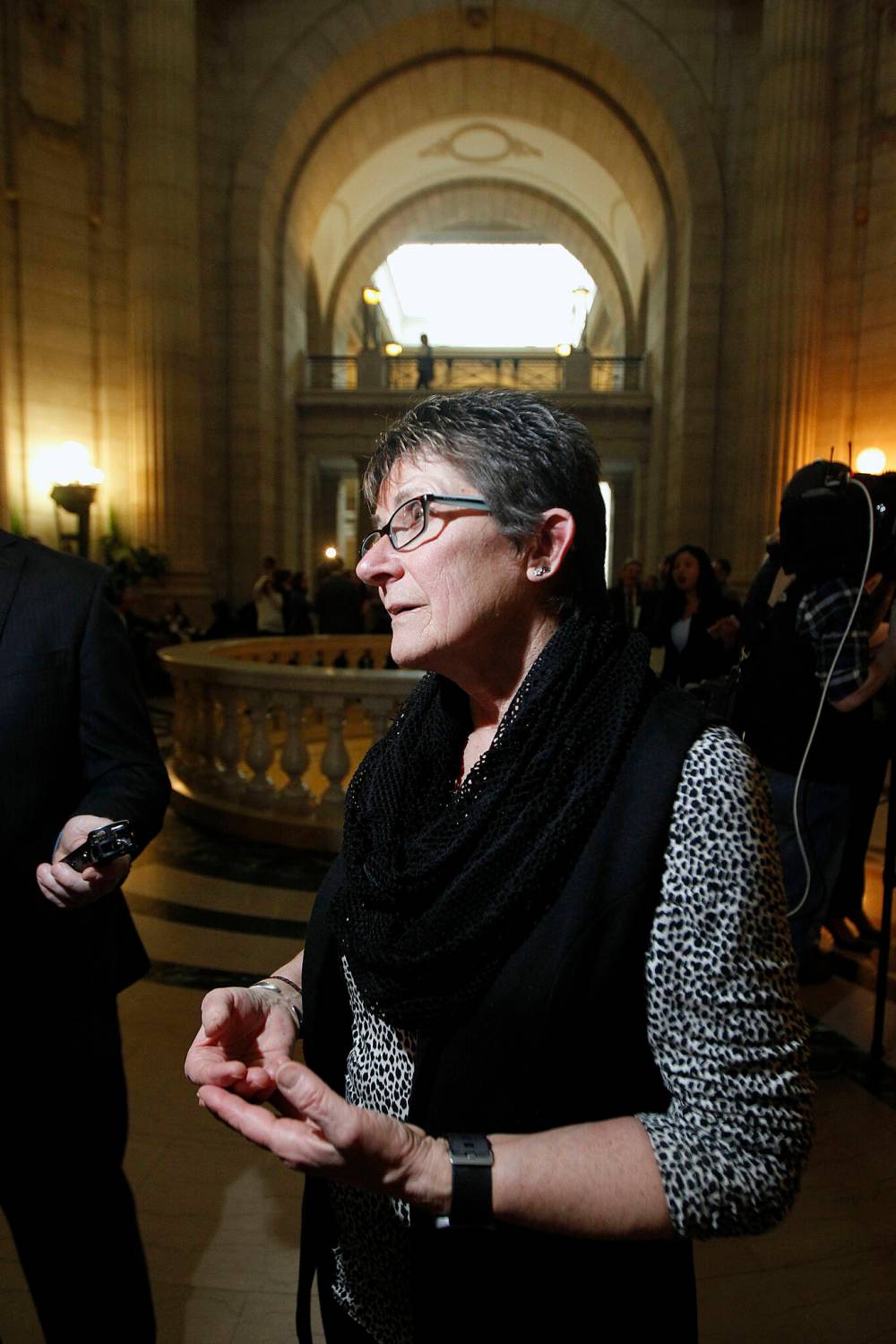
Pat Wege, then the executive director of the Manitoba Child Care Association, reacts to the 2018 provincial budget outside the Manitoba legislature. Wege writes that Manitoba must do better to provide quality child care. (Winnipeg Free Press)
The child-care system in Manitoba has been built starting at the community level. If there is a daycare centre near you, chances are high volunteers and the early childhood educators did most of the grunt work to get it off the ground. They do the community-needs assessments, learn about the licensing requirements, write grant proposals, look for affordable space, fundraise (perhaps millions), oversee renovations or construction. It can take years to jump through all the hoops, but there is no guarantee the desperately needed operating grant funding will be available when ready to open.
The most serious problem in the system is a decades-long and growing shortage of early childhood educators and child-care assistants. Compliance with legislated trained-staff requirements continues to dwindle, so centres hire whoever they can find willing to work for what they can pay instead of the best qualified candidate. The province will allow an exemption, thereby bypassing its own legislation. That is not a solution — it is one of many Band-Aids.
Low wages are at the heart of the staffing problem. Facility revenue is locked in for not-for-profit centres who must wait (sometimes years) for government to provide or boost operating grants. Increasing parent fees is not popular with the voter, so it rarely happens in Manitoba. Quality child care isn’t cheap, so the system requires the child-care workforce to subsidize the cost to government and to parents. Funding is the same for all facilities regardless of how far north they are, how much rent they pay or the additional costs to support children’s unique needs. A new, modernized funding model that reflects the actual operating cost of quality care, and fair wages for everyone in the child-care workforce is past due.
The Manitoba-Canada Early Learning and Child Care Agreement, which funds, among other things, the $10-a-day initiative is an exciting opportunity. However, the shortage of early childhood educators is a significant roadblock to achieving the vision and objectives. More of the pot should have been invested to fix wages first and to new spaces for desperate parents.
Elected officials and decision-makers at the top were kept well-informed of priorities, concerns and challenges by the association, whether escalating demand for spaces, governance and administration challenges, funding shortages, workforce problems or inclusion support needs. On behalf of our 4,000-plus members, we regularly provided updates from the field along with recommendations to facilitate improvements. If the foundation is now crumbling, it’s not because those in charge at the provincial level didn’t know it was happening.
This is a time of opportunity for child care, and there is hope. Manitoba must do better. The 2016 Manitoba Early Learning and Child Care Commission and the association’s road map to a quality early learning and child-care system in 2022 provides all the information the province needs to move forward quickly. There is no need for further research or consultation.
In 2022, the broken child-care system was moved into Manitoba Education and Early Childhood Learning. Although promising, child care remains the poor cousin in its own silo, even though there would be many benefits to better integration. “Good education cares and good child care educates,” but so far the two systems share a minister and little else.
The Ready to Move Child Care Project is smart policy that could get new spaces up and running quickly. The missing piece to success is the shortage of early childhood educators. Many leave the field within five years of entering, some taking their diploma or degree to the education system where wages and working conditions are more attractive. If child-care wages quickly increase to the $25.21-$30.65 market competitive range recommended by local research, some early childhood educators can be recruited back. There are many excellent, innovative, licensed centres and homes with exceptional leaders and experienced staff, along with early childhood educators faculty, to mentor others.
An NDP government started Manitoba’s child-care program in 1974. With the encouragement of parents, the child-care workforce, stakeholders and the media, I am hopeful the political will to repair and rebuild can be secured.
» Pat Wege worked in child care for more than four decades. She was a centre director for 20 years and executive director of the Manitoba Child Care Association from 1997 to 2018. This column previously appeared in the Winnipeg Free Press.