
Trudeau cabinet showing lack of discipline
Advertisement
Read this article for free:
or
Already have an account? Log in here »
We need your support!
Local journalism needs your support!
As we navigate through unprecedented times, our journalists are working harder than ever to bring you the latest local updates to keep you safe and informed.
Now, more than ever, we need your support.
Starting at $15.99 plus taxes every four weeks you can access your Brandon Sun online and full access to all content as it appears on our website.
Subscribe Nowor call circulation directly at (204) 727-0527.
Your pledge helps to ensure we provide the news that matters most to your community!
To continue reading, please subscribe:
Add Brandon Sun access to your Free Press subscription for only an additional
$1 for the first 4 weeks*
*Your next subscription payment will increase by $1.00 and you will be charged $20.00 plus GST for four weeks. After four weeks, your payment will increase to $24.00 plus GST every four weeks.
Read unlimited articles for free today:
or
Already have an account? Log in here »
Hey there, time traveller!
This article was published 20/07/2024 (583 days ago), so information in it may no longer be current.
A few weeks ago, Immigration Minister Marc Miller gave an interview that suggests something is amiss in Ottawa, and that concerns over Prime Minister Justin Trudeau’s leadership as a federal election approaches are bleeding into the administration of government.
Miller provided insight into disagreement over a proposed regularization program that would allow migrants in Canada without proper approval to stay rather than be deported. The proposed program would provide both failed asylum claimants and international students with expired study permits with an opportunity to apply for permanent residence.
Former Immigration Minister Sean Fraser was given a mandate by Trudeau to develop a regularization program in 2021. While work has been ongoing, public opinion on immigration issues among Canadians has shifted sharply in the meantime. While Canadians have traditionally been supportive of immigration and temporary residence programs, that support has plummeted as the Liberal government has sharply increased immigration targets, which has in turn applied pressure to the housing market and saturated the labour market.
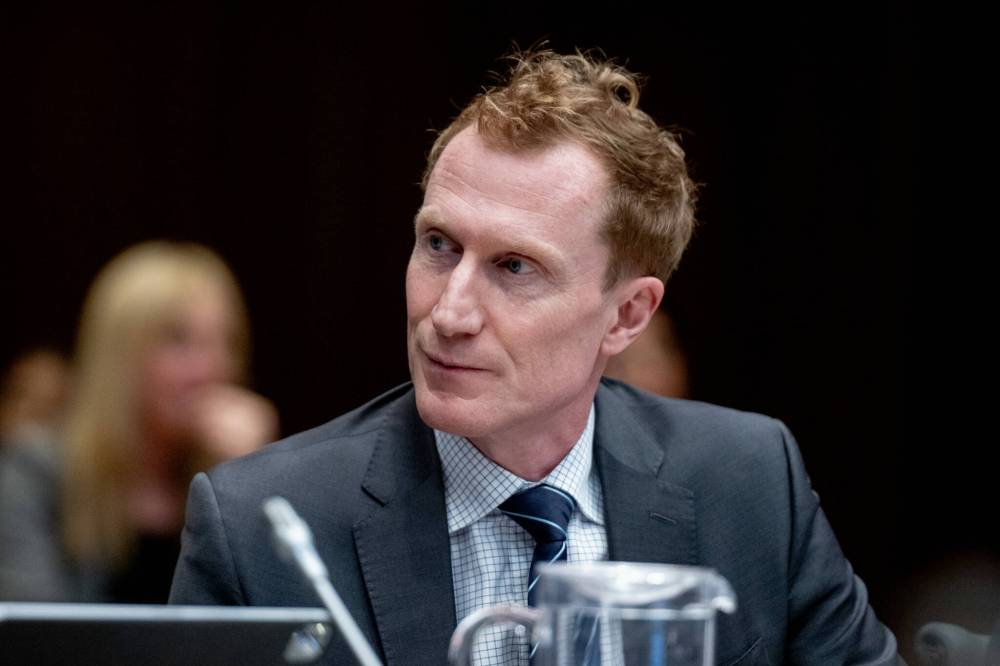
Federal Immigration Minister Marc Miller has hinted about divisions within the federal cabinet. (File)
A poll by Abacus data in November 2023, for example, found that 67 per cent thought the government’s immigration target was too high. In response to public pressure, the government froze its immigration target and took steps to cap the number of international students coming to Canada to study.
Shifts in the public opinion landscape have meant that the government has pumped the brakes on its proposed regularization program. In his interview, Miller openly expressed frustration about opposition within, notably, the cabinet.
Miller put the blame for the delay on ministers whose “views that I respect, people that care about these issues that are radically opposed and diametrically opposed, and not necessarily from people that [you] would necessarily think would have that thought process.” The result, according to Miller, was that such a program was unlikely to be rolled out anytime soon. “What I do know is that given the ongoing discussions, and they are ongoing — they have not come to an end — it isn’t something that I have any confidence will be rolled out in the short term.”
Miller made it quite clear that he was personally supportive of a regularization program (the proposed program, he argued, makes “a heck of a lot of sense”), but that opposition from other ministers meant the program would be delayed. It’s very unlikely that such a program will see the light of day before the upcoming federal election.
Ask yourself a question: when is the last time you’ve heard a cabinet minister (at either the federal or provincial level) openly talk about arguments and disagreements within the cabinet? It is a vanishingly rare occurrence, and there is a good reason for this: the convention of cabinet collective responsibility.
This is a convention of responsible government that states cabinet must speak with one voice, and that all ministers must publicly support government decisions, even if they privately disagree with them. Ministers can debate while the doors to the cabinet meeting are closed, but once a decision has been made, they are expected to smile for the cameras and support that decision.
Most ministers, if they disagree with some government policy, will swallow their pride and publicly support it nonetheless. But if a minister cannot do so, the only honourable course of action is to resign from the cabinet. A cabinet minister in former Prime Minister Stephen Harper’s cabinet, Michael Chong, did precisely this, but it is a rare occurrence.
Why does this convention exist? Because the cabinet must maintain solidarity in order for the government to be held accountable for its actions. Imagine a situation in which a minister responded to a critique of a government policy in question period by saying, “Well, I wasn’t personally supportive of that policy, so don’t blame me.” It would be impossible to hold governments accountable as ministers sloughed off responsibility onto each other.
This why cabinet must speak with one voice.
I’m not sure if Miller’s comments are a clear violation of the convention but, even if not, they come close. In staking a public position in favour of regularization and blaming other ministers for its delay, Miller gave the public a glimpse into cracks within the cabinet. And if the government declines to introduce a regularization program, Miller has outed himself as being opposed to that decision. He can say, “Don’t blame me.”
Does this matter to anyone other than constitutional wonks? I’d argue that Miller’s willingness to talk openly about disagreements in cabinet likely reflects a breakdown in discipline in Trudeau’s government. It comes as members of the caucus openly question Trudeau’s leadership and organize against him.
Even if Trudeau hangs on to the party leadership, he may face challenges in keeping his caucus and even his cabinet in line in the months to come.
» Royce Koop is a professor of political studies at the University of Manitoba and academic director of the Centre for Social Science Research and Policy. This column previously appeared in the Winnipeg Free Press.