
Fundraising in schools is an unfair practice
Advertisement
Read this article for free:
or
Already have an account? Log in here »
We need your support!
Local journalism needs your support!
As we navigate through unprecedented times, our journalists are working harder than ever to bring you the latest local updates to keep you safe and informed.
Now, more than ever, we need your support.
Starting at $15.99 plus taxes every four weeks you can access your Brandon Sun online and full access to all content as it appears on our website.
Subscribe Nowor call circulation directly at (204) 727-0527.
Your pledge helps to ensure we provide the news that matters most to your community!
To continue reading, please subscribe:
Add Brandon Sun access to your Free Press subscription for only an additional
$1 for the first 4 weeks*
- Enjoy unlimited reading on brandonsun.com
- Read the Brandon Sun E-Edition, our digital replica newspaper
*Your next Free Press subscription payment will increase by $1.00 and you will be charged $20.95 plus GST for four weeks. After four weeks, your payment will increase to $24.95 plus GST every four weeks.
Read unlimited articles for free today:
or
Already have an account? Log in here »
Hey there, time traveller!
This article was published 04/09/2024 (725 days ago), so information in it may no longer be current.
As students settle into this school year, their parents and guardians are preparing for a different type of work.
While Manitoba’s public schools are meant to be publicly funded, the funding of many schools is supplemented by fundraising undertaken by their parental advisory councils or school staff.
School communities increasingly organize fundraisers, such as selling plants, offering fun lunches or organizing school events, to provide school supplies, playground equipment or enrichment opportunities for their children.
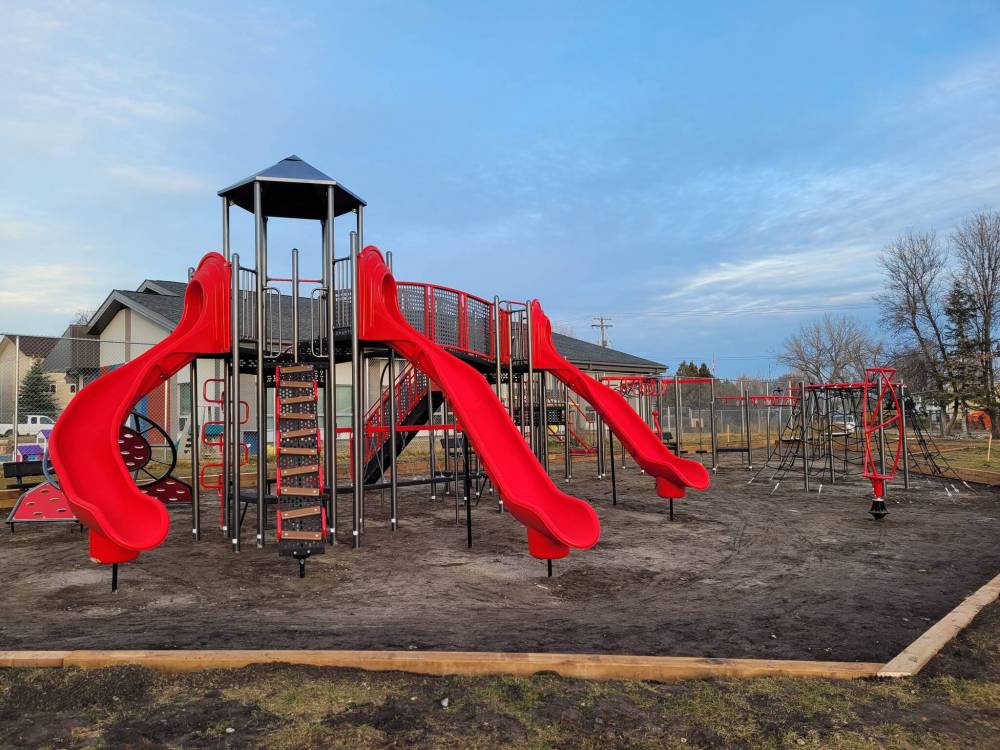
The play structure at Neepawa Middle School is shown during installation in 2022. The school had been fundraising for the play structure since it opened in 2019. (File)
The cumulative effect of these fundraisers adds up.
When People for Public Education Manitoba, a public education advocacy group, surveyed 56 parents and guardians of public school students in May, 48 per cent indicated that school fundraisers occur monthly or more often. Sixty per cent of respondents stated they spent more than $100 each year on school fundraising campaigns.
This does not include money collected from extended families and other community members or fees charged to families for supplies.
While this boost in funds is cheered by many, it is problematic within a public system.
First, relying on fundraising to supplement public funding results in inequities between and within schools and communities. Some schools can raise hundreds of thousands of dollars through fundraising and grant writing for play structures or schoolground enhancements. These schools can fund field trips, extracurricular activities, supplies for learning and more, while these opportunities will remain out of reach for other schools that cannot raise funds privately.
This runs counter to the promise of public education, which should be free and accessible for all.
The resources and opportunities added from fundraising are not extras; they are crucial aspects of a well-rounded education. When these essential elements are increasingly provided through fundraising, they become considered extras. In turn, many may perceive the public education system as worsening.
When schools cannot fundraise, students go without essential elements of their schooling experience. Public schools are supposed to promote equity, not exacerbate existing inequities.
Fundraising is often sold as a community-building activity; however, it is important to highlight how fundraising excludes some community members.
Families who do not have the means to pay might be excluded from fun lunches, book drives or other fundraising events. In other cases, fundraising campaigns might offer incentives for students who are better positioned to raise more money. These prizes are out of reach for some students, and this sends a message of exclusion.
Another concern relating to fundraising is the encroachment of corporations into school activities.
More recently, new companies have emerged that aim to facilitate fundraising. This includes some that help with web forms and others that act as intermediaries between schools and restaurants, such as MunchaLunch, Lunchbox or Healthy Hunger.
This creeping corporate influence requires a critical eye. There is the issue of advertising to a captive audience, namely schoolchildren.
Also, it is unclear what kind of data these services collect or what these companies do with the data. Other apps appear to monetize existing community relationships, even offering tutorials for families to extract money from their friends and family more effectively.
Finally, we should recognize how fundraising relies on significant labour, particularly from parents. In the survey, 20 per cent of respondents indicated they spent one to five unpaid hours a month doing fundraising activities. Four per cent spent five to 10 hours a month, and another four per cent spent more than 10 hours monthly on fundraising activities. Often, these activities rely on the unpaid labour of mothers. Also, grant writing, which can result in tens to hundreds of dollars, takes hours to complete without guaranteeing success.
Not all communities can devote this amount of time to fundraising activities, further emphasizing how relying on fundraising exacerbates inequities.
While some parents expressed the need to fundraise due to the underfunding of schools, it often provoked stress. Most respondents indicated they felt pressure to fundraise for their child’s school.
However, parents were often reluctant to ask others to purchase products and sometimes spent their own money on products they did not need. Another common theme was the difficulty in amassing volunteer resources, with parental advisory councils feeling the strain of organizing these campaigns.
Fundraising to fill the gaps in public school funding is problematic because it results in inequities between and within schools, it invites corporate influence into public systems, and it puts pressure on parents and families.
In a public school system, education should be publicly, proudly and robustly funded so that all children have equal and equitable access to the opportunities schools offer.
» Ee-Seul Yoon is a member of People for Public Education Manitoba and associate professor at the faculty of education at the University of Manitoba. She has researched and written several articles about school fundraising in K-12. Emily Livingston is a PhD candidate in the faculty of education at the University of Manitoba and a member of People for Public Education Manitoba. This column previously ran in the Winnipeg Free Press.