
The local impact of incoming tariffs
» NEELIN VIEWS
Advertisement
Read this article for free:
or
Already have an account? Log in here »
We need your support!
Local journalism needs your support!
As we navigate through unprecedented times, our journalists are working harder than ever to bring you the latest local updates to keep you safe and informed.
Now, more than ever, we need your support.
Starting at $15.99 plus taxes every four weeks you can access your Brandon Sun online and full access to all content as it appears on our website.
Subscribe Nowor call circulation directly at (204) 727-0527.
Your pledge helps to ensure we provide the news that matters most to your community!
To continue reading, please subscribe:
Add Brandon Sun access to your Free Press subscription for only an additional
$1 for the first 4 weeks*
- Enjoy unlimited reading on brandonsun.com
- Read the Brandon Sun E-Edition, our digital replica newspaper
*Your next Free Press subscription payment will increase by $1.00 and you will be charged $20.95 plus GST for four weeks. After four weeks, your payment will increase to $24.95 plus GST every four weeks.
Read unlimited articles for free today:
or
Already have an account? Log in here »
Hey there, time traveller!
This article was published 19/02/2025 (604 days ago), so information in it may no longer be current.
On Nov. 25, 2024, U.S. President Donald Trump announced through social media that he planned to impose a 25 per cent tariff on products imported into the United States from Canada and Mexico once in office on Jan. 20.
A tariff is a tax or duty that must be paid on imported or exported goods imposed by a country. Their purpose is to increase the purchase of domestically produced goods rather than of imported goods. According to the Fact Sheet that can be found on the White House website, the justification for this policy is an emergency situation, “The extraordinary threat posed by illegal aliens and drugs, including deadly fentanyl, constitutes a national emergency under the International Emergency Economic Powers Act (IEEPA).” Until this crisis is resolved, President Trump is placing a 25 per cent additional tariff on imports from Canada and Mexico, and a 10 per cent additional tariff on imports from China. Energy resources from Canada, however, will have a 10 per cent tariff. He claims this will resolve the rising issue and the distribution of illicit drugs, such as fentanyl, currently present in the United States.
These tariffs will not only have a significant impact on the Canadian economy, but also on the Canadian people. Canadians who live near the border depend on their relationship with the United States every single day. Many small towns rely on trade connections almost entirely for jobs and resources, their income is dependent on our neighbours. These tariffs will place a large effect on “generations to come of friendship with the U.S.,” Peele Township Mayor Cathy Miller said in an interview on CTV News. She says as a border town, you don’t only feel the change financially, you feel it personally. Many people have spouses, family, friends, and neighbours who are American. Whenever relationships between the two countries change for the worse, their communities feel the impact in a different way. In response to this situation, many mayors from across the country have formed the Border Mayors Alliance. They intend to serve as a unified voice to help their communities and bring a municipal perspective to an international discussion.
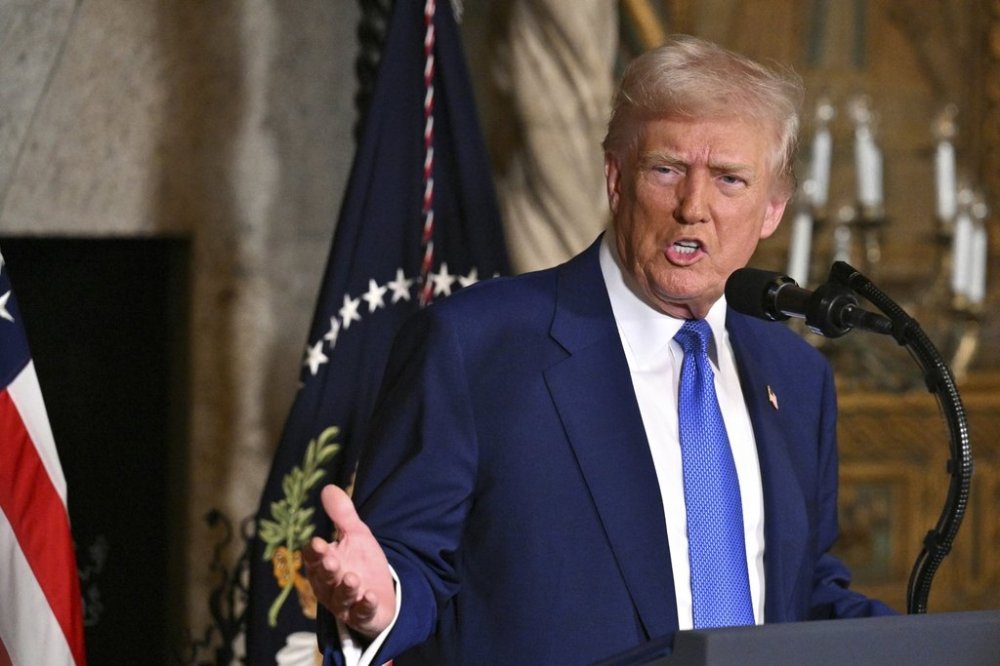
Since the initial statement on imposing tariffs, Trump has delayed them for at least 30 days, coming to an agreement that Canada will increase surveillance at the border. However, on Feb. 9, he stated he will place a 25 per cent tariff on steel and aluminium imports and later will announce reciprocal tariffs against countries that have placed tariffs on American products. Many provincial leaders have since criticized Trump for creating constant chaos and putting the economy at risk.
Manitoba Premier Wab Kinew stated on CBC News that this delay is a sign that the province’s effort has been effective, and the province has paused plans to stop selling American liquor. Still, he said, “We have a responsibility to continue to take those long-term steps to ensure that our economy is Trump-proof in Manitoba.” The Manitoba government has introduced retaliatory measures. Kinew stated that the province is searching for ways to prevent U.S. companies from bidding on provincial contracts. Manitobans and Canadians are encouraged to look at labels and support local businesses. The Buy Local ad campaign is advertising to convince people to buy local goods and services. As the United States continues to threaten imposing tariffs, Kinew says it’s important for Manitobans to support the local economy. He has also said he wants to reduce the province’s reliance on trade with the United States. He said Manitoba still needs to diversify its exports and boost its production to decrease reliance on the U.S. market.
However, even with the pause on tariffs so far, Manitoba businesses are still feeling the impact. Many businesses rely on U.S. consumers as big sources of income. With shipments that are being held up at the border, businesses are unable to make money. Manitoba trade minister Jamie Moses’ office said that they had reached out to these impacted business owners. They launched a tariff hotline, 1-877-827-4330 (toll-free), 204-945-8011, or 204-945-3744, and want businesses to know that they have their support.
The Neelin Journalism Team was able to speak with Brandon Mayor Jeff Fawcett regarding these tariff threats. He commented on the situation saying, “Around here we have our federal trade commissioner out working with some of our local groups just to see what we could be doing. We have a few very local industries that do work in the U.S., so they have to take a lot of precaution. A lot of them are in agriculture and a lot of their marketing is in the U.S. The other piece that is of concern is the counter tariffs. That could increase costs significantly. Around Brandon, the biggest concerns would probably be things like agriculture. A lot of the canola grown in our area is shipped to the United States. If we had counter tariffs put in, it could make things they purchase much more expensive. Lots of uncertainty on that. Those are some of our biggest concerns, everything about agriculture. But even on the smaller scale, like cars, no one knows for certain. A lot of people are doing their shopping locally. But it’s the uncertainty that’s also the issue. The biggest thing is the uncertainty.” When asked to comment on those who are concerned about this situation he said, “I think they need to know that there is an extremely good team working on this. The government, large chamber of commerce groups. We have to realize that the U.S. senators and governors also play a role. We have to have some sort of faith in our systems. But we are counting on a lot of people including in the U.S. trying to make it work.”
Since then, on Feb. 10, Trump signed orders for 25 per cent tariffs on all steel and aluminum imports. These tariffs are scheduled to take effect on March 12. Trump stated these were to take place “without exceptions or exemptions.” The White House said that should all its trade actions take effect in March, it would indeed pile tariff on top of tariff, to reach the larger number of 50 per cent on some items.
In situations like these, it’s important to form your own opinion on the matter. It’s good to do some research and find out the facts. Especially for young people, this is the time to speak out and make people hear your voice. It is also possible to have an impact through individual consumer choices, by getting informed, reading labels, and trying to buy Canadian. Every purchase counts.
» Georgia Feng is a Grade 11 student at École secondaire Neelin High School