
Flawed process leads to flawed decisions
Advertisement
Read this article for free:
or
Already have an account? Log in here »
We need your support!
Local journalism needs your support!
As we navigate through unprecedented times, our journalists are working harder than ever to bring you the latest local updates to keep you safe and informed.
Now, more than ever, we need your support.
Starting at $15.99 plus taxes every four weeks you can access your Brandon Sun online and full access to all content as it appears on our website.
Subscribe Nowor call circulation directly at (204) 727-0527.
Your pledge helps to ensure we provide the news that matters most to your community!
To continue reading, please subscribe:
Add Brandon Sun access to your Free Press subscription for only an additional
$1 for the first 4 weeks*
*Your next subscription payment will increase by $1.00 and you will be charged $20.00 plus GST for four weeks. After four weeks, your payment will increase to $24.00 plus GST every four weeks.
Read unlimited articles for free today:
or
Already have an account? Log in here »
Hey there, time traveller!
This article was published 25/07/2025 (244 days ago), so information in it may no longer be current.
Regular readers of this column will know that I am often critical of decisions made by Brandon City Council on a range of issues. I have often suggested that past councils made mistakes by making decisions that either failed to consider the facts and/or long-term consequences of their votes, or were a poor use of tax dollars.
There is another factor at play, however, that impairs council’s decision-making process and increases the likelihood of bad decisions being made. It relates to an increasingly passive approach at the council table, and the roles played by the various participants in perpetuating that process.
Under the province’s Municipal Act and the City’s of Brandon’s Organizational By-law (no. 6650), the structure, roles and responsibilities of our mayor and council are defined.
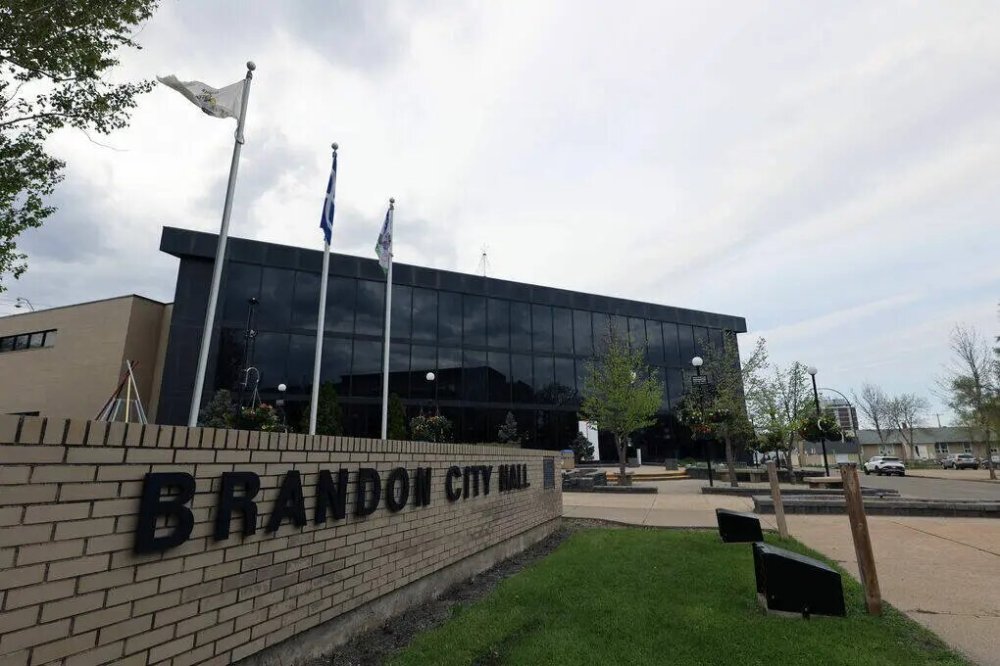
Under section 78 of the Municipal Act, each council must have a head of council and between four and 10 councillors. Under section 82, a council is responsible for “developing and evaluating the policies and programs of the municipality,” for “ensuring that the powers, duties and functions of the municipality are appropriately carried out,” and for “carrying out the powers, duties and functions expressly given to the council under this or any other Act.”
Under section 83, each member of council, including the mayor, has the duty to “consider the well-being and interests of the municipality as a whole and to bring to the council’s attention anything that would promote the well-being or interests of the municipality” and “participate generally in developing and evaluating the policies and programs of the municipality.”
They must also “participate in meetings of the council and of council committees and other bodies to which the member is appointed by the council,” keep confidential matters secret, comply with council’s code of conduct and “perform any other duty or function imposed on the member by the council or this or any other Act.”
Section 12 of the city’s organizational bylaw has similar wording.
Also under section 83 of the Municipal Act, the head of council — the mayor — has the added duties to “provide leadership and direction to the council,” to “preside when in attendance at a council meeting, except where the procedures by-law or this or any other Act otherwise provides,” and to “perform any other duty or function assigned to a head of council by the council or by this or any other Act.” Section 10 of the city’s organization bylaw has almost identical language.
Under section 4 of the bylaw, the city is responsible for providing “good civic government,” for providing “services, facilities or other things that are necessary or desirable for all or part of the municipality,” and for developing and maintaining a “safe and viable community” for all residents of the city.
Under section 7 of that bylaw, city council is responsible for “the overall development and evaluation of policies and programs of the municipality,” for “ensuring that all powers, duties and functions of the municipality are appropriately carried out,” and for carrying out the duties, powers and functions delegated to it by the Municipal Act or any other Manitoba law.
I have set out all of that in order to help you understand the precise statutory roles and responsibilities of our mayor and council. Once you grasp the broad scope of those powers and duties, you will likely see the “design flaw” that is undermining city council’s decision-making process and increasing the odds of bad decisions being made.
Those flaws are, firstly, the absence of any language in either the Municipal Act and the organizational bylaw that explicitly gives councillors the right to all information regarding matters being discussed at the council table and/or city operations generally, and (2) council’s willingness to effectively “farm out” its responsibilities to unelected city staff.
Like most, if not all, smaller municipal councils in the province, Brandon has a governance model that puts immense power and responsibility in the hands of the city manager and senior administrative staff. In theory, the mayor and councillors exercise oversight over the city manager and senior staff, but the reality is far different.
The only city employee directly responsible to council is the city manager. City staff, including senior administrative staff, are responsible to him. When council makes a decision, it is almost always based entirely on information and recommendations given to them by the city manager and senior staff.
I have seen situations in the past where council was given incomplete, incorrect or misleading information by city administration prior to making a decision. That should never happen, but it has occurred with troubling frequency. A couple of years ago, for example, council was almost duped into approving the demolition of Park Community Centre.
The problem hasn’t been caused by a law or bylaw. Rather, it’s because successive city councils, made up of part-time councillors, have allowed it to happen over the past several decades. By being increasingly passive in the decision-making process, they have increasingly become “rubber-stampers.”
That has to change. Brandon’s mayor and city councillors are elected to make informed decisions and exercise genuine oversight over city operations in order to ensure that the interests of Brandonites are well served. Council has the power to impose processes and duties that would enable them to fully carry out their responsibilities, but they haven’t done so because successive councils have chosen to follow a “trust the process, don’t make waves” approach.
It isn’t working. Maybe it’s time to start discussing the idea of full-time city councillors. At a minimum, it’s time for our mayor and council to stop operating like a passive volunteer board of directors and start using the powers they already have to deliver the “good civic government” and create the “safe and viable community” Brandonites deserve.
Either way, with the next civic election just 15 months away, it’s time for a discussion aimed at ensuring better decisions and oversight at city hall.