
RCMP’s release of body camera footage sets dangerous precedent
Advertisement
Read this article for free:
or
Already have an account? Log in here »
We need your support!
Local journalism needs your support!
As we navigate through unprecedented times, our journalists are working harder than ever to bring you the latest local updates to keep you safe and informed.
Now, more than ever, we need your support.
Starting at $15.99 plus taxes every four weeks you can access your Brandon Sun online and full access to all content as it appears on our website.
Subscribe Nowor call circulation directly at (204) 727-0527.
Your pledge helps to ensure we provide the news that matters most to your community!
To continue reading, please subscribe:
Add Brandon Sun access to your Free Press subscription for only an additional
$1 for the first 4 weeks*
- Enjoy unlimited reading on brandonsun.com
- Read the Brandon Sun E-Edition, our digital replica newspaper
*Your next Free Press subscription payment will increase by $1.00 and you will be charged $20.95 plus GST for four weeks. After four weeks, your payment will increase to $24.95 plus GST every four weeks.
Read unlimited articles for free today:
or
Already have an account? Log in here »
Hey there, time traveller!
This article was published 03/12/2025 (295 days ago), so information in it may no longer be current.
The first authorized body-worn camera footage to be officially shared in Canada was made public by Manitoba Mounties at the end of November.
The video, at just under one minute, is an edited compilation of footage taken from RCMP officers’ body cameras over the last year as the Mounties rolled out the devices across the country.
The week prior to the release of the video compilation, body camera video captured a fatal shooting by an RCMP officer at Sagkeeng First Nation in Manitoba.
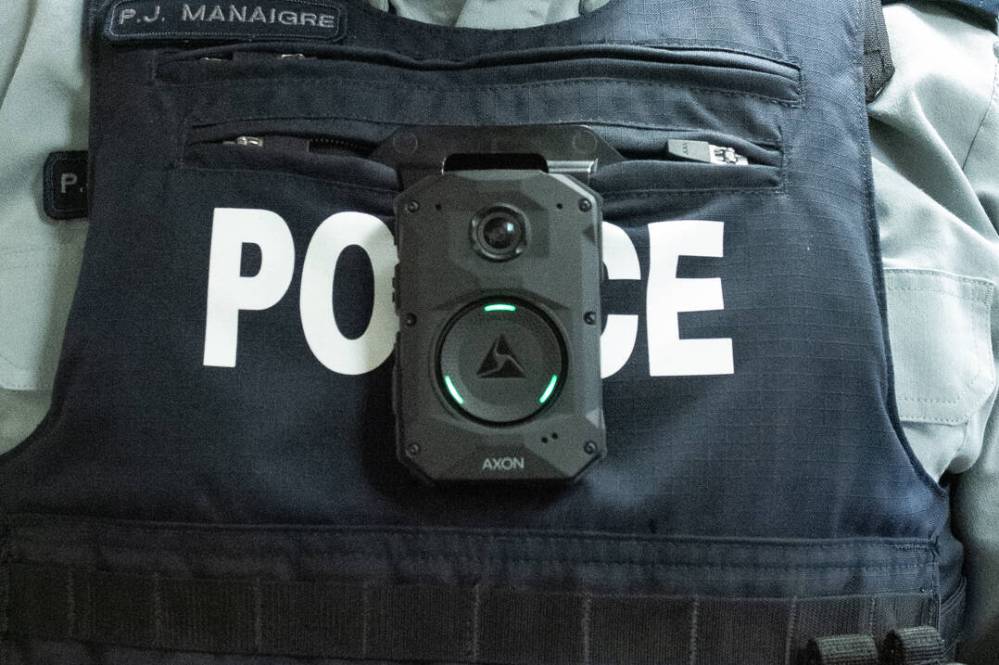
RCMP Sgt. Paul Manaigre, media relations officer with D Division, wears one of the body cameras the RCMP deployed to 44 detachments in Manitoba during a press conference in Steinbach last year. (Svjetlana Mlinarevic/The Carillon files)
“We want to see it,” said a close friend of the deceased.
Body camera footage of the shooting has been turned over to the Independent Investigation Unit, Manitoba’s police watchdog agency. According to a Manitoba RCMP spokesperson, the footage “is now restricted to only a few investigators within the RCMP, and videos are not shared.”
Considering the seriousness of the fatal shooting at Sagkeeng First Nation, the timing of the RCMP release of the body camera compilation video appears insensitive to what the public wants from body camera footage.
The footage released by the RCMP is soundtracked with rock guitar, reminiscent of an advertisement, and has no value in terms of transparency or accountability for police actions.
The RCMP video offers no context or information regarding the sequence of events shown, which all appear to be dramatic moments from police interactions with the public. The reasonable conclusion is that the sharing of the footage was intended as a public relations strategy to advertise police work as exciting and dangerous and to bolster public appreciation and support for police.
The RCMP release of body camera footage in this manner sets a dangerous precedent in Canada for video to be used by police as a public relations tool when it suits their interests.
This was never the stated intention for equipping police with body cameras, nor is it what the public are demanding when they foot the bill for this equipment and data storage. Body camera footage is intended as a tool for the courts and oversight agencies to assess police conduct.
The sharing of this body camera footage is even more troubling when you consider that its release had to be sanctioned by the RCMP and by the Office of the Privacy Commissioner.
While the faces of those in the footage are blurred, it is unlikely that the civilians in the footage were consulted and consented to its release as a promotional video.
The release of selected body camera footage is common in jurisdictions in the United States. Such footage can be viewed on nightly television newscasts and has become a source of public entertainment on sites like YouTube.
Consequently, public relations firms in the U.S. have emerged to assist police agencies in the professional production, scripting, and narration of body camera footage for release to the public. These videos present the police perspective on officer-involved shootings; hundreds of such videos have been produced, costing taxpayers about $5,000 each.
In the forthcoming book, “Police Body-Worn Cameras: Media and the New Discourse of Police Reform,” the practice of editing and producing body camera footage is referred to as orchestrated visibility. These productions allow police to present a single-sided narrative that defends their actions and tells viewers how they should see the events captured on camera. While video may provide visibility of police actions, it is not an objective arbiter of truth and is subject to viewer interpretation. These kinds of orchestrated visibility practices allow police to frame the public’s interpretation in a way that primarily serves their own interests.
While it might seem unlikely that body camera footage would be scripted and publicly released in such a manner in Canada, the RCMP’s body camera video compilation suggests that such practices are no longer out the realm of possibility. This footage is now on YouTube, in the sea of available U.S. footage.
Strict parameters should immediately be put in place to prohibit police from using body camera footage as a promotional tool. Such restrictions are necessary to ensure body cameras work foremost to the benefit of the public who pay for them, to protect citizens’ privacy and to ensure the integrity of body camera footage for legal proceedings.
If the government does not act to protect the proper use of body camera footage, they are betraying that the implementation of these cameras is not really about transparency and accountability, but about police image control at best, and public entertainment at worst.
» Christopher J. Schneider is a professor of sociology at Brandon University. He is the co-author (with Erick Laming) of “Police Body-Worn Cameras: Media and the New Discourse of Police Reform” that will be published by Routledge in January 2026. Stacey Hannem is professor of criminology at Wilfrid Laurier University.