
Time to consider recall legislation
Advertisement
Read this article for free:
or
Already have an account? Log in here »
We need your support!
Local journalism needs your support!
As we navigate through unprecedented times, our journalists are working harder than ever to bring you the latest local updates to keep you safe and informed.
Now, more than ever, we need your support.
Starting at $15.99 plus taxes every four weeks you can access your Brandon Sun online and full access to all content as it appears on our website.
Subscribe Nowor call circulation directly at (204) 727-0527.
Your pledge helps to ensure we provide the news that matters most to your community!
To continue reading, please subscribe:
Add Brandon Sun access to your Free Press subscription for only an additional
$1 for the first 4 weeks*
*Your next subscription payment will increase by $1.00 and you will be charged $20.00 plus GST for four weeks. After four weeks, your payment will increase to $24.00 plus GST every four weeks.
Read unlimited articles for free today:
or
Already have an account? Log in here »
After elections, we often hear successful candidates thank voters for the trust they have placed in them, along with solemn promises to continue to earn and honour that trust throughout those candidates’ respective terms in office.
For most candidates, that commitment is earnestly made with the best of intentions. For others, however, the pledge is just a collection of words that mask the intention to do what they think is best during their mandate.
Many successful politicians have told me over the years they do not feel an obligation to consult voters on key issues between elections. They argue that voters elect them for their judgment and, if they disagree with decisions made based on that judgment, voters can elect somebody else in the next election.
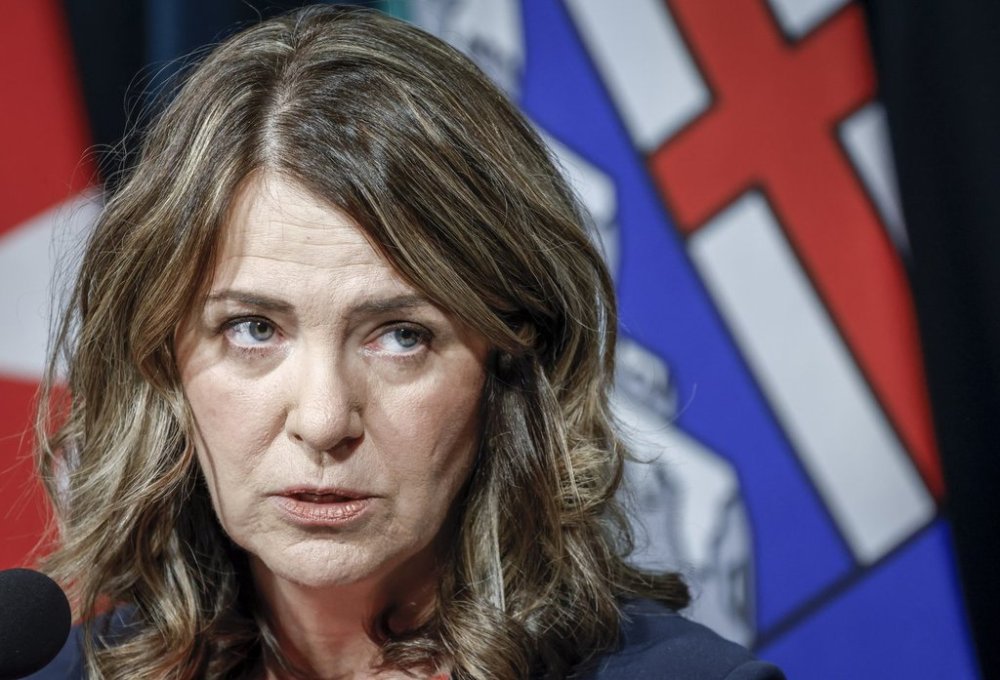
Under that approach, voters hand a multi-year “blank cheque” to a virtual stranger to make important decisions affecting the lives of those voters with no right to object, let alone remove their elected representative between elections.
Most democracies have worked that way for centuries, but does the model fit society today? Does it still make sense to hand such immense power to so few people, without the ability to rescind that authority when necessary? Did that ever make sense?
Those aren’t hypothetical questions. In the recent past, Manitobans elected a provincial government that promised to not raise the retail sales tax rate, and then did so. Voters were forced to wait until the next election to respond.
When municipal and school board elections are held across the province next fall, there is a non-zero possibility that voters will elect trustees who did not disclose, prior to the election, their intention to ban certain types of books from school libraries that do not conform to the moral and/or religious standards of those trustees.
Similarly, there is every possibility that votersm could elect mayors, reeves and councillors who, after being elected, make questionable decisions that impair the well-being of their respective communities and fellow citizens.
In those instances, Manitobans are impotent to do anything in response, other than mobilize for the next election, which could be years away.
It shouldn’t be that way, and isn’t that way in Alberta and British Columbia. In those provinces, elected officials can be removed from office if enough voters feel it is justified.
In Alberta, for example, the Recall Act allows voters to petition to remove an MLA, municipal official or school board official between elections, subject to certain timing rules. In the context of an MLA, an eligible elector must state in 100 words or less why they feel an MLA should be recalled and pay a $500 processing fee.
If the petition is approved by Elections Alberta, the applicant then has 90 days to collect signatures from enough people in the constituency in favour of a recall vote — a number that is at least 60 per cent of the total votes cast in the constituency in the previous general election.
If that threshold is met, a vote must be held in the riding within four months to determine if the MLA should be recalled. If a majority of votes are cast in favor of recall, the MLA is removed from office and a byelection must be held.
As of Friday there were 17 members of Alberta’s governing United Conservative Party caucus, including Premier Danielle Smith, who are currently subject to recall petitions. The groundswell is largely in response to that government’s use of the Charter of Rights’ notwithstanding clause to trample trans rights and end a recent teachers’ strike.
The UCP currently holds a majority of nine seats in the Alberta Legislative Assembly, meaning that if just two-thirds of the 15 recall petitions ultimately succeed, the Smith government could fall.
That possibility illustrates not just the power of recall laws, but also their ability to compel politicians to maintain the trust of the people who elected them.
It’s 2025, not 1955. It is no longer reasonable to expect, let alone force, citizens to blindly entrust politicians with their rights, their health and their future without the ability to ensure those politicians always act in our interest.
Albertans and British Columbians have that power, but not Manitobans. For our own protection, perhaps it’s time for that to change.