
Using the tobacco settlement
Advertisement
Read this article for free:
or
Already have an account? Log in here »
We need your support!
Local journalism needs your support!
As we navigate through unprecedented times, our journalists are working harder than ever to bring you the latest local updates to keep you safe and informed.
Now, more than ever, we need your support.
Starting at $15.99 plus taxes every four weeks you can access your Brandon Sun online and full access to all content as it appears on our website.
Subscribe Nowor call circulation directly at (204) 727-0527.
Your pledge helps to ensure we provide the news that matters most to your community!
To continue reading, please subscribe:
Add Brandon Sun access to your Free Press subscription for only an additional
$1 for the first 4 weeks*
- Enjoy unlimited reading on brandonsun.com
- Read the Brandon Sun E-Edition, our digital replica newspaper
*Your next Free Press subscription payment will increase by $1.00 and you will be charged $20.95 plus GST for four weeks. After four weeks, your payment will increase to $24.95 plus GST every four weeks.
Read unlimited articles for free today:
or
Already have an account? Log in here »
Hey there, time traveller!
This article was published 09/12/2025 (275 days ago), so information in it may no longer be current.
All of us wonder sometime what we might do if we suddenly had a significant amount of money made available to us.
Few would say they would spend it all on a big house without having a plan to ensure their long-term financial security.
Yet that is essentially the position being taken by the Manitoba government now that it is to receive a big, one-time-only financial payout.
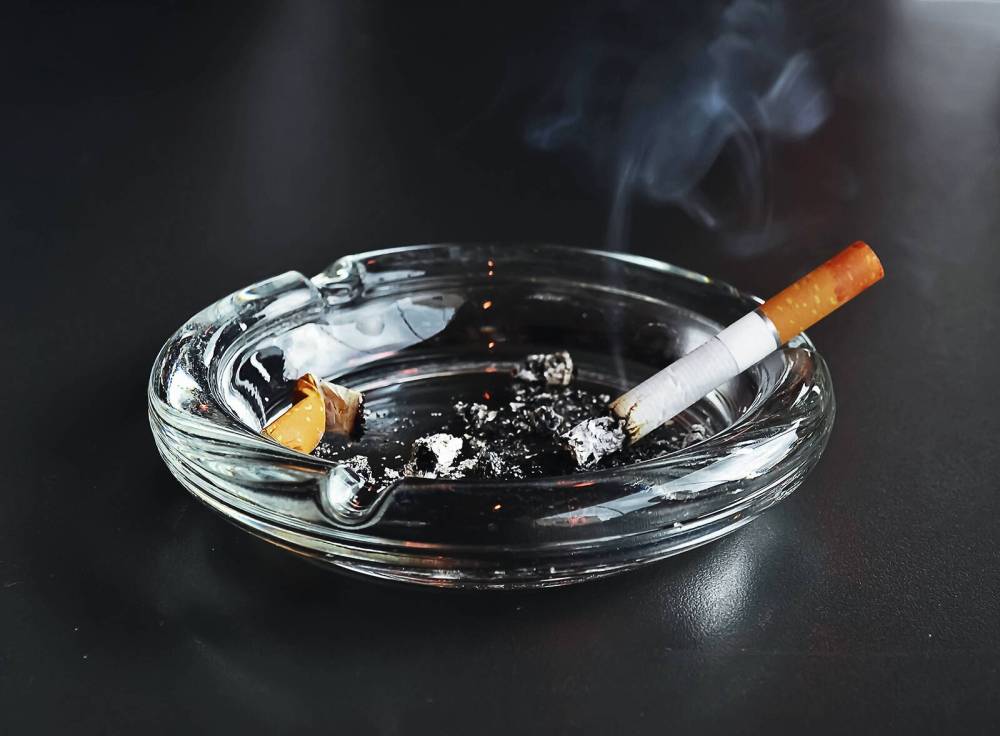
Columnists Andrew Halayko and Christopher Pascoe say proceeds from the tabacco settlement should be used to wipe out tobacco and nicotine addiction once and for all. (File)
The windfall is Manitoba’s share of the historic lawsuit fought over many years by the provinces against the major tobacco companies. The dollar amount is intended to address some of the costs of health care required by people using the companies’ products.
The government of Manitoba has already received $280 million this year, and is due in total over coming years, about $1.1 billion of the $32.5-billion settlement.
At the same time, Premier Wab Kinew has announced his government is moving ahead with a much-needed new cancer centre for the province, located in Winnipeg, with all of the estimated $1-billion cost to come from the tobacco settlement funds.
At first glance, it might sound appropriate to exclusively use payments from tobacco companies to build a new cancer centre. There’s no doubt the province needs one.
But the settlement funds also give us a unique opportunity to do something to benefit future generations by investing a portion of it toward getting Manitobans to never start or to stop using commercial tobacco products.
The need for the province to introduce programs to end commercial tobacco use and its resulting myriad of devastating consequences is outlined clearly in the tobacco settlement itself — and it emphasizes that tobacco prevention and reduction initiatives fall within the purview of provinces and territories.
With the settlement funds, Manitoba has every reason and the means to launch ambitious plans and programs with the goal of — within a generation — creating a tobacco-free and nicotine-free population. This would also reduce the burden on health-care services to treat its consequences.
Tobacco is the only legal consumer product that kills up to half its users when used exactly as intended. It not only causes multiple types of cancer, but it also causes or exacerbates heart, stroke, lung disease and other conditions like diabetes.
Prevention of disease is a far more effective and economical approach than treating disease after it emerges. This is particularly important in the context of cigarette smoking, which is the No. 1 risk factor globally for lung, heart and cardiovascular disease and for deaths from these disorders.
The unfortunate fact is that in 2024, 11.2 per cent of Manitoba adults were current smokers. That’s one of every nine adults.
Tobacco products remain the leading preventable cause of disease and death in Manitoba and Canada, killing 1,525 Manitobans each year and leaving at least 45,000 residents suffering from adverse health conditions due to commercial tobacco use.
The province is also facing a youth vaping epidemic, with more than one in four (27 per cent) of Manitobans in grades 10-12 using vaping products containing nicotine and one in 10 (10 per cent) in grades 7-9.
We are creating a whole new generation addicted to nicotine through vaping. They are also at a higher risk of becoming tobacco users, since youth who vape are three times more likely to start smoking.
But we can change the future and now we have the financial means to do so if we act wisely.
We can and must invest a portion of the tobacco settlement money into the programs necessary to eventually create a Manitoba without nicotine addiction — and significantly lower our future health-care burden while improving the lives of Manitobans.
We can and should build a new cancer centre. But this should come with complementary and synergistic efforts to protect the long-term well-being of Manitobans by investing now to ensure we end the devastation of tobacco and nicotine addiction once and for all.
» Andrew Halayko, PhD, is a researcher in lung disease at the University of Manitoba’s Max Rady College of Medicine and a Canada Research Chair in Lung Pathobiology and Treatment. Christopher Pascoe, PhD, is an associate professor in the department of physiology and pathophysiology at the Max Rady College of Medicine, University of Manitoba.