
Reverse migration a perilous journey
Advertisement
Read this article for free:
or
Already have an account? Log in here »
We need your support!
Local journalism needs your support!
As we navigate through unprecedented times, our journalists are working harder than ever to bring you the latest local updates to keep you safe and informed.
Now, more than ever, we need your support.
Starting at $15.99 plus taxes every four weeks you can access your Brandon Sun online and full access to all content as it appears on our website.
Subscribe Nowor call circulation directly at (204) 727-0527.
Your pledge helps to ensure we provide the news that matters most to your community!
To continue reading, please subscribe:
Add Brandon Sun access to your Free Press subscription for only an additional
$1 for the first 4 weeks*
*Your next subscription payment will increase by $1.00 and you will be charged $20.00 plus GST for four weeks. After four weeks, your payment will increase to $24.00 plus GST every four weeks.
Read unlimited articles for free today:
or
Already have an account? Log in here »
Since February 2025, thousands of Venezuelan asylum-seekers have been turned away from the United States-Mexico border and denied the right to apply for protection in the U.S. Along with other Venezuelans who were living in the U.S. and have been deported, they’ve been forced to head south, either back to Venezuela or to other countries in Central and South America.
This phenomenon — commonly described as reverse migration — raises important questions about the capacity or willingness of countries in the region to ensure the safety and security of these migrants.
As part of ongoing research, we talked to asylum-seekers and collected their insights during our field work in Costa Rica in November and December 2025. Our interviews revealed that those who abandoned the hope of crossing into the U.S. made the decision for many reasons.
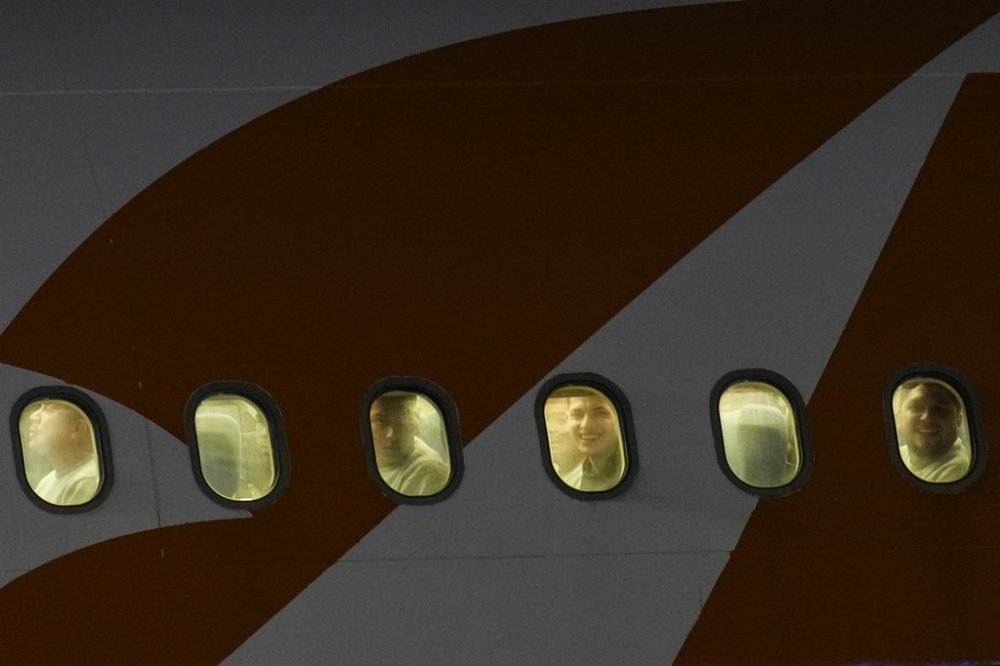
Expecting a better life in Venezuela was not among them. Instead, many faced repeated obstacles along the way, which accumulated over time into what can be described as journey fatigue.
Exhaustion
The migrants we interviewed experienced physical exhaustion from long periods of waiting, economic hardship, fear and incidents of violence in Mexico, as well as fraud and theft, while access to institutional or humanitarian support steadily declined.
The final blow for most of them came from changes in the U.S. asylum and temporary protection policies. These included the termination of the two‑year humanitarian parole program, the freezing of asylum application processing for Venezuelans and nationals of 18 other countries and the inclusion of Venezuelans in travel bans restricting entry for citizens of 39 countries.
These policy shifts were combined with the abrupt cancellation of what was known as the CBP One mobile application and all previously approved appointments made using the app.
The U.S. Customs and Border Protection’s app allowed asylum-seekers to submit biographic information to set up an appointment prior to their scheduled arrival at a port of entry. This sudden change dashed the hopes of thousands who had been waiting for an opportunity to request asylum at the U.S. border.
Decisions to head back south rather than continue pursuing entry into the U.S. are made under conditions of high uncertainty. Migration regimes, support infrastructure and facilitation networks change rapidly — some disappearing as others emerge — and often without clear mechanisms for sharing information among migrants or those trying to help them.
In this environment, many people remain trapped for months in waiting spaces, with no real possibility of moving forward and no means of survival while waiting, resorting to begging or informal work.
A Venezuelan couple we interviewed at the Costa Rica–Panama border described how they often sang in restaurants or begged to feed their family, pay for bus travel between countries, and, at times, secure a roof over their heads when shelters run by religious organizations were unavailable.
Not safe to return
For international organizations and receiving countries, “voluntary return” is often presented as a preferred solution.
The International Organization for Migration (IOM) administers the Assisted Voluntary Return and Reintegration (AVRR) Program. As we learned during our Costa Rican field work, the IOM facilitates the return of Venezuelans to their home country when they reach Panama.
But whether a return is feasibile depends directly on conditions in the country of origin. Most Venezuelan migrants we interviewed didn’t think it was safe for them to return home.
U.S. intervention only creates more uncertainty
The recent U.S. intervention in Venezuela and the capture of President Nicolás Maduro did nothing to change this political scenario.
Instead, it has injected regional uncertainty that transcends Venezuela’s borders. After Maduro’s capture, Vice-President Delcy Rodríguez assumed the role of interim president, suggesting the country’s authoritarian regime can survive the U.S. intervention.
The Trump administration says it will oversee Venezuela during an unspecified transition period, but the implications are unclear.
The post-invasion situation does not include the transition of power to opposition leaders like González Urrutia or Corina Machado, even though Machado just handed over her Nobel Peace Prize to U.S. President Donald Trump.
Settling elsewhere
Within this tense and uncertain climate, many displaced Venezuelans heading south consider settling in Chile, Colombia or Costa Rica as alternative destinations.
That’s despite the fact that these countries lack the institutional capacity and infrastructure to absorb sustained reverse migration and are showing growing signs of rejecting Venezuelans.
This is evident with the recent election of Jose Antonio Kast in Chile, whose campaign focused on controlling “irregular immigration,” threatening mass deportations of migrants — mostly Venezuelans — and fuelling a climate of social hostility.
As we found during our research in Costa Rica, the country’s asylum system is stretched to the limit and appointments to put in a refugee claim can take more than two years to be scheduled, not counting the adjudication process.
These delays and the uncertainty of outcomes for migrants cause anxiety among displaced people and discourage them from attempting to seek protection in Costa Rica.
Research on transit migration to the U.S. or Europe has shown that these movements are fragmented, multi-directional and often circular. Policy changes — both in countries of destination and transit — new opportunities for social support or jobs, new intimate relationships or new information on possibilities of border crossing reshape migration trajectories.
Venezuelan reverse migration reflects similar dynamics, but unfolds in even more uncertain and precarious ways because the capacity of various states to meet the needs of displaced people is severely limited. This leads to even more severely fragmented routes for return migrants than for those travelling north.
Global North must step up
In light of these dynamics, it’s crucial to reaffirm the international protection regime and to recognize the historical responsibility of northern countries — including the United States, Canada and EU member states — to ensure effective access to asylum for people displaced by violence, conflict and persecution.
Any reform of regional migration governance must begin from this core principle.
We therefore call on governments, international organizations, humanitarian groups and civil society to uphold international protection regimes and to design responses that reflect the complex realities of shifting migration flows and the rights of people on the move.
» Guillermo Candiz is an assistant professor of human plurality at Université de l’Ontario français. Tanya Basok is a professor of sociology at the University of Windsor.
» This column was originally published at The Conversation Canada: theconversation.com/ca