
Navigating exam season for parents
NEELIN VIEWS
Advertisement
Read this article for free:
or
Already have an account? Log in here »
We need your support!
Local journalism needs your support!
As we navigate through unprecedented times, our journalists are working harder than ever to bring you the latest local updates to keep you safe and informed.
Now, more than ever, we need your support.
Starting at $15.99 plus taxes every four weeks you can access your Brandon Sun online and full access to all content as it appears on our website.
Subscribe Nowor call circulation directly at (204) 727-0527.
Your pledge helps to ensure we provide the news that matters most to your community!
To continue reading, please subscribe:
Add Brandon Sun access to your Free Press subscription for only an additional
$1 for the first 4 weeks*
*Your next subscription payment will increase by $1.00 and you will be charged $20.00 plus GST for four weeks. After four weeks, your payment will increase to $24.00 plus GST every four weeks.
Read unlimited articles for free today:
or
Already have an account? Log in here »
Every year in late January and mid-June, exams roll around. Highschoolers pour all their time and energy into studying for 20 per cent of their mark, or ignoring it completely until the very last minute. But no matter how the teenager decides to handle it, the stress that they feel affects everyone in the household.
From the perspective of a teenager, parents often say or do things that may be irritating. Although these actions are usually with the intent to help, they can unintentionally increase stress rather than reduce it. To keep a teenager’s stress level to a minimum, a parent will want to avoid helping their teenager without their consent. According to a study conducted at Newport Academy, teenagers with parents who overhelped “experienced significantly higher levels of anxiety and depression.” Though this statement is general, it can be applied to exams. On the other hand, some teens may not know how to ask for help and may appreciate receiving the help that they did not ask for. It is best, therefore, if the parents ask their teenager how they can help, or what they can do to help.
To ask a teenager if they want help, a parent may need to be gentle in their tone, or may need to ask in a tone like they do when asking someone what they think of the weather. A simple “How can I help?” may go a long way with some teenagers, while others may need either a less or a more direct approach. Some teens may say they do not want any help, and others may want the parent to cover all the material with them. Some may want a parent or sibling to work on something totally different while being in the same room, while others may want the internet to help them. Small check-ins are options as well to keep the teenager on track; however, they would have to be very infrequent so as not to disrupt the flow of the teenager’s studies.
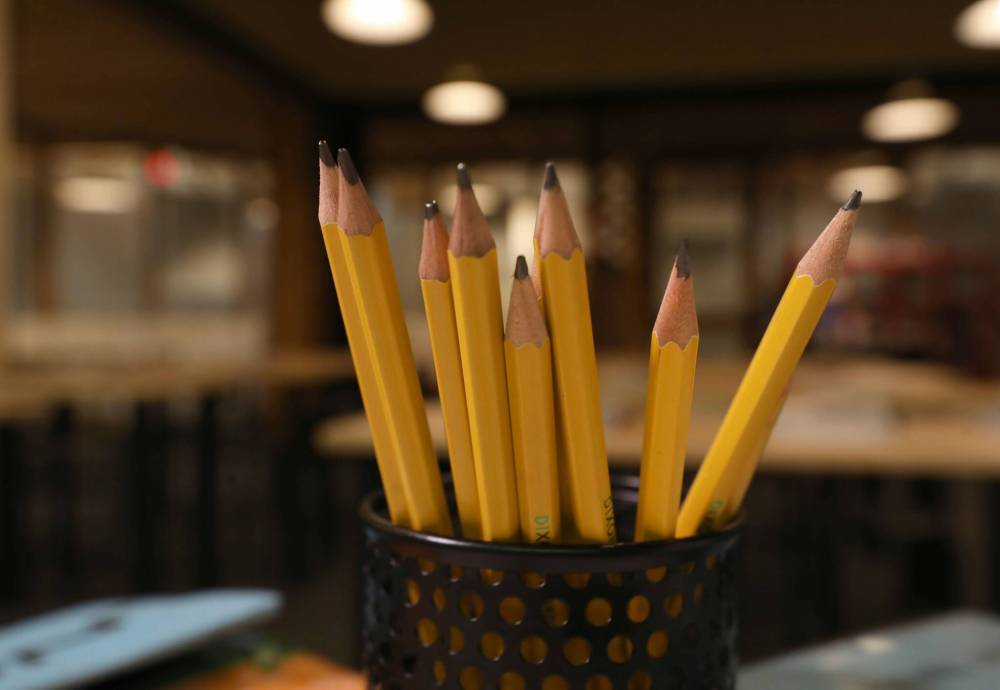
Kitt Hughes has some tips for parents and guardians who want to help their teens study for their exams. (Ruth Bonneville/Winnipeg Free Press files)
If the parents help the teenager, they should allow them to talk about what is troubling them, whether it be on topic or not. According to an article written by Laura Williamson on heart.org, healthy venting reduces stress and improves psychological health, and having a good support system can also be linked to improved psychological health. With that being said, the parents should always ask the teenager if they would like advice and should respect the teen’s decision if they say no. Unwanted suggestions could increase pressure. Clear communication about the type of help the teenager wants is an absolute must in ensuring that parental involvement remains helpful rather than overwhelming.
If the teenager asks for time to study alone, the check-ins may not be viable in this scenario, and it is best for the parents to respect the teenager’s privacy. With this mentioned, it should be noted that parents should encourage breaks in studying if the teen is studying for huge amounts of time. Though it is important for teenagers to have independence as they prepare themselves for life after high school, they should get gentle reminders from their parents that rest and time to process are important.
While leaving a teenager to their own resources is a good strategy, it should be balanced with parental support and lots of communication between the parents and the teen. Parents can offer advice and give help while respecting the teen’s boundaries; at the same time, allowing the teen to express their feelings can greatly decrease their stress levels during exam times, and thereby reduce the stress for everyone in the household.
» Kitt Hughes is a Grade 12 student at École secondaire Neelin High School.