
The war on empathy leads to barbarism
Advertisement
Read this article for free:
or
Already have an account? Log in here »
We need your support!
Local journalism needs your support!
As we navigate through unprecedented times, our journalists are working harder than ever to bring you the latest local updates to keep you safe and informed.
Now, more than ever, we need your support.
Starting at $15.99 plus taxes every four weeks you can access your Brandon Sun online and full access to all content as it appears on our website.
Subscribe Nowor call circulation directly at (204) 727-0527.
Your pledge helps to ensure we provide the news that matters most to your community!
To continue reading, please subscribe:
Add Brandon Sun access to your Free Press subscription for only an additional
$1 for the first 4 weeks*
*Your next subscription payment will increase by $1.00 and you will be charged $20.00 plus GST for four weeks. After four weeks, your payment will increase to $24.00 plus GST every four weeks.
Read unlimited articles for free today:
or
Already have an account? Log in here »
The commencement by some Americans of a “war on empathy,” not coincidental with the second Donald Trump administration, is shock, but not awe.
While discussing immigration on The Joe Rogan Experience podcast last year, Elon Musk declared that “the fundamental weakness of Western civilization is empathy” which people “exploit.” Adding that “we’ve got civilizational suicidal empathy going on,” he conjured up horrors of white Christian nation-alist great replacement theory.
It served as a dutiful call to arms, and the American political and religious right mobilized on multiple fronts.
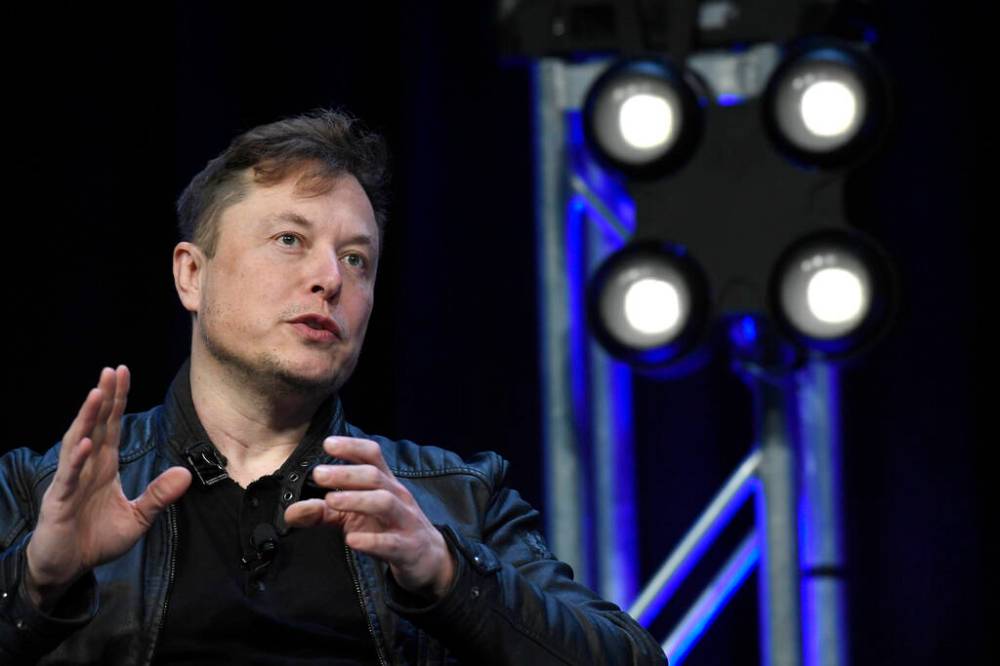
Dennis Hiebert defends empathy from Elon Musk (shown here), who has declared empathy “the fundamental weakness of Western civilization.” (File)
Sample recent publications include “Toxic Empathy: How Progressives Exploit Christian Compassion” (2024) by podcaster Allie Beth Stuckey, “The Sin of Empathy: Compassion and Its Counterfeits” (2025) by pastor Joe Rigney, and “Suicidal Empathy: Dying to be Kind” (2026) by professor Gad Saad. The image on the front cover of Suicidal Empathy is a sheep holding a protest sign demanding “Free the Wolves.”
Other commanders of this ongoing culture-war blitzkrieg include pastor Josh McPherson on his Stronger Man Nation podcast: “Empathy almost needs to be struck from the Christian vocabulary … Empathy is dangerous. Empathy is toxic. Empathy will align you with hell.”
Of course, the war on empathy turns on its conflicting definitions. Translated from the German term Einfühlung (“infeeling”), empathy is best understood as feeling sorry with another person.
As both a cognitive and affective process of imagining ourselves in their position, it is seeing and feeling their pain through their senses, vicariously experiencing the same circumstances, thoughts, and feelings they are living. It is the moral imagination and moral imperative to walk a mile in their shoes.
Notably, empathy is not mere sympathy, which is standing still at some distance and feeling sorry for the other. But neither does empathy alone reach the level of compassion, which is doing something to relieve the suffering of the other, an activated “common passion” that is the opposite of indifferent bystander apathy. Empathy can motivate the altruistic action of compassion, whereas mere sympathy does not, and as such empathy is a useful tool, a means toward the end of compassion.
The essence of recent assaults on empathy is the insistence that feeling with another person can be misguidedly harmful to the other by legitimating their vice or self-harm, and can thereby ultimately be both individually and collectively self-destructive. And in defence of such fear-mongering, they accuse progressives of “empathy-mongering.”
The irony, if not hypocrisy, of these assaults is that those who wage them do so selectively, and unabashedly promote empathy for their own political, religious, and racial coalition.
In their mind, they are the real victims in current society deserving empathy, not the immigrants living next door. Trump and his warriors, they say, are the truly embattled, persecuted, and aggrieved, hence it is supposedly only tribal empathy that is useful and good.
However, emotion-driven decisions and actions are no more or less reliably virtuous than motivated reasoning or authority-driven decisions and actions, because the latter are equally vulnerable to being made and taken according to self- or group-interest.
And unless we try to understand and feel what others understand and feel, we cannot know them well, much less know how to relate to them most justly.
Empathy enables us to be more aware of and less arrogant about the diversities of human experience of reality, and is often the voice of good conscience that ought not be silenced.
Thankfully, some recent reports from the front of the war on empathy seek its cessation.
For example, in “Empathy: A History,” historian of psychology Susan Lanzoni concluded that “the disparagement of empathy is … a deliberate effort to set up a permission structure to dehumanize others.” In “Loathe Thy Neighbor,” journalist Julia Carrie Wong concluded that “we are witnessing the construction of the ideological architecture to excuse violence and suffering on a mass scale.”
Decades earlier, having escaped the horrors of the Holocaust, Jewish-German political theorist Hannah Arendt reported on the trial of Nazi official Adolf Eichmann.
She described him not as a lunatic monster, but rather as a thoughtless bureaucrat, the epitome of “the banality of evil” who committed atrocities through simple obedience and lack of empathy.
Contrary to Musk, she concluded that “the death of human empathy is one of the earliest and most telling signs of a culture about to fall into barbarism.”
» Dennis Hiebert teaches in the department of sociology and criminology at the University of Manitoba. This column was originally published in the Winnipeg Free Press.