
Why don’t we legalize, regulate and stigmatize drug use?
Advertisement
Read this article for free:
or
Already have an account? Log in here »
We need your support!
Local journalism needs your support!
As we navigate through unprecedented times, our journalists are working harder than ever to bring you the latest local updates to keep you safe and informed.
Now, more than ever, we need your support.
Starting at $15.99 plus taxes every four weeks you can access your Brandon Sun online and full access to all content as it appears on our website.
Subscribe Nowor call circulation directly at (204) 727-0527.
Your pledge helps to ensure we provide the news that matters most to your community!
To continue reading, please subscribe:
Add Brandon Sun access to your Free Press subscription for only an additional
$1 for the first 4 weeks*
*Your next subscription payment will increase by $1.00 and you will be charged $20.00 plus GST for four weeks. After four weeks, your payment will increase to $24.00 plus GST every four weeks.
Read unlimited articles for free today:
or
Already have an account? Log in here »
The violence in Mexico following the killing of the head of a drug cartel illustrates again the failure of the War on Drugs. Drugs are more plentiful and deadly than ever. Drug dealers are more powerful and violent than ever. And harm reduction measures like more needle disposal containers in our community signal the acceptance of widespread drug use. But we can delve into our history to discover better models. These involve legalization, regulation and stigmatization.
So first, we citizens must call out our political leaders for pretending that the War on Drugs can succeed. Last week, the provincial NDP government and the federal Liberal government announced a new drug trade task force. The provincial Conservatives said that this was just a recycling of their ideas. But the justice minister proclaimed that this task force would finally “really go after those organized crime groups.”
Yet the NDP, in a policy statement a few years ago, said the opposite. The party interviewed “experts across both health care and the justice system.” Assured anonymity, these individuals spoke freely. The conclusion: the “War on Drugs has been shown to be counterproductive and has actually coincided with an increase in drug use.”
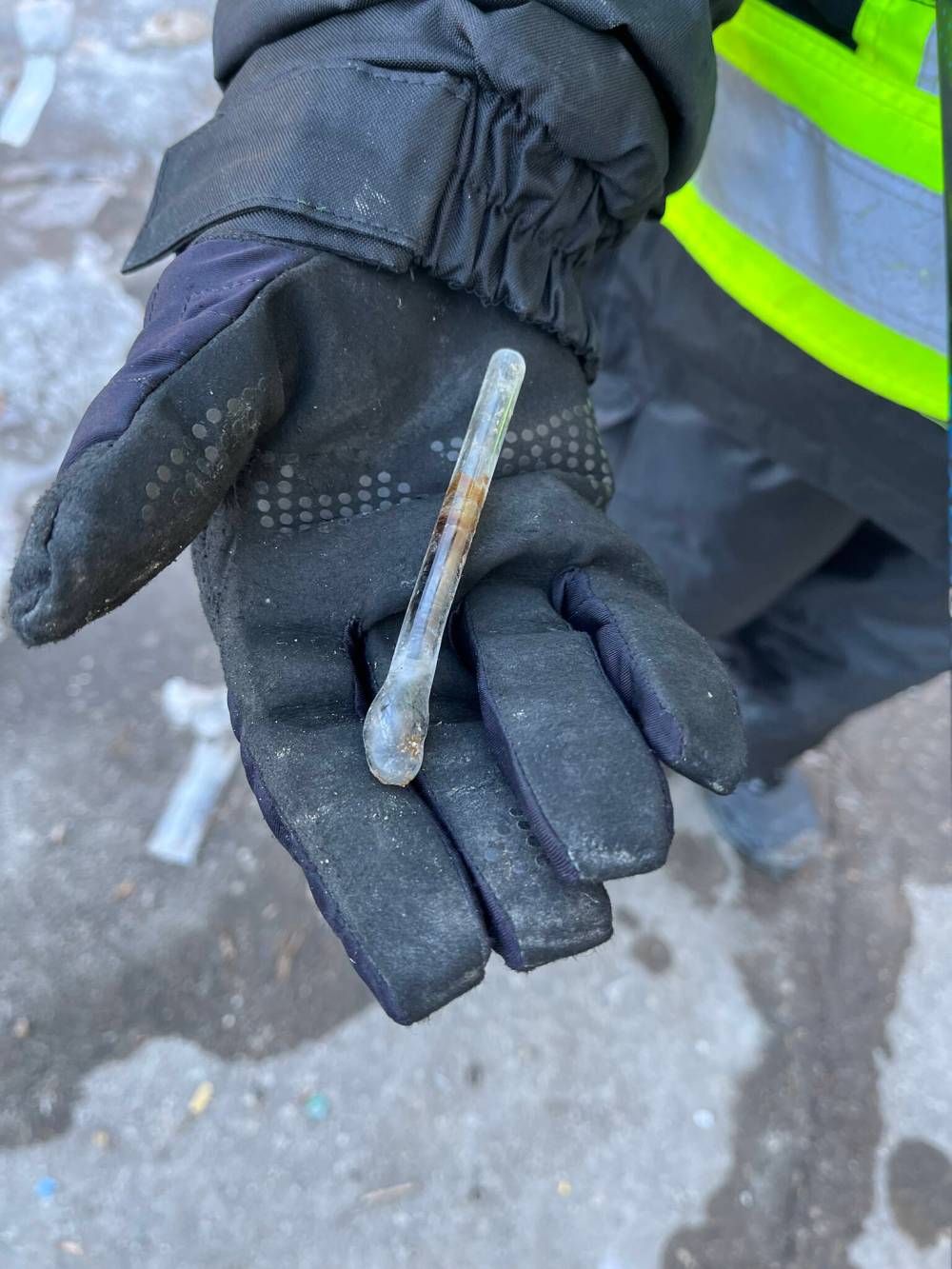
Bear Clan members gather needles and drug paraphernalia during a patrol of Winnipeg’s North End in March 2023. (File)
We can acknowledge the complexity of the problem of drug addiction. There will be no ideal solution. And let’s acknowledge the stated good intentions. Many proposals have been advocated. These include ramping up the War on Drugs, decriminalization, legalization, harm reduction and compulsory and voluntary treatment. All these ideas have been advanced with the aim of helping those addicted and increasing the well-being of the general society.
But we must choose to support some approaches and not others. So, what should we do? A year ago, I made a proposal based on Canada’s attempt to mollify the Americans by spending $1 billion on reducing fentanyl crossing the border into the U.S. I suggested that this was largely a non-existent problem. And this performance would not mollify the Americans anyway.
Instead I proposed spending the $1 billion to address the real issues. Like: Why do some people become addicted to drugs? What programs best help folks get off drugs? I continue to think this would be a good place to start.
We can look into our history to consider some good ideas. More than a century ago, feminist activists identified what was then often ignored: irresponsible drinking of alcohol. Many men got drunk in bars, squandering the family’s grocery money. These men then came home and beat up their wives and children. But citizens learned over the years that the proposed solution — the prohibition of alcohol — didn’t work.
Instead, we found what does work: legalization, regulation and stigmatization. Alcohol was legalized, but its purchase and use was regulated. And behaviours like drinking to excess and drunk driving were stigmatized.
Another example is smoking. We oldsters remember a time when smoking was allowed just about everywhere. It took years, but we greatly reduced smoking by a combination of regulation, taxation, education and treatment.
Also helping to reduce smoking was stigmatization. Instead of smoking being normalized and even glamorized, it was stigmatized. Horrifying pictures on cigarette packages showed the reality of the habit. Society was saying bluntly to smokers: your addiction is filthy and disgusting and pollutes the environment for everyone else.
But remember: it was not the people who were being stigmatized, it was the behaviour. Society was not saying to smokers that they were bad people. Society was saying that the smoking behaviour was bad.
These experiences in our history are applicable today. A policy of legalization with regulation is an option for drugs. And notice the difference between legalization and decriminalization. Legalization means that drugs would be legal, but their purchase and use would be regulated. Along with these policies goes stigmatization.
Decriminalization means society stands back and lets anyone possess and use drugs. This can be seen as part of a broader movement to normalization. For instance, placing more public needle disposal containers throughout Brandon has the objective of harm reduction and to “remove stigma.”
In summary, let’s think of an approach to drugs based on the model of how we deal with smoking. Imagine society saying to drug users what we now say to smokers: these substances will be legalized and regulated; you have our sympathy and we would like to help you quit; your substance use will not be permitted in most locations because this behaviour endangers our health and safety.
Today, we look back at our society’s widespread, unregulated drinking and smoking and ask: “What were they thinking?”
In the future, people will look back at our society’s widespread, unregulated drug use and ask: “What were they thinking?”