
The evolution of human rights over 50 years
» NEELIN VIEWS
Advertisement
Read this article for free:
or
Already have an account? Log in here »
We need your support!
Local journalism needs your support!
As we navigate through unprecedented times, our journalists are working harder than ever to bring you the latest local updates to keep you safe and informed.
Now, more than ever, we need your support.
Starting at $15.99 plus taxes every four weeks you can access your Brandon Sun online and full access to all content as it appears on our website.
Subscribe Nowor call circulation directly at (204) 727-0527.
Your pledge helps to ensure we provide the news that matters most to your community!
To continue reading, please subscribe:
Add Brandon Sun access to your Free Press subscription for only an additional
$1 for the first 4 weeks*
- Enjoy unlimited reading on brandonsun.com
- Read the Brandon Sun E-Edition, our digital replica newspaper
*Your next Free Press subscription payment will increase by $1.00 and you will be charged $20.95 plus GST for four weeks. After four weeks, your payment will increase to $24.95 plus GST every four weeks.
Read unlimited articles for free today:
or
Already have an account? Log in here »
Hey there, time traveller!
This article was published 23/03/2026 (203 days ago), so information in it may no longer be current.
Fifty years ago today, one of the most important treaties in the realm of international law came into effect.
The International Covenant on Civil and Political Rights (ICCPR) is one of the three core documents that form the International Bill of Human Rights, alongside the International Covenant on Economic, Social, and Cultural Rights (ICESCR) and the Universal Declaration of Human Rights (UDHR). Notably, the ICCPR marks the first instance of a treaty where human rights are codified as law. The ICCPR is a milestone for the progress in multilateral co-operation and the promotion of human rights around the world.
The ICCPR was based off the Universal Declaration of Human Rights, which established a collection of human rights that the UN Commission on Human Rights deemed essential but were not legally binding. The creation of these rights stemmed from a collective desire not to repeat the atrocities seen in the Second World War.
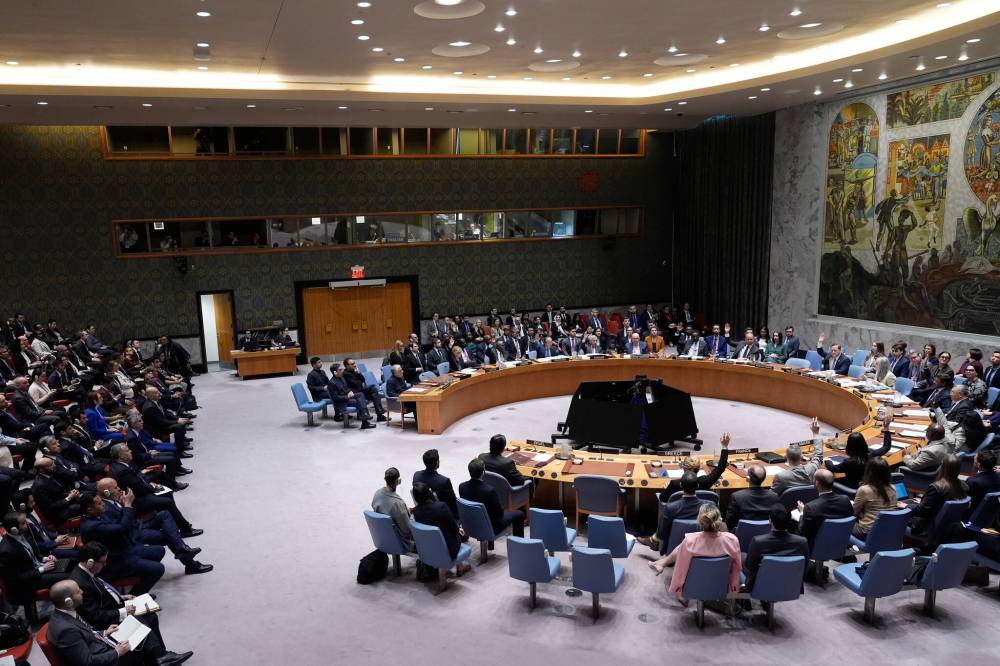
Members of the Security Council vote on a resolution at United Nations headquarters, Wednesday, March 11, 2026. It has been 50 years since the UN adopted the International Covenant on Civil and Political Rights. (The Associated Press files)
Eighteen years after the UDHR was adopted, the ICCPR was adopted by the UN, and 10 years after that, on March 23, 1976, the treaty became legally binding after it was ratified by 35 countries. Now, as of this writing, 175 countries have ratified the treaty. The lengthy time between the adoption of the treaty and its coming into effect can be attributed to ideological divisions between Eastern and Western blocs of power during this time. According to research from Stanford University, the West favoured the ICCPR, while the Eastern Bloc favoured the ICESCR, as it emphasized the right to work or education.
Originally, the two covenants were supposed to be unified. Despite being supposedly binding, many countries that have ratified the treaty have made reservations or specific interpretations of the ICCPR that align with their own internal constitution or laws. For example, countries like the United States and the United Kingdom, which have over 10 reservations each, call into question the integrity of these kinds of international laws if countries can simply exempt themselves to such a degree from their regulations. In addition, the UN points out that the rights as set out in the ICCPR are limited only in circumstances that threaten a state’s national security.
The credibility of the United Nations and its subsequent resolutions are constantly under scrutiny, especially when countries like Russia, which have ratified the ICCPR, blatantly violate the treaty’s contents by suppressing political opposition and waging war in Ukraine. Because Russia is a permanent member of the UN Security Council, there is very little the UN can do to enforce these rights, which can lead to a decline in confidence regarding the organization.
However, this erosion in trust is partly due to a fundamental misunderstanding of what the UN actually is. Often people conceptualize it as one unified governing entity, when in reality it is a framework that fosters relations between the 193 member states, and, as such, it is not some international police force. However, the member states can co-operate and diplomatically pressure countries that violate human rights, or in some cases the Security Council can issue economic sanctions or embargos. It’s important to note that, in extreme cases like genocide, the UN has authority to use force to prevent it.
Overall, the ICCPR is a foundational document in history, marking the transition from the fragmented, chaotic world order prior to the Second World War to that of the rules-based international order seen in the years since. The 50th anniversary of the ICCPR is a perfect time to reflect on Canada’s position in an international landscape characterized by increased human rights abuses and an erosion in multilateral relations between countries. How can Canada navigate this changing landscape while affirming its support for human rights?
» Colin Shaw is a grade 12 student at École secondaire Neelin High School.