
Energy security, not more gas tax cuts
Advertisement
Read this article for free:
or
Already have an account? Log in here »
We need your support!
Local journalism needs your support!
As we navigate through unprecedented times, our journalists are working harder than ever to bring you the latest local updates to keep you safe and informed.
Now, more than ever, we need your support.
Starting at $15.99 plus taxes every four weeks you can access your Brandon Sun online and full access to all content as it appears on our website.
Subscribe Nowor call circulation directly at (204) 727-0527.
Your pledge helps to ensure we provide the news that matters most to your community!
To continue reading, please subscribe:
Add Brandon Sun access to your Free Press subscription for only an additional
$1 for the first 4 weeks*
*Your next subscription payment will increase by $1.00 and you will be charged $20.00 plus GST for four weeks. After four weeks, your payment will increase to $24.00 plus GST every four weeks.
Read unlimited articles for free today:
or
Already have an account? Log in here »
In the wake of U.S. and Israeli attacks on Iran, oil and gas prices have surged, triggering what’s widely expected to be the worst energy crisis on record. Amid ongoing affordability challenges, governments are reaching for policy tools to soften the blow for consumers.
Now, Manitoba Premier Wab Kinew has suggested that another gas tax cut may be under consideration to temper the effects of high gas prices. In the past few weeks, the controversy surrounding the province’s 2024 gas tax “holiday” has been revived after the premier provocatively declared the policy to be “the most important thing that a provincial government ever did” in Manitoba.
From an affordability perspective, a gas tax cut has major drawbacks.
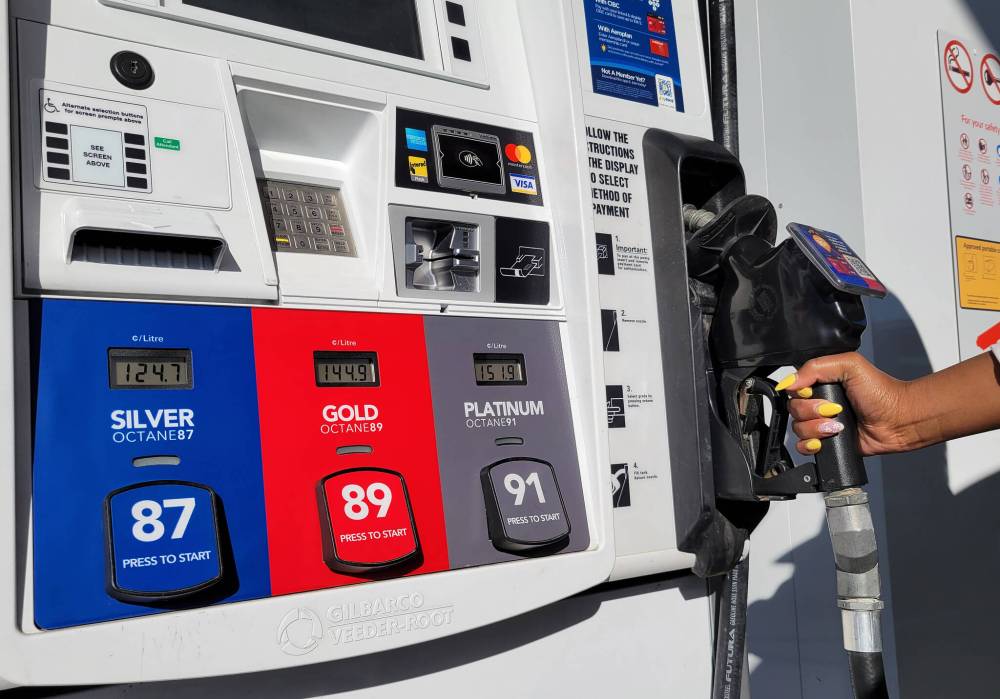
A gas station north of Newcastle, Ont. displays it’s gasoline per litre prices as a customer finishes pumping gas on April 1. In Manitoba, Premier Wab Kinew has hinted at another gas tax break to deal with high prices at the pump. However, Laura Cameron argues that’s not the sustainable way to go. (The Canadian Press)
It only benefits drivers, disproportionately those with multiple and/or large vehicles. The savings provided by a gas cut are dwarfed by the rising prices, which the policy does nothing to address.
And, it encourages more fossil fuel use at a time when the insecurity and price volatility of oil andm gas lay bare the need to reduce our dependence on them as quickly as possible.
The irony is, the volatility of fossil fuel markets have been a primary driver of unaffordability over the last five years. When Russia invaded Ukraine in 2022, oil prices skyrocketed, triggering record high inflation and cost of living. The Centre for Future Work calculated that between 2022 and 2024, inflated fossil fuel prices cost Canadian households an extra $12,000 on average.
For a period in 2021-2022, high energy prices were responsible for a third of Canada’s overall inflation rate, according to the International Institute for Sustainable Development.
The high prices we feel now at the pump are only the tip of the iceberg. The International Energy Agency has warned that this oil and gas crisis will be worse than those of 1973, 1979 and 2022 combined. And the price of fossil gas that about half of Manitobans still rely on to heat our homes may also rise in the coming months.
Following the start of Russia’s war on Ukraine, Manitoba residential fossil gas prices increased significantly, climbing 40 per cent between February and November 2022, before coming back down.
The longer we rely on oil and gas for transportation, heating our homes, and growing food, the longer we will be on this price rollercoaster.
While we are forced to pay through the teeth, fossil fuel companies are making record profits, exacerbating inequality. A recent article tracking profits in the wake of the 2022 crisis found that American fossil fuel companies increased profits sevenfold over their pre-pandemic average, and half of profits claimed flowed to the wealthiest one per cent of individuals. Amidst today’s oil price shocks, the Canadian Centre for Policy Alternatives estimates that Canadian oil and gas companies are on track to triple their profits because of the war.
In the bigger picture, these short-term costs threaten to be dwarfed by the affordability impacts from climate change if we continue burning fossil fuels.
Rather than subsidizing the fuels that make things more expensive, Manitoba should take steps towards lasting energy security and affordability. And there are plenty of examples to learn from. In response to the current crisis, the U.K. government has mandated solar panels and heat pumps on all new houses. Australia and Pakistan have made public transit free. France and the Philippines are pushing forward with renewables and energy storage.
Countries that are further ahead in the clean energy transition are less vulnerable to the current fossil fuel crisis. In the face of the 2022 crisis, Spain instituted a windfall profits tax on oil and gas companies and used it to fund public transit and wind and solar roll out, which have made it substantially less vulnerable to the current crisis.
A 33 per cent windfall profit tax on Canadian oil and gas companies this year would raise $18 billion, according to the CCPA, which could fund long term energy solutions.
Energy security is now a major driver of the energy transition. We need to ramp up the things that will actually help reduce bills and bring us lasting security: heat pumps, retrofits, wind, solar, battery storage, public transit, and clean electricity grids. Instead of another $340 million gas tax cut, we could fund massive public transit expansion and fare relief, or provide about 7,000 ground source heat pumps at no-cost to low-income and rural households.
Manitoba is undoubtedly much more insulated from current price shocks than many parts of the world. Nonetheless, we will face impacts and the province will face a choice: to prolong our dependence on oil while providing marginal relief for drivers, or to drive a lasting shift away from fossil fuels targeted to those who need it most.
» Laura Cameron is the director of programs and strategy for Climate Action Team Manitoba. This column first appeared in the Winnipeg Free Press.