
Tax break misses small businesses
Advertisement
Read this article for free:
or
Already have an account? Log in here »
We need your support!
Local journalism needs your support!
As we navigate through unprecedented times, our journalists are working harder than ever to bring you the latest local updates to keep you safe and informed.
Now, more than ever, we need your support.
Starting at $15.99 plus taxes every four weeks you can access your Brandon Sun online and full access to all content as it appears on our website.
Subscribe Nowor call circulation directly at (204) 727-0527.
Your pledge helps to ensure we provide the news that matters most to your community!
To continue reading, please subscribe:
Add Brandon Sun access to your Free Press subscription for only an additional
$1 for the first 4 weeks*
- Enjoy unlimited reading on brandonsun.com
- Read the Brandon Sun E-Edition, our digital replica newspaper
*Your next Free Press subscription payment will increase by $1.00 and you will be charged $20.95 plus GST for four weeks. After four weeks, your payment will increase to $24.95 plus GST every four weeks.
Read unlimited articles for free today:
or
Already have an account? Log in here »
Manitoba’s small businesses understand the importance of affordability because they are living it themselves.
They see it every day when customers make careful choices at the till, stretch dollars a little further or delay discretionary spending. But business owners are facing those same pressures behind the counter. Every supply chain disruption, every added cost from rent to fuel, insurance or utilities, forces difficult decisions, and absorbing higher costs is rarely an option. Helping Manitobans manage rising food costs is a worthwhile goal, but how government chooses to do that matters.
The province’s recent decision to exempt certain grocery items from the provincial sales tax sends a troubling message to small businesses. Not because of the intent, but because it completely misses an opportunity to support our local small firms.
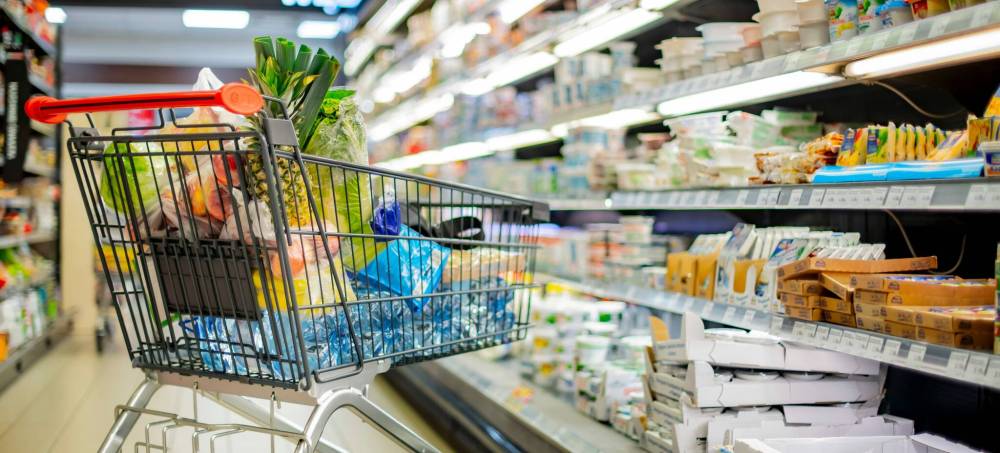
The Canadian Federation of Independent Business would like the Manitoba government’s PST exemption to apply to all businesses that sell eligible food items. (File photo)
Some grocery retailers will be able to offer the benefit of additional food items PST-free for Manitobans, but many small, independent retailers and restaurants will be forced to continue charging the PST.
Small mom-and-pop corner stores, independent bakeries, cafés, coffee shops and restaurants sell everyday essentials, yet they are excluded from the PST exemption, leaving them to compete against larger, tax‑advantaged grocery giants.
That matters at a time when small food businesses are grappling with rising ingredient costs and low consumer demand. When neighbourhood stores must continue charging PST while larger grocery chains do not, customers respond to the price difference. A person who might normally stop in for a bagel, sandwich or quick meal is encouraged to walk past the corner store and head elsewhere.
These are often the stores closest to where people live. For many low-income Manitobans, seniors and those without reliable transportation, neighbourhood convenience stores are not a luxury, they are a primary food source.
There is nothing fair about a system where the same grocery item is tax-free in one store and taxed in another because of size or postal code.
For restaurants and small food retailers alike, even modest shifts in purchasing behaviour can affect staffing levels, operating hours and long‑term viability. When government policy nudges customers elsewhere, it compounds challenges that are already difficult to manage.
Through the Canadian Federation of Independent Business’s discussions with Manitoba small business owners, we hear a consistent theme: Most (70 per cent) Manitoba small business owners don’t believe the government has their back. The PST grocery exemption fits that pattern. While some small businesses will qualify, the exclusions create confusion, distort consumer behaviour and make a clear statement that the government has chosen big business over small.
Instead of choosing economic winners and losers, Manitoba’s government should be doing everything it can to support small businesses and promote entrepreneurship. The need is urgent.
Manitoba is experiencing what the federation describes as an entrepreneurial drought, with Statistics Canada data showing more business exits than entries for six straight quarters. When more businesses are closing than opening, the consequences ripple outward: competition weakens, local services disappear and communities lose employers they depend on. Over time, that means fewer jobs, less innovation and a more fragile provincial economy.
Manitoba’s economy depends on its local businesses. Small to medium-sized firms make up 99 per cent of all businesses in Manitoba and employ 62 per cent of the private sector workforce, all while keeping dollars circulating close to home as 66 cents of every dollar spent local, stays in the local economy. When tax relief bypasses the corner store and lands only at the big box stores, it weakens the businesses many communities rely on most.
The federation is calling on the Manitoba government to extend the PST exemption to all retailers selling eligible food items, eliminate PST on dine-in and takeout restaurant meals and ensure affordability initiatives do not come at the expense of small, community-based businesses.
Manitoba has an opportunity to fix this policy before it takes effect and send a clear signal that small businesses are partners in building a more affordable province, not collateral damage in the process.
» Tyler Slobogian is a senior policy analyst for the Canadian Federation of Independent Business — Prairies and the North. This column previously appeared in the Winnipeg Free Press.