
Schools honouring my Dad making Canada more inclusive
Advertisement
Read this article for free:
or
Already have an account? Log in here »
We need your support!
Local journalism needs your support!
As we navigate through unprecedented times, our journalists are working harder than ever to bring you the latest local updates to keep you safe and informed.
Now, more than ever, we need your support.
Starting at $15.99 plus taxes every four weeks you can access your Brandon Sun online and full access to all content as it appears on our website.
Subscribe Nowor call circulation directly at (204) 727-0527.
Your pledge helps to ensure we provide the news that matters most to your community!
To continue reading, please subscribe:
Add Brandon Sun access to your Free Press subscription for only an additional
$1 for the first 4 weeks*
*Your next subscription payment will increase by $1.00 and you will be charged $20.00 plus GST for four weeks. After four weeks, your payment will increase to $24.00 plus GST every four weeks.
Read unlimited articles for free today:
or
Already have an account? Log in here »
In 1968, my late father Murray Sinclair was named valedictorian and athlete of the year at Selkirk Collegiate Institute in his hometown.
He was very proud of this accomplishment in his final year of high school — so proud, in fact, he brought it up all the time.
“Hey Dad, I got my PhD,” I remember proudly telling him after finishing at the University of British Columbia.
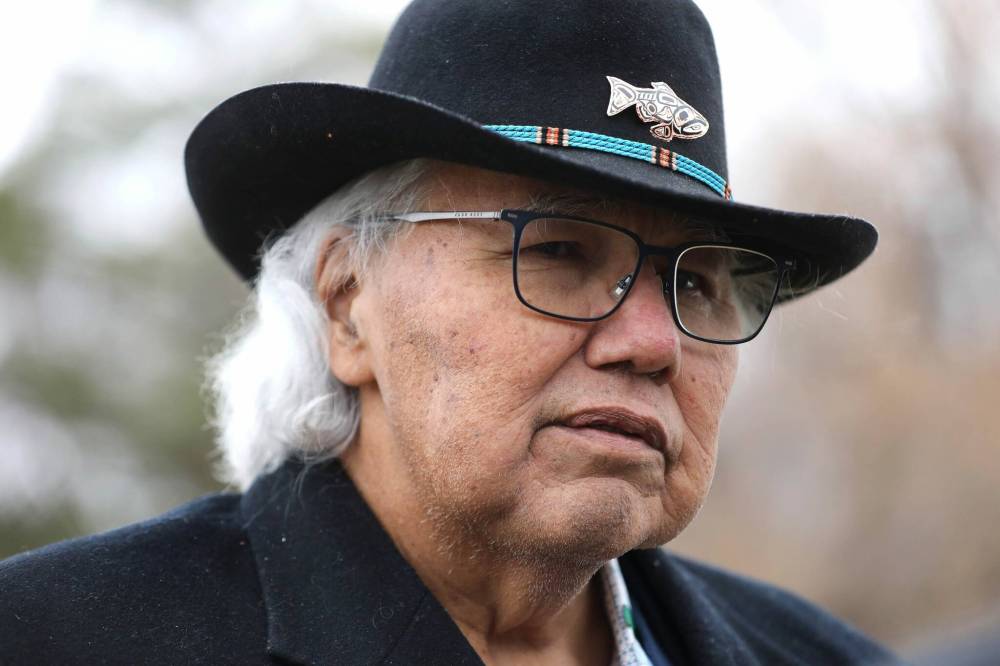
Murray Sinclair was one of Manitoba’s first Indigenous lawyers and was appointed the province’s first-ever Indigenous judge. École Selkirk Junior High will be renamed in his honour. (Ruth Bonneville/Winnipeg Free Press files)
“But were you valedictorian and athlete of the year at SCI in 1968?” he responded, with a smile.
This fall, SCI — now École Selkirk Junior High — will be renamed École Murray Sinclair Middle School in honour of my father’s accomplishments.
I can only imagine how many people Dad has told in the spirit world.
My father was one of Manitoba’s first Indigenous lawyers and, in 1988, was appointed the province’s first-ever Indigenous judge.
He co-led the Aboriginal Justice Inquiry, which studied the Manitoba justice system’s treatment of Indigenous peoples — a hugely controversial issue at the time.
He then went on to become lead commissioner of the Truth and Reconciliation Commission of Canada — which held public hearings, conducted research and concluded with 94 “calls to action” in order to help heal this country from the legacies of residential schools.
Dad ended his career as an independent senator in Ottawa, working to pass legislative changes in Indigenous child welfare, give federal recognition to Indigenous languages and rights, advocate for LGBTTQ+ peoples and for the protection of whales, dolphins, porpoises and other aquatic animals.
That last one makes sense if you know that he was, in the Anishinaabe tradition, fish clan — a scholar, mediator and healer.
My father died in November 2024.
Now, two Manitoba schools will bear his name next year.
The other is in Louis Riel School Division, where École Sage Creek Bonavista will be re-named École Mazina Giizhik after his spiritual name, which means: “He Who Speaks of Pictures in the Sky.”
In order to receive our family’s permission to use his name, both schools have had to make commitments to nurture healthy relationships between Indigenous peoples and Canadians and develop initiatives focused on building a healthy mind, body, heart and spirit.
A large part of this is in their sport and music programs — two of my father’s favourite parts of school.
Something we didn’t require — but I think Dad would love, as he spoke it — was that both schools are centred around French immersion initiatives.
It was his position that linguistic, cultural and political diversity were among the things that made Canada great.
It was this complexity and its foundation in Indigenous ideas, perspectives and cultures that he spent his entire life fighting for, accepting every invitation to boardrooms, classrooms and living rooms.
His favourite places to visit when he toured the country were the classrooms.
Dad’s plan was simple, yet profound.
It was to model, encourage and empower the idea that if we just communicated with one another, we could make this country truly great.
The Canada he grew up in was divisive, harmful and left out Indigenous peoples.
He believed it could be better if we just learned about one another.
If we told enough stories, listened and struggled together, he thought, we could understand and stand up for each other, share lands and resources and build schools and homes instead of jails.
That belief required a lot of humility, courage and, sometimes, tears. Most of all, it required laughter.
This work begins with investing in young people.
“It was education that got us in this mess,” he would often say, “so it will be education that will get us out of it.”
When Dad was named valedictorian at SCI in 1968 (and, sigh, athlete of the year), he delivered a speech referring to his graduating class “the first of Canada’s next centennial.”
Canada had just celebrated its 100-year anniversary a year earlier.
As is often the case in such speeches, he called upon his classmates to become everything they could be, to hope and to take forward everything they had gained in school.
A lot of people — my father and some of your parents and grandparents — started this process six decades ago.
They did it by encouraging us to see one another, to listen and to believe that everyone matters and has a place here.
We now are the most inclusive generation in Canada’s history; learning languages, celebrating cultures and recognizing each other’s heroes to a greater degree than ever before.
We are not perfect and have much more work to do, of course, but we are now sending our children, grandchildren and — soon — our great-great grandchildren to a much better place where they will mark the beginning of Canada’s third century.
They will have learned that the words, the names and the ideas we use matter.
» Niigaan Sinclair — the son of 1968 Selkirk Collegiate Institute valedictorian and athlete of the year Murray Sinclair — is Anishinaabe and a columnist at the Winnipeg Free Press.