
Manitoba misses the mark in creating inclusive classrooms
Advertisement
Read this article for free:
or
Already have an account? Log in here »
We need your support!
Local journalism needs your support!
As we navigate through unprecedented times, our journalists are working harder than ever to bring you the latest local updates to keep you safe and informed.
Now, more than ever, we need your support.
Starting at $15.99 plus taxes every four weeks you can access your Brandon Sun online and full access to all content as it appears on our website.
Subscribe Nowor call circulation directly at (204) 727-0527.
Your pledge helps to ensure we provide the news that matters most to your community!
To continue reading, please subscribe:
Add Brandon Sun access to your Free Press subscription for only an additional
$1 for the first 4 weeks*
- Enjoy unlimited reading on brandonsun.com
- Read the Brandon Sun E-Edition, our digital replica newspaper
*Your next Free Press subscription payment will increase by $1.00 and you will be charged $20.95 plus GST for four weeks. After four weeks, your payment will increase to $24.95 plus GST every four weeks.
Read unlimited articles for free today:
or
Already have an account? Log in here »
The United Nations Convention on the Rights of the Child recognizes that all children have the right to an education that helps them reach their full potential. It should develop their personalities, talents and mental and physical abilities. Actualizing these rights in the classroom, however, is not as easy in practice.
Every classroom includes learners with different strengths, challenges, identities and experiences. Some students are especially gifted while others have medical needs, require accommodations or manage complex issues that require additional, individualized support.
Under Manitoba’s appropriate educational programming legislation, students are entitled to educational programming that meaningfully supports both their academic and social lives. However, the number of students in Manitoba who require complex support in the classroom surpasses the number of resources teachers currently have available.
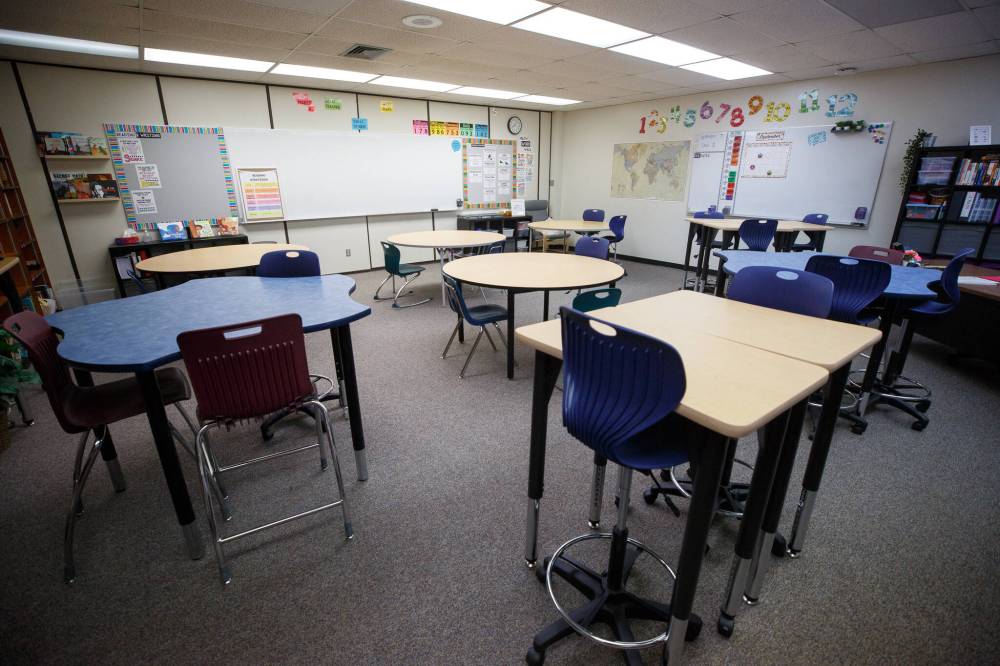
Manitoba Advocate for Children and Youth Sherry Gott writes that the “gap between students’ needs and available resources raises a critical challenge: what fundamental changes must be made to ensure truly inclusive classrooms?” (Mike Deal/Winnipeg Free Press files)
The Manitoba Teachers’ Society recently surveyed 3,400 Manitoba teachers about these gaps. Seventy-eight per cent said students are not getting needed support and 63 per cent reported fewer educational assistants. Eighty-one per cent identified class size, complexity and lack of support as top issues — citing an increase in students with complex needs within the last five years. Today, nearly half of teachers have six or more students with complex needs, a sharp rise from previous years.
This gap between students’ needs and available resources raises a critical challenge: what fundamental changes must be made to ensure truly inclusive classrooms?
Students with diverse needs require flexible, responsive support. But as the level of support students require has increased, so too have the responsibilities placed on teachers. Teachers are increasingly taking on additional roles such as counselling and social work, reducing time for teaching. Student services staff are developing and documenting more education plans for individual students while spending more time co-ordinating services, training educational assistants and co-teaching in classrooms.
Behaviour management is dominating classroom time, especially in early grades. More often, teachers are required to spend significant class time ensuring the physical and emotional well-being of some students, often taking away from instruction time for everyone.
In recent years, inclusion in practice has often meant keeping all students in the classroom, regardless of their needs. This begs the question — is being physically present in the classroom sufficient when real inclusion requires ensuring every student has access to meaningful opportunities and support?
While teachers want to use the best teaching practices, the level of students’ support needs makes even the best class plans made by the most experienced teachers impossible, contributing to teacher burnout.
At its annual general meeting earlier this year, MTS reported that 84 per cent of educators report feeling stressed; 77 per cent say they feel overwhelmed by the emotional demands of the job; 40 per cent are considering leaving the profession early; and 53 per cent say workload is the main reason they would leave teaching early.
In response, the MTS is calling for increased funding, smaller class sizes and more support staff.
Manitoba’s education system will also need more money to fund professional development for teachers who need help learning how to work with students’ diverse needs. The province, on the other hand, says resource allocation is up to school divisions — pointing to existing funding and additional teachers hired to fill support gaps.
There is no one-size-fits-all solution. Some students thrive in specialized classes with peers who share similar learning needs, while other students with similar support needs do not.
Manitoba Education and Early Childhood Learning’s philosophy of inclusion says: “Inclusion is a way of thinking and acting that allows every individual to feel accepted, valued and safe.”
Inclusion is when a student is learning, participating, building relationships, feeling safe and experiencing a genuine sense of belonging.
For years, across multiple governments, Manitoba has repeatedly made commitments to providing inclusive educational environments that ensure all students can thrive, yet no government has successfully implemented or sustained them.
Teachers need support and students need resources that reflect the full range of their strengths and needs.
Otherwise, students may be present in the classroom but be absent from the opportunities their education is meant to provide for them.
It’s time for Manitoba to close the gap between vision and reality, providing the resources schools require to create truly inclusive learning environments.
» Sherry Gott is the Manitoba Advocate for Children and Youth. This column previously appeared in the Winnipeg Free Press.