
Manitoba’s next power plant already under construction
Advertisement
Read this article for free:
or
Already have an account? Log in here »
We need your support!
Local journalism needs your support!
As we navigate through unprecedented times, our journalists are working harder than ever to bring you the latest local updates to keep you safe and informed.
Now, more than ever, we need your support.
Starting at $15.99 plus taxes every four weeks you can access your Brandon Sun online and full access to all content as it appears on our website.
Subscribe Nowor call circulation directly at (204) 727-0527.
Your pledge helps to ensure we provide the news that matters most to your community!
To continue reading, please subscribe:
Add Brandon Sun access to your Free Press subscription for only an additional
$1 for the first 4 weeks*
- Enjoy unlimited reading on brandonsun.com
- Read the Brandon Sun E-Edition, our digital replica newspaper
*Your next Free Press subscription payment will increase by $1.00 and you will be charged $20.95 plus GST for four weeks. After four weeks, your payment will increase to $24.95 plus GST every four weeks.
Read unlimited articles for free today:
or
Already have an account? Log in here »
Across Manitoba, we’re rapidly moving toward a more electrified future, as homes, businesses, industries and transportation increasingly turn to electricity. This transition offers a significant opportunity to reduce greenhouse gas emissions, but it also requires us to rethink how we plan for and participate in our energy future.
Manitoba Hydro’s 2025 integrated resource plan (IRP), currently under review with the Public Utilities Board, projects that our province will need significant additional capacity over the next decade to meet growing electricity demand. Much of the public discussion following the IRP has focused on how to meet that growing demand and what new generation sources may need to be built.
These are important conversations, but I believe there’s another question that deserves just as much attention. How much of that growing demand can we address by using energy more efficiently?
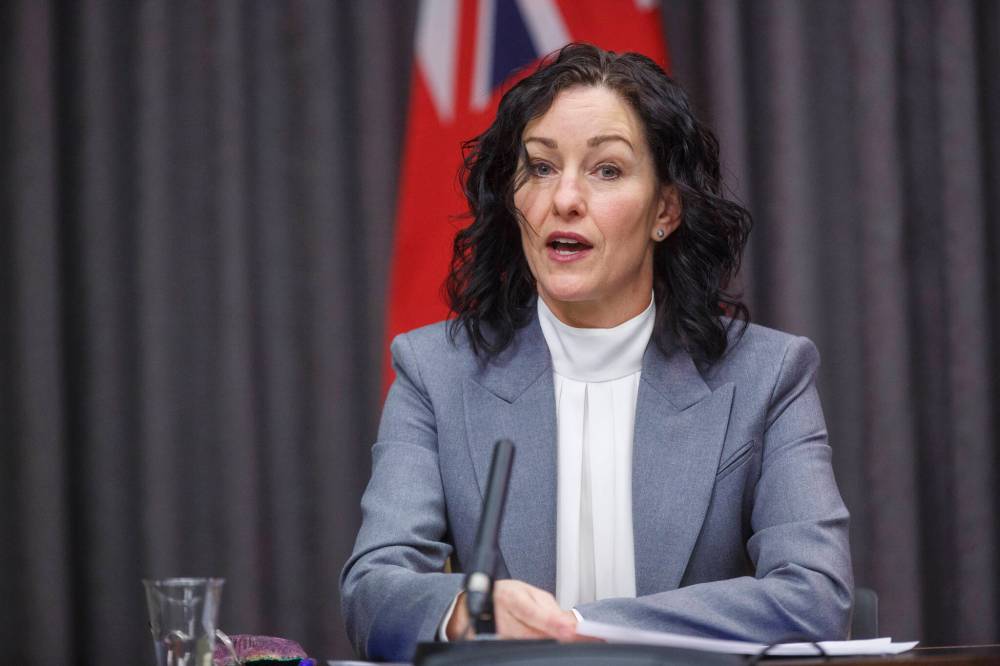
Efficiency Manitoba chief executive officer Colleen Kuruluk writes that some of the most valuable energy infrastructure over the next decade “will be built into homes, schools, businesses and farms, where energy efficiency upgrades improve comfort, lower costs, and support productivity.” (Mike Deal/Winnipeg Free Press files)
Earlier this year, I joined energy leaders from around the world in Montreal at the International Energy Agency’s Global Conference on Energy Efficiency. One message I heard consistently throughout the conference was that energy efficiency is no longer a nice-to-have. It’s an essential resource and a cornerstone of energy security, affordability, and economic competitiveness.
For decades, energy efficiency was often seen as something that came after decisions about new electricity generation had already been made. Today, we know that every unit of energy we save is one we don’t need to generate.
Energy efficiency reduces how much energy we use, while demand response shifts when we use it to reduce pressure on the system during periods of peak demand, such as Manitoba’s coldest winter days. Together, energy efficiency and demand response are expected to account for nearly half of the capacity identified in the IRP.
Achieving these savings will depend on the participation of Manitobans across the province and signals a different way of thinking about the infrastructure needed to meet our growing energy needs.
When we think about energy infrastructure, we tend to picture what we can see — generating stations, transmission lines, wind and solar farms and other large, physical assets. Those investments are important, and Manitoba will continue to need them, but some of the most valuable energy infrastructure we’ll build over the next decade won’t be found in a single location.
Instead, it will be built into homes, schools, businesses and farms, where energy efficiency upgrades improve comfort, lower costs, and support productivity.
At Efficiency Manitoba, we call this collective impact Manitoba’s “efficiency power plant.” Our power plant is being built one decision at a time, by thousands of Manitobans who make practical choices that reduce energy use or shift when that energy is used.
And this isn’t just a vision for the future; we’re already seeing what an efficiency power plant can look like. In just five years, Efficiency Manitoba has delivered nearly 200 MW of savings at the generation level — which is comparable in magnitude to the Wuskwatim generating station at less than 10 per cent of the cost.
Energy efficiency requires no large-scale construction or significant land footprint and is less exposed to major-project cost escalation. Lower costs, combined with benefits that extend beyond bill savings, deliver long-term value to ratepayers and communities across Manitoba.
Energy efficiency deserves a meaningful place in the conversation about Manitoba’s energy future. We won’t replace the need for new generation, but collectively, we can increase the benefit of energy efficiency working alongside other resources as part of a thoughtful, balanced approach to meeting our growing energy needs.
The question isn’t which resource is best, but how we use every available tool and help create an energy system that remains affordable, accessible, and resilient for generations to come.
One of the most important power plants we’ll build over the next decade doesn’t have to appear as a single location on a map. Rather, with collective commitment and action, it will take shape in homes, classrooms, factories, farms, communities and buildings across our province, built through thousands of decisions by each of us about how and when we use energy.
Manitoba’s next efficiency power plant is already taking shape, and we all have a role to play in building it.
» Colleen Kuruluk is the chief executive officer of Efficiency Manitoba. This column also appeared in the Winnipeg Free Press.