
Why younger Canadians are losing hope in the possibility of a middle-class life
Advertisement
Read this article for free:
or
Already have an account? Log in here »
We need your support!
Local journalism needs your support!
As we navigate through unprecedented times, our journalists are working harder than ever to bring you the latest local updates to keep you safe and informed.
Now, more than ever, we need your support.
Starting at $15.99 plus taxes every four weeks you can access your Brandon Sun online and full access to all content as it appears on our website.
Subscribe Nowor call circulation directly at (204) 727-0527.
Your pledge helps to ensure we provide the news that matters most to your community!
To continue reading, please subscribe:
Add Brandon Sun access to your Free Press subscription for only an additional
$1 for the first 4 weeks*
- Enjoy unlimited reading on brandonsun.com
- Read the Brandon Sun E-Edition, our digital replica newspaper
*Your next Free Press subscription payment will increase by $1.00 and you will be charged $20.95 plus GST for four weeks. After four weeks, your payment will increase to $24.95 plus GST every four weeks.
Read unlimited articles for free today:
or
Already have an account? Log in here »
An increasing share of Canadians are reporting financial difficulties. According to Statistics Canada, 39 per cent said it was difficult or very difficult for their household to meet its financial needs in spring 2025.
Younger adults were particularly likely to experience financial difficulties. These struggles were linked to deteriorating life satisfaction and declining hope for the future.
Incomes remain stagnant for many Canadians while costs climb, employment uncertainties continue and social safety net programs struggle to fill the gap.
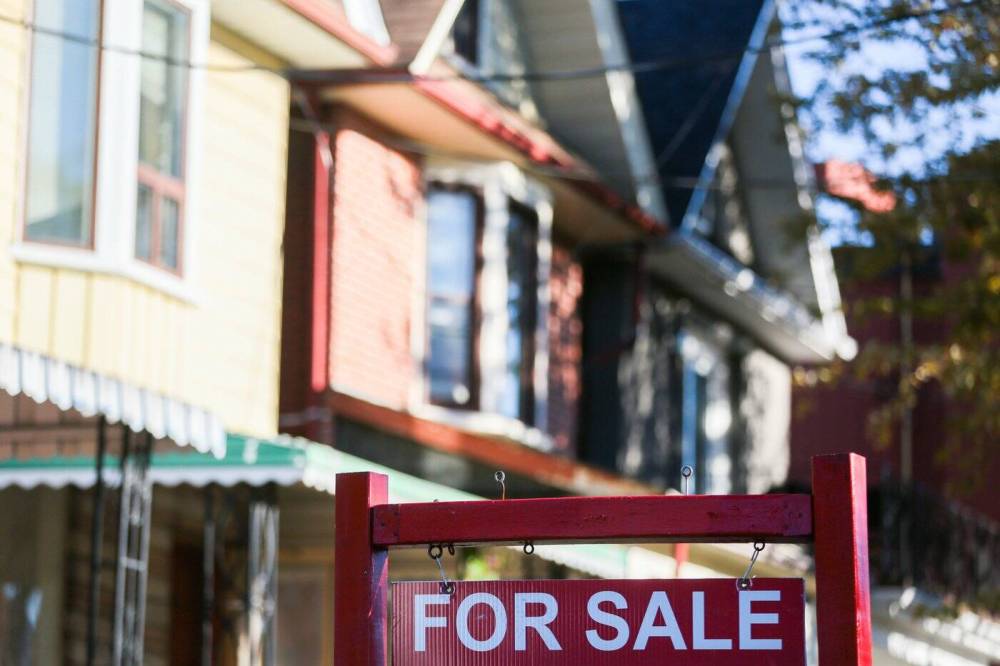
A real estate sign is displayed in front of a house in Toronto in September 2021. Home ownership has traditionally been an important source of middle-class wealth, but rising housing costs have put it beyond the reach of many Canadians. (The Canadian Press files)
These situations show how rising economic insecurity is affecting people’s lives. Economic insecurity — sometimes described as precarity, vulnerability or financial risk — refers to how individuals balance resources and costs.
To better understand how economic insecurity affects Canadians across social classes, we surveyed more than 8,000 Canadians and interviewed 127 about their experiences with economic insecurity as part of the Great Canadian Class Study.
By talking to people in in-depth interviews, we learned more about the factors that lead to insecurity and how participants understood these situations. The conversations also highlighted the growing divides between younger and older adults in Canada.
Economic security cuts across class
We began this project to investigate whether, and how, social class shapes people’s lives in Canada. We found that social class matters in myriad ways, but not always in the ways we might expect. Growing economic insecurity helps explain why.
Our recently published research in the British Journal of Sociology highlights why people’s experiences and perceptions of economic insecurity must be considered when examining social class.
Our survey found that younger people, unemployed people, members of lower-income households, renters and people carrying stressful levels of credit card debt were more likely to experience insecurity. They were less able to meet their monthly expenses and did not have enough savings to cover an emergency expense.
Our interviews revealed that economic insecurity was not only reflected in people’s income or assets. Some homeowners, for example, described feeling financially insecure despite owning property. The rising cost of living still left them with little money to set aside for savings or emergencies.
Economic security cannot always be understood through income or wealth alone. People’s ability to manage unexpected expenses and their perceptions of their financial circumstances also matter.
Highlighting the growing generational divide
Younger Canadians experienced the most severe effects of insecurity. Despite doing “everything right” to set themselves up for stability, many expressed resignation that they would never achieve the signifiers of middle-class status that past generations had, or the security that once came with it.
Education, which has historically been seen as a route to job stability and higher incomes, instead contributed to feelings of insecurity in participants. Student debt felt insurmountable and shaped participants’ decisions about whether to pursue further schooling when rising tuition costs might not be offset by higher future earnings.
Home ownership, once a traditional marker of middle-class success, was also not possible for most younger participants. Rising housing costs due to the treatment of housing as an investment opportunity, the dominance of private equity and real estate investment firms and mounting debt have made home ownership increasingly difficult to attain.
For those shut out of home ownership, renting brought its own uncertainties, including rent increases, evictions and frustration at not being able to build wealth.
This contrasted with the experiences of some older participants, who built their lives during a time of more opportunity and lower income inequality. Decades of good-paying jobs, a stronger social assistance system and a favourable housing market provided a stronger foundation for lifelong economic security.
Homes, investments, pensions and personal savings were all sources of security that could be used to mitigate unforeseen emergencies.
How to address economic insecurity
Despite its pervasiveness, there are many steps governments can take to alleviate the increasing insecurity Canadians are feeling across generations. Reinvesting in the social infrastructure that provided previous generations with a strong footing would be a good place to start.
This includes expanding funding for post-secondary education to address the steady declines in government grants, strengthening rent control, building more non-market housing and instituting broader tax reforms to address growing income and wealth inequality.
Our study reflects a changing Canada in which even people who grew up believing that education and hard work would lead to middle-class stability are experiencing economic insecurity.
The traditional promise of meritocracy rests on the idea that people who work hard, pursue education and make responsible financial decisions can improve their circumstances. However, when those efforts no longer reliably lead to financial security, that promise becomes harder to sustain.
The growing disconnect between Canadians’ expectations and their lived realities suggests that the traditional path to middle-class security is becoming increasingly difficult to follow.
» Michelle Maroto is a professor of sociology at the University of Alberta. Andrea DeKeseredy is a PhD candidate in sociology at the University of Alberta.
» This column was originally published at The Conversation Canada: theconversation.com/ca