
Finding balance may be difficult
Advertisement
Read this article for free:
or
Already have an account? Log in here »
We need your support!
Local journalism needs your support!
As we navigate through unprecedented times, our journalists are working harder than ever to bring you the latest local updates to keep you safe and informed.
Now, more than ever, we need your support.
Starting at $15.99 plus taxes every four weeks you can access your Brandon Sun online and full access to all content as it appears on our website.
Subscribe Nowor call circulation directly at (204) 727-0527.
Your pledge helps to ensure we provide the news that matters most to your community!
To continue reading, please subscribe:
Add Brandon Sun access to your Free Press subscription for only an additional
$1 for the first 4 weeks*
- Enjoy unlimited reading on brandonsun.com
- Read the Brandon Sun E-Edition, our digital replica newspaper
*Your next Free Press subscription payment will increase by $1.00 and you will be charged $20.95 plus GST for four weeks. After four weeks, your payment will increase to $24.95 plus GST every four weeks.
Read unlimited articles for free today:
or
Already have an account? Log in here »
Hey there, time traveller!
This article was published 16/09/2023 (1083 days ago), so information in it may no longer be current.
“I think growing our economy is going to be key. What that means is that there’s more money for health care, education, social services (and) making life more affordable for Manitobans.”
— Progressive Conservative Leader Heather Stefanson
“The main concern is that cutting taxes is either going to be cutting services or increasing our deficits. In rural areas, there’s been quite a round of service cuts, and that is really challenging to make rural Manitoba more attractive and more competitive if you’re not able to offer adequate services.”
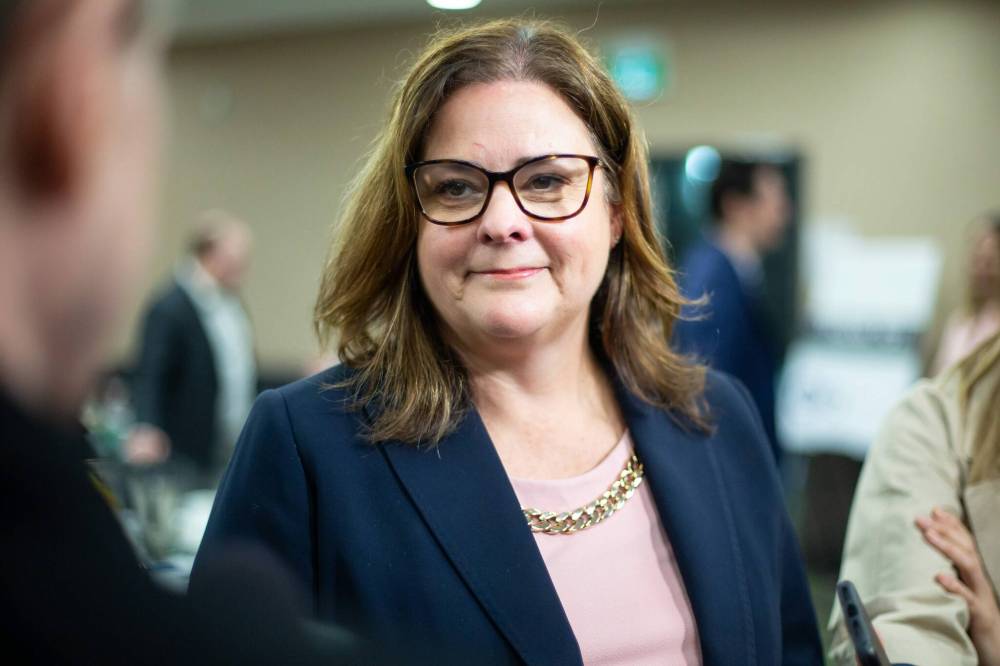
Heather Stefanson is banking on tax-cut pledges to propel the Progressive Conservatives back into office during the Oct. 3 provincial election, but are those promises based on fiscal reality?
— Wayne Kelly, Brandon University Rural Development Institute director
For the last several days, the Progressive Conservatives have gone out of their way to show Manitobans that a vote for the Tories is a vote for a conservative brand of economic growth that is dependent upon tax cuts and the removal of bureaucratic impediments as a means to create new opportunities for business development and personal wealth.
The party of Heather Stefanson has promised to cut the lowest provincial income tax bracket in half over four years, should she be re-elected on Oct. 3, a move that the Tory leader asserts could save the average person earning $50,000 in annual income about $1,900 per year by 2028.
Stefanson has also promised to remove the federally imposed carbon price on hydro bills within 10 days of being re-elected, eliminate the payroll tax on business, provide an exemption for first-time home buyers from the land transfer tax, allow senior homeowners to defer some or all of their property taxes until they sell their homes and eliminate the provincial sales tax on sales of trees, shrubs, seeds, bulbs and house plants.
Following the announcement last February by Education Minister Wayne Ewasko that the province needed more time to implement a new taxation model regarding Manitoba’s education funding system, the Progressive Conservatives have been somewhat silent during this campaign on any plans they may have to push forward with an earlier pledge to fully end education property taxes from residential and farm properties.
But that pledge may still be coming, even as groups like the Keystone Agricultural Producers continue to lobby for the elimination of education taxes.
For Manitobans who have been on edge over the last year watching the prices of everything from gasoline and groceries to electricity and school supplies go up and up, no doubt these tax-cut pledges are designed to entice and retain those voters who previously brought the Tories to power in the first place.
Stefanson asserted this week that “growing our economy is going to be key,” as the means to have more money for “health care, education, social services (and) making life more affordable for Manitobans.”
But historically this kind of approach hasn’t worked very well. Save for a fleeting glimpse of a modest year-end surplus in the 2019-20 fiscal report, Manitoba has yet to witness a balanced budget under any government since the NDP government of Greg Selinger. Taking in less revenue is not a sure-fire means to fiscal balance.
And such wide-spread tax cuts will only serve to reduce government revenues by tens of millions of dollars in the short term — and perhaps in the long term if the rosy predictions of increased economic activity fail to materialize. According to a 2022 research paper by the National Bureau of Economic Research in the United States, personal income tax cuts “trigger a short-term boost to GDP, productivity and hours worked but have no long-term effects.” The paper further asserts that the effect of corporate tax cuts are more lasting, however, with sustained increases to GDP and productivity.
Yet even while the Stefanson government promises to reduce government revenues, government services are in need of more and better investments, including improved training for doctors and nurses with more student availability in our universities, ongoing infrastructure deficits for road construction and repairs across the province.
And as we mentioned yesterday, there is still no viable plan from the Stefanson government — or any party — regarding how to pay for and sustain quality public education in this province.
We understand Stefanson’s desire to reach out to Manitobans who are having difficulty making ends meet, and trying to reassure our business community that the party understands their struggles coming out of the pandemic. These are real problems, too, and it makes good political sense.
But it seems a little jarring for the leader of a party that purports to be fiscally responsible to come out with an economic platform that appears to be based more on rosy economic forecasts than the hard economic realities.
Somehow, the balance feels off.
» Matt Goerzen, editor