
Rebates not helping those most in need
Advertisement
Read this article for free:
or
Already have an account? Log in here »
We need your support!
Local journalism needs your support!
As we navigate through unprecedented times, our journalists are working harder than ever to bring you the latest local updates to keep you safe and informed.
Now, more than ever, we need your support.
Starting at $15.99 plus taxes every four weeks you can access your Brandon Sun online and full access to all content as it appears on our website.
Subscribe Nowor call circulation directly at (204) 727-0527.
Your pledge helps to ensure we provide the news that matters most to your community!
To continue reading, please subscribe:
Add Brandon Sun access to your Free Press subscription for only an additional
$1 for the first 4 weeks*
- Enjoy unlimited reading on brandonsun.com
- Read the Brandon Sun E-Edition, our digital replica newspaper
*Your next Free Press subscription payment will increase by $1.00 and you will be charged $20.95 plus GST for four weeks. After four weeks, your payment will increase to $24.95 plus GST every four weeks.
Read unlimited articles for free today:
or
Already have an account? Log in here »
Hey there, time traveller!
This article was published 01/11/2024 (565 days ago), so information in it may no longer be current.
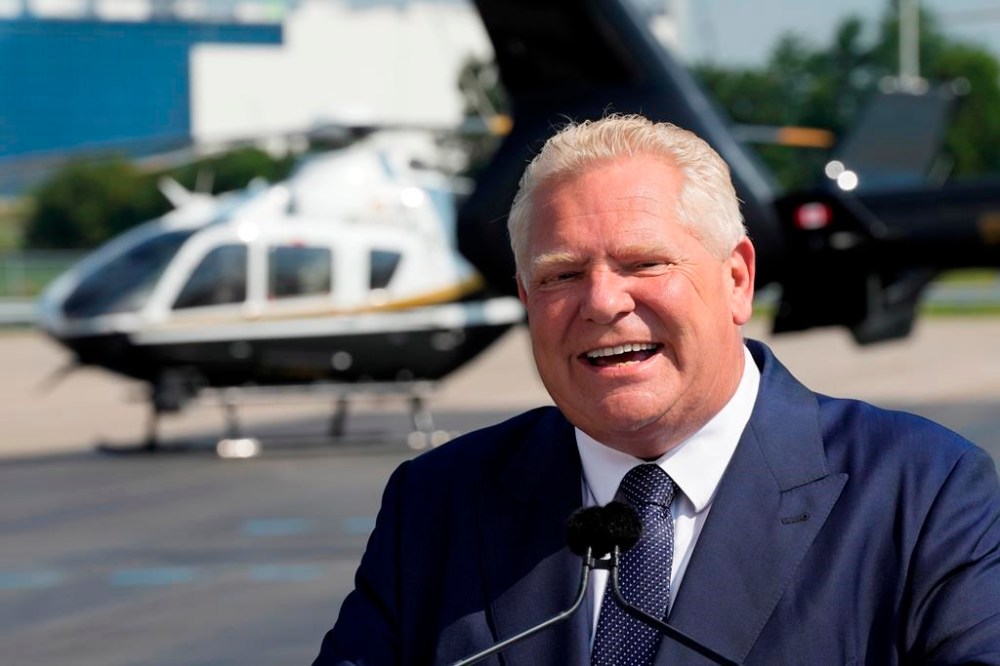
Ontario Premier Doug Ford is in a generous mood. With an election looming next spring, and government revenues ticking upward, Ford has decided to give 15 million Ontarian adults and children a $200 “rebate” cheque. The total cost will be $3.6 billion.
Rebate for what you may ask? It’s not entirely clear.
Ontario Finance Minister Peter Bethlenfalvy has only said that times are tough and Ontarians are looking for a little relief from the high cost of living.
“I’m under no illusions that this will relieve all of the affordability pressures facing Ontario families, but it will help,” Bethlenfalvy told Queen’s Park reporters this week.
Given that this rebate is purportedly about affordability, it’s odd the Ford government made no effort to target these rebates to citizens who truly cannot afford to live. Instead, every Ontarian regardless of income will receive one cheque per adult and child under 18. Bethlenfalvy said a family of five could receive $1,000 in rebates.
The rebate is a curious policy choice when you consider Ontario’s other fiscal challenges. The country’s largest province is facing a $6.6-billion deficit this year and political opponents have also pointed out that Ontario’s health-care system is still straining under the weight of wait lists.
The only mitigating factor is that Ford’s rebate scheme is merely an echo of the current state of politics in this country.
Political leaders in power are giving away billions of dollars in rebates or tax cuts to ease the high cost of living and curry favour with voters.
However, very few of these gestures are targeted to help those who have suffered the full wrath of inflation.
Manitoba’s gas tax holiday is an excellent case in point. Despite facing crises in education, social services and health care, Premier Wab Kinew has twice extended the suspension of provincial tax on fossil fuels. The total loss in revenue to the government will be more than $360 million on an annual basis — money that could have been spent on helping the lowest-income Manitobans make basic ends meet. (Or, as we argued yesterday on this page, could have paid for desperately needed school repairs throughout our province).
And it’s not just those politicians in power; politicians who seek power are tripping over themselves to give away government revenues through one avenue or another.
Federal Conservative Leader Pierre Poilievre recently unveiled a plan to cut the GST from new home purchases up to $1 million. At the upper end of that equation, a homebuyer could reap a $50,000 discount on the price of a newly constructed home. It matters little to Poilievre that the people who really need financial relief are not even contemplating a home purchase. They are having trouble buying groceries.
It should be noted that the idea that higher-income earners have not suffered from inflation is not merely a theory.
A recent report from the Parliamentary Budget Office noted that the top 60 per cent of income earners actually saw their buying power increase over the last four years because wages and investment income grew by more than 10 per cent over inflation. The 40 per cent of Canadians at the low end of the income scale fell behind inflation by more than five per cent.
Governments and governments-in-waiting need to start focusing supports on those Canadians who have suffered the most from the affordability crisis. To do otherwise is to risk permanent economic damage to the nation.
The gratuitous use of taxpayer money to pay rebates and tax cuts to Canadians who do not need the help may very well ensure that those who have suffered the most from the darkest period of high inflation never see the light of recovery.
» Winnipeg Free Press and The Brandon Sun