
Crypto strategy not a wise move
Advertisement
Read this article for free:
or
Already have an account? Log in here »
We need your support!
Local journalism needs your support!
As we navigate through unprecedented times, our journalists are working harder than ever to bring you the latest local updates to keep you safe and informed.
Now, more than ever, we need your support.
Starting at $15.99 plus taxes every four weeks you can access your Brandon Sun online and full access to all content as it appears on our website.
Subscribe Nowor call circulation directly at (204) 727-0527.
Your pledge helps to ensure we provide the news that matters most to your community!
To continue reading, please subscribe:
Add Brandon Sun access to your Free Press subscription for only an additional
$1 for the first 4 weeks*
- Enjoy unlimited reading on brandonsun.com
- Read the Brandon Sun E-Edition, our digital replica newspaper
*Your next Free Press subscription payment will increase by $1.00 and you will be charged $20.95 plus GST for four weeks. After four weeks, your payment will increase to $24.95 plus GST every four weeks.
Read unlimited articles for free today:
or
Already have an account? Log in here »
Hey there, time traveller!
This article was published 31/03/2022 (1652 days ago), so information in it may no longer be current.
“Canada needs less financial control for politicians and bankers and more financial freedom for the people. That includes freedom to own and use crypto, tokens, smart contracts and decentralized finance.”
— Conservative Party of Canada leadership candidate Pierre Poilievre
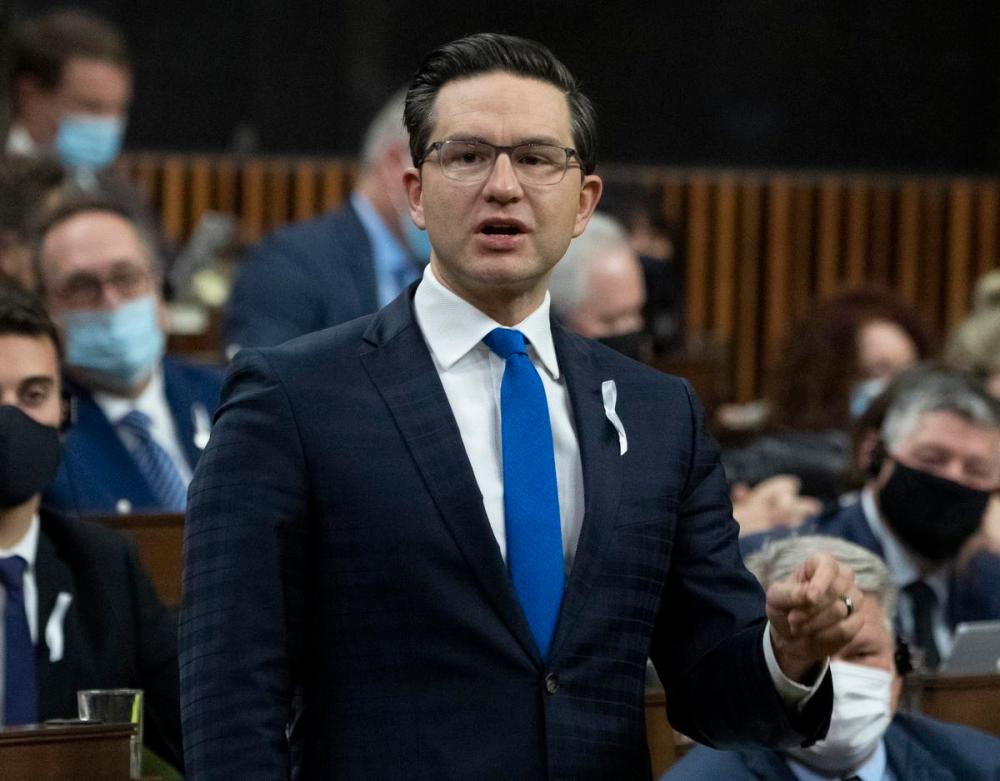
At a campaign stop in London, Ont., earlier this week, Tory leadership candidate Pierre Poilievre became the latest politician to tout cryptocurrencies and blockchain technology as a miracle cure for financial woes.
While these things are new and generate some excitement on social media, his endorsement of the technology shows that the frequent critic of the federal Liberals’ spending isn’t putting forward serious financial policy.
For those who might not know the ins and outs of Bitcoin and cryptocurrencies, they’re essentially computer files attached to a connective structure called the blockchain.
Computers are connected to the blockchain and made to complete complex math problems, where the users who finish the problems first are awarded certain amounts of cryptocurrency. Artificial scarcity is created by keeping the amount of crypto that gets awarded to miners the same no matter how many people are vying for their piece of the pie.
That’s why early adopters of cryptocurrencies tend to be the ones that profit from them. The Winklevoss Twins, who co-founded Facebook with Mark Zuckerberg, started investing in Bitcoin when the price was low and turned their US$11-million buy-in into billions.
When cryptocurrencies are mined or when people purchase them, the blockchain records the transactions and assigns the items traded to a digital wallet.
No personal information is saved in the process, which makes it hard to track the parties involved in a transaction, which is why supporters talk up the privacy benefits of the system. That also makes the technology useful for illicit transactions like purchasing drugs or bypassing sanctions as Russia is trying to do after it invaded Ukraine.
Users will sometimes set up elaborate clusters of computers dedicated to solving these problems as quickly as possible, which has led to a shortage of some parts essential to the process and creates a huge demand for electricity.
The Sun reported last month that Riverdale Municipality approved a conditional-use permit for the construction of a mining centre, with Mayor Todd Gill speculating that Manitoba’s low electricity prices was part of the attraction for the developers.
After China banned cryptocurrencies last year, many miners moved their operations to Kazakhstan, which the BBC says has put a huge strain on the country’s electrical grid, causing rolling blackouts.
Poilievre’s pitch surrounding crypto is partially motivated by China’s actions, saying he wouldn’t institute any kind of crackdown if he winds up in charge of the federal government.
He wants to see people use Bitcoin to undermine the government and central banks’ influence over the economy. Here’s why that’s a bad thing.
Sure, it might be unregulated, less traceable and more private, but that’s where the risk comes in.
In 2014, the Mt. Gox Bitcoin exchange filed for bankruptcy after it said hackers stole US$460 million worth of the cryptocurrency.
When Halifax, N.S., man Gerald Cotten died in India in 2018, no one could access the $250 million in Bitcoin that his cryptocurrency exchange held, separating investors from their cash.
Last week, a blockchain-linked video game called Axie Infinity — which allowed users to have connected digital wallets for storing cryptocurrencies to make in-game purchases — was hacked, with US$615 million being taken.
It’s clear that despite the supposed security of the blockchain, there is a major security risk with no safety net to help out after fraud or theft.
In Canada, if someone illicitly uses someone else’s credit or debit card, the card issuer will protect you against financial loss. If your bank fails, the Canada Deposit Insurance Corporation insures your deposits up to a maximum of $100,000.
You or your financial institution can still get robbed, but it’s much easier to recover stolen items when the things being stolen are physical and not part of a system built to obscure the identities of the people using it.
Besides that, the rapidly fluctuating value of cryptocurrencies makes them an incredibly risky investment. With nothing to base the value of these currencies on, the price is entirely decided by the whims of the market.
The average person does not have the resources to create a mining rig that will provide a meaningful amount of cryptocurrency or absorb a major loss after the value of whatever specific coin has been devalued by Elon Musk’s latest tweet.
That’s not a joke. Last May, when Musk said Tesla would stop accepting Bitcoin in exchange for its products, the value dropped 15 per cent, according to Vox, an American website focusing on explanatory journalism.
According to crypto exchange Coinbase, Bitcoin hit a then-record high value of $78,826.34 on April 14, 2021. By June 21 that same year, it had lost almost half that value, dropping to $35,625.46.
On Nov. 9, the value hit a new record high at $85,813.71. As of Thursday, the value had again dropped to $58,121.99.
Imagine that you bought shawarma with Bitcoin as Poilievre did in London. Depending on what side of things you’re on, there’s either the chance that your payment in Bitcoin will either become much more valuable after you’ve given it away or the item you’ve just accepted for payment has diminished greatly in price.
Yes, the price of traditional currencies can change greatly over time — especially if you’re a country that, for example, has been sanctioned within an inch of its life after starting an unprovoked war of aggression — but why would we want our country to become reliant on a fake commodity that can suddenly become half of its previous worth in the span of months?
Cryptocurrencies are a security risk, they’re unstable, a drain on resources that gives nothing in return and no one who wants our country to integrate them into our economy should be taken seriously on financial matters.
Leave them to their current userbase, a collection of people who have already cashed out their winnings after being early adopters and those who want to keep loading their quarters into the digital slot machine, desperately hoping that the jackpot is right around the corner.