
Kelly carries competitive edge into emergency planning
Brandon University Alumni Series
Advertisement
Read this article for free:
or
Already have an account? Log in here »
We need your support!
Local journalism needs your support!
As we navigate through unprecedented times, our journalists are working harder than ever to bring you the latest local updates to keep you safe and informed.
Now, more than ever, we need your support.
Starting at $15.99 plus taxes every four weeks you can access your Brandon Sun online and full access to all content as it appears on our website.
Subscribe Nowor call circulation directly at (204) 727-0527.
Your pledge helps to ensure we provide the news that matters most to your community!
To continue reading, please subscribe:
Add Brandon Sun access to your Free Press subscription for only an additional
$1 for the first 4 weeks*
*Your next subscription payment will increase by $1.00 and you will be charged $20.00 plus GST for four weeks. After four weeks, your payment will increase to $24.00 plus GST every four weeks.
Read unlimited articles for free today:
or
Already have an account? Log in here »
Hey there, time traveller!
This article was published 09/04/2020 (2217 days ago), so information in it may no longer be current.
Jude Kelly spent four seasons dominating the Brandon University Bobcats front court and carries the same competitive edge to everything he does now, 40 years later.
The Hamilton product is channelling his energy into informing the public about COVID-19 for Emergency Management Ontario.
“We were ramped up for SARS back in 2003, and of course the (northeast) blackout that same summer, but this is a whole new paradigm for us, for everyone,” Kelly said from his home office in Toronto.
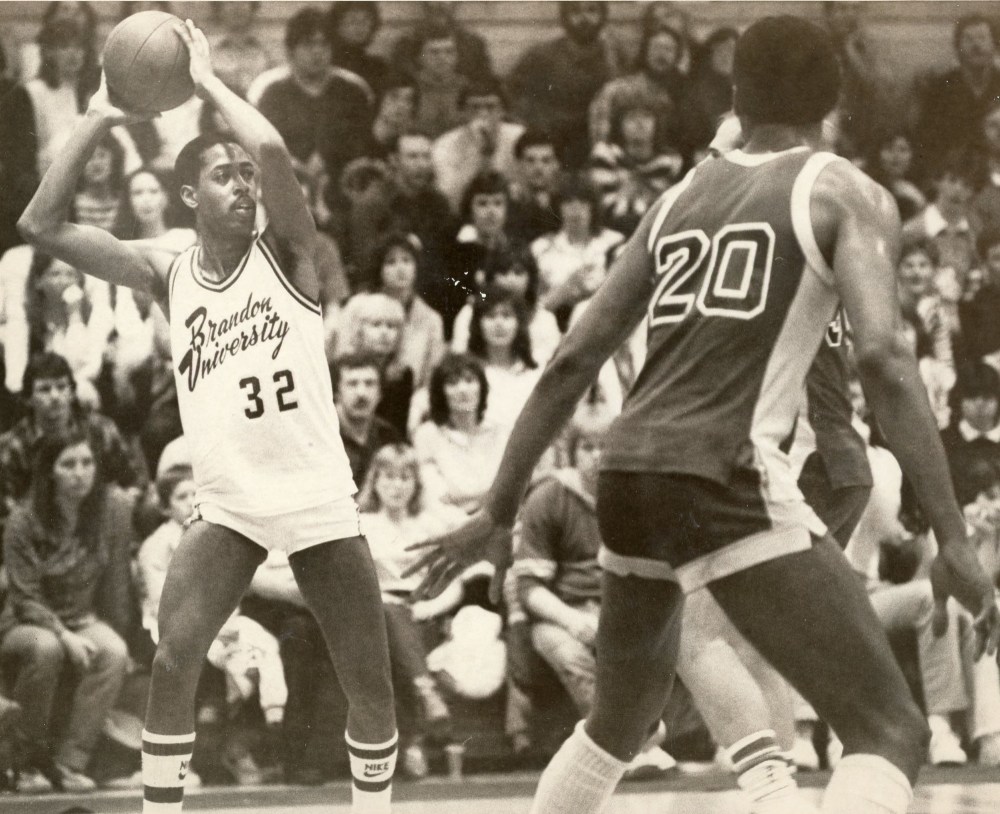
“There’s so much information coming in. We co-ordinate up to a dozen teleconferences a day. We have calls with the municipalities, the ministries, … the federal government, with suppliers, everyone has information and we have to be able to make sure the people get in the information that need it.”
The position Kelly currently holds is a result of two wildly different decisions: Kelly’s course selection at BU and that of the people who hijacked airplanes and struck the Twin Towers on Sept. 11, 2001.
Kelly was working in communications for the ministry of the solicitor general at the time, in part writing content for Emergency Management Ontario before people realized the organization needed to bulk up on staff.
“It was kind of by accident,” Kelly said. “When 9/11 hit, suddenly people asked ‘Could those planes have hit key targets in Ontario? Were we prepared? Of course, the answer was ‘Yeah they could have hit us and no, we weren’t prepared.’”
The takeaway was people needed to be more prepared for emergencies. Kelly recalled a conversation about first-aid kits and how few people had them prior to the Second World War, but it’s rare to find a home without one now.
“Instead of thinking the government is going to take care of you for everything, we’re saying ‘No, people have a responsibility to be prepared for emergencies, and here’s how you can be prepared,’” Kelly said.
Growing up, Kelly didn’t need to look outside his own home to develop strong preparation skills. That started on the football field and basketball court.
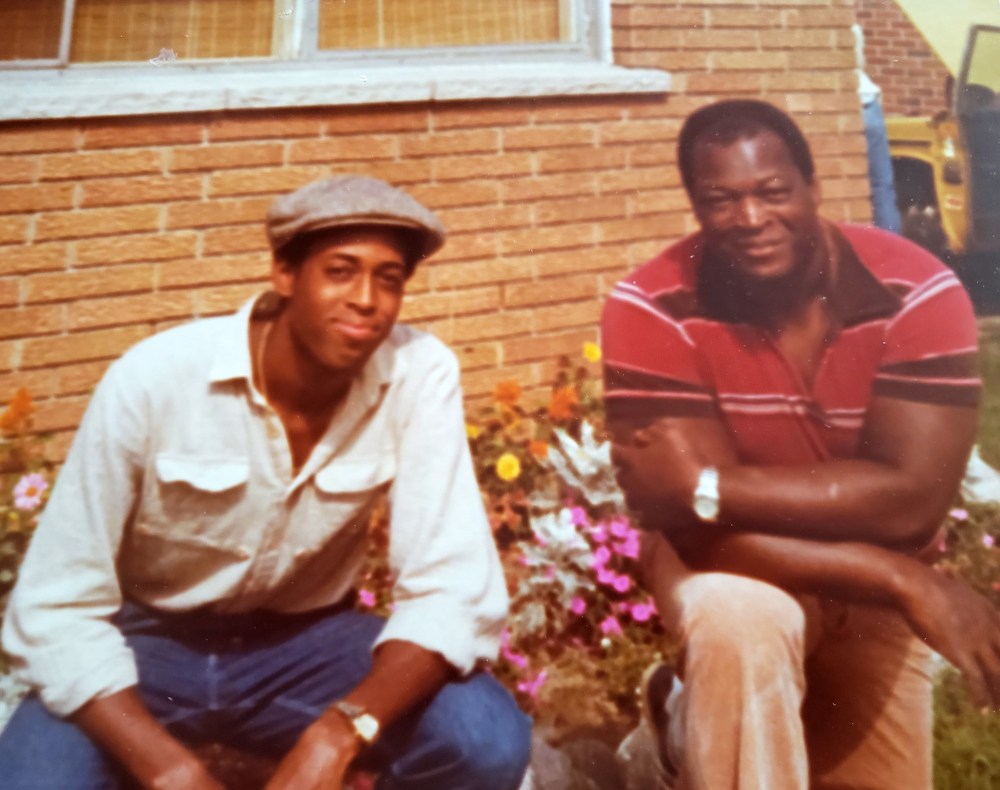
The six-foot-four forward was always around sports as his father, Ellison Kelly, was drafted by the National Football League’s New York Giants in 1959. He spent one season there before patrolling the Hamilton Tiger-Cats offensive line for a decade, earning three Grey Cups (1963, 1965 and 1967) and appearing in 175 straight contests.
Ellison wrapped up his career with two seasons in Toronto in 1971-72, and was inducted into the Canadian Football Hall of Fame 20 years later. He died in February 2016.
“Growing up in that type of environment, I just wanted to excel at some type of game,” Jude said. “Football was actually my best sport: I had great hands and good feet, but I did not like practising outdoors in the mud and snow and hard ground, people trying to hurt you, so I looked for an indoor sport.”
Kelly picked up a basketball in Grade 6, but said he didn’t take the sport seriously until Grade 8. His school team was in the Hamilton city championship game and came up short. He didn’t see a second of playing time.
“I was the worst player on the team and I said to myself, ‘This is never going to happen again,’” Kelly said.
Kelly had quite the motivation that summer and each one afterward. Ellison, who was born in Butler, Ga., grew up in Sandusky, Ohio, where he’d take the family for summers during his time off from teaching.
Jude would play one-on-one against his uncle Richard Koonce, who was actually a year younger than him.
“He was a fantastic basketball player. He had his own court in his backyard and he was a lot better than me,” Kelly said.
“He used to be kicking my butt on the court every single summer. Since he was American, he’d be talking trash all the time and there was nothing I could do about it. Except one year, Grade 12, I finally beat him for the first time ever.
“That gave me so much confidence.”
Kelly came back to Westmount Secondary and led his team to its first-ever city championship. After his Grade 13 year, he was off to the University of Prince Edward Island to play in the ultra-tough Atlantic University Sport conference.
That only lasted for the 1978-79 season, after which the Panthers’ coach left and advised Kelly to look for a stronger program. So Kelly reached out to schools and quickly settled on St. Francis Xavier in Antigonish, N.S.
Coach Steve Konchalski was in charge of the national team program and Kelly said Konchalski promised him a spot.
Then Brandon’s Jerry Hemmings called and heard the news. He tried again two weeks later. Then Kelly received one more call from BU, this time from athletic director George Birger, who had quite the list of selling points.
“We got a tournament in Hamilton, your hometown. Wouldn’t it be nice to have your parents, friends and family see you play in Hamilton? We got a tournament in Calgary. You ever been to the Rocky Mountains?” Kelly recalled Birger’s pitch.
“Basically, Birger is selling me on all these trips and experiences I’d never had before. … Then he starts talking about the team. They had Jerry Abernathy and Keith Streiter, two all-Canadians returning, and Fred Lee, Birger said I might be the missing piece to help them win a national championship.”
“He said ‘I want you to be the first to know, we just secured a tournament at the end of the season in Africa. We’re going to go for two weeks, we’re going to play some professional teams in Africa and maybe spend some time in European centres.’ All this stuff was basically blowing my mind. I could not believe what I was hearing,” Kelly added.
“Finally, I told him I’d change my mind and I’d come to Brandon. … That’s all thanks to George Birger.”
It turns out Birger was just about right. The Bobcats won the Great Plains Athletic Conference title in the 1979-80 season, the first of what became quite the storied run of dominance.
BU went to the national tournament and edged York University 91-90 in the quarterfinals, then knocked off provincial rival Winnipeg 85-81 to reach the title game against Victoria.
The magic stopped as the final score read 73-65 in favour of the powerhouse Vikes.
“We were really, really disappointed,” Kelly said. “It’s easier to not even get to the final, because it’s so disappointing to get to the national championship and lose. You’d almost rather not even get there. You’d almost rather get to the third-place game and win or even the consolation game and win. It makes for a much easier summer going home because you’re going home on a win.
“To lose the championship game after coming so close, and we felt we were the better team, we felt we could have won and should have won and in fact we were up at halftime. We were up with 10 minutes to go even though we weren’t playing that well. We just couldn’t make any stops in the last six, seven minutes and couldn’t score any buckets.”
In that sense, Kelly got what he wished for his final two seasons.
Brandon lost a pair of national semifinals, capping a storied career with back-to-back bronze medals. Kelly was named a GPAC first-team all-star each of his last three seasons, conference player of the year in 1982 and a second-team all-Canadian his last two seasons.
Kelly averaged 17 points per game on his career, and left as BU’s all-time leading scorer with a memorable 1,981st point.
“That last game I played, this is after another disappointing game against Waterloo when the Waterloo guy hit the shot after the buzzer and they counted it. It was in their gym and there was nothing we could do. They counted it and we’re playing in the third-place game again,” Kelly said.
“I said ‘Look, it’s the third-place game, but it’s my last game and we have to win this game. I’m not going out as a loser … all I want to do is win my last game and make my last shot.”
The Bobcats held a comfortable lead in the last few minutes against St. Mary’s in a game they won 85-72.
Jan Bujan called Kelly’s name to sub him off after he knocked down a jump shot.
.jpg?w=1000)
“He pointed to the score — we were up about 17 or 18 — he said you made your last shot. I said ‘Yeah, you’re right. Might as well go out now,” Kelly said.
“I shed a small tear when I got to the bench and realized this was not going to repeat itself.”
Kelly already established his next step in life after signing up for BU’s intro to journalism class, taught by then Brandon Sun editor Fred McGuinness, the year prior. Kelly quickly developed a passion for journalism and took another one of McGuinness’s classes, spent a year at Edmonton’s MacEwan University in the journalism program, then took a job as sports editor of a weekly paper in Yorkton, Sask.
Kelly spent two-and-a-half years in Yorkton, coming back to visit his girlfriend in the Wheat City four to five times each year, he said, taking each chance he had to see the Bobcats and catch up with McGuinness.
See ‘Kelly’ — Page B2
“If it wasn’t for Fred, I don’t think I’d be doing what I’m doing now. It’s all directly linked to Fred and Brandon,” Kelly said.
Kelly’s goal was to write sports for the Globe and Mail, knowing he was still a few stepping stones away. He went back home and secured a desk job with his hometown Hamilton Spectator in 1986, and was two weeks into training when some funding was cut and he was laid off.
So he decided to explore the corporate communications world, and moved up to the position he’s in today.
JACK OF ALL TRADES
Kelly’s versatility on the court is matched only by his life outside of work.
He was the unofficial disc jockey for the Bobcats, pulling together the hottest warmup playlists in GPAC.
Throughout his time at the old BU gym, the Bobcats marched out to “Ain’t No Stopping Us Now” by McFadden and Whitehead, with other staples including “Good Times” by Chic, Queen’s “Another One Bites The Dust,” Sister Sledge’s “We Are Family” and more.
Kelly tired his hand at DJing in Brandon, when the Red Pepper at the Red Oak Inn gave him a shot.
“I pitched the guy there to do a ladies night on Wednesdays. I had a bunch of records, so he gave me a shot at DJing, and it was fantastic. I had a lot of fun,” Kelly said.
“When I came back to Toronto I was throwing parties and hiring DJs, but I realized I had better music than the DJs I was hiring and I enjoyed it as much or more than the promoting.
“I still do that.”
While that gig is on hold due to COVID-19 closures, Kelly plans to stay involved in the music industry. He has been featured on CBC radio, written music features for various newspapers and even has a submission in the Canadian encyclopaedia on R&B.
And believe it or not, Kelly still hits the hardcourt competitively at age 61.
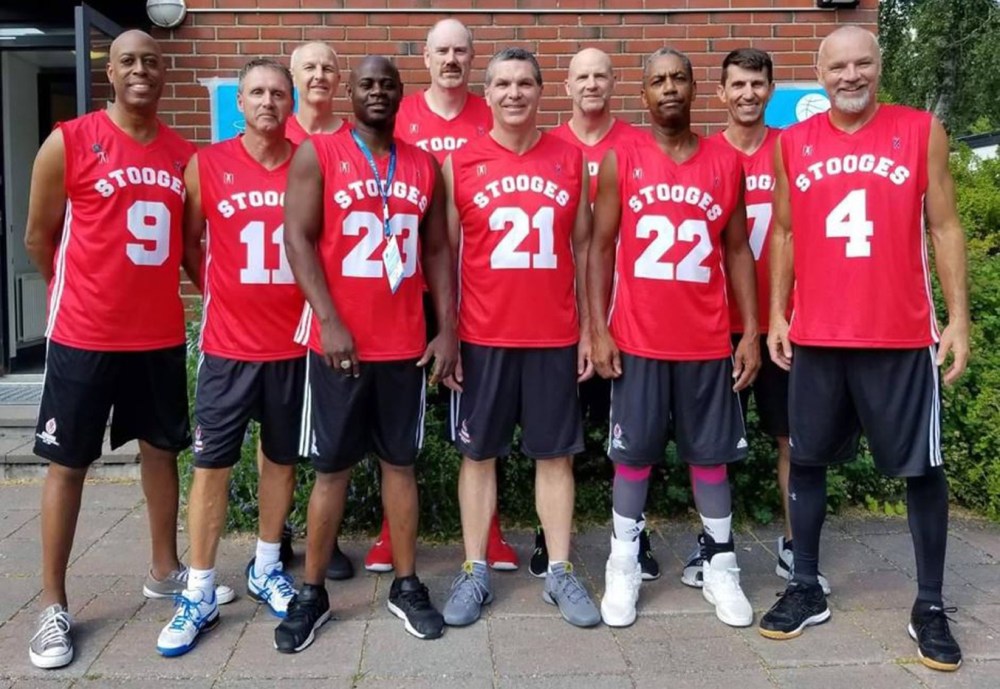
It might have been 30 years after his final game as a Bobcat, but he stood atop the world as his Canadian masters (50-plus) team went undefeated to win a world championship in 2013.
“That was a phenomenal feeling,” Kelly said.
“That championship game against Australia, we were down 8-0 early and looked around at ourselves … we were like ‘Oh my God, is this team for real?’ We regrouped and by halftime we were up 19. We ended up winning by 38, and that was great feeling. To get the gold medals presented Olympic-style, with the national anthem playing in the background … that was a great feeling.”
Kelly says the best feeling yet is watching his son Andre follow in his footsteps and find success with the University of Alberta men’s basketball team.
“It’s a great legacy, and it’s an honour for me to honour my father, who wanted his kids to have the same or similar experience he had as an elite university athlete, to travel and use sports to make new friends, enjoy new experience and gain knowledge,” Kelly said.
“I’ve imparted that to my boys and Andre is having a great experience, living a similar lifestyle and similar experiences I had, playing in the same conference, against the same schools.”
It all comes back to his time in Brandon, where he made friendships that last to this day. He credits Hemmings for establishing those connections and instilling confidence in his players.
“Coach Hemmings was always positive, was always up. No matter how bad things got after a loss or a couple of shots, he said, ‘You’ll hit your next shot,’” Kelly said. “I got into a bad slump the first half of my last year. He showed confidence in me and I stayed in the starting lineup even though I was shooting poorly.
“I turned it around and that was all because of him.”
Of course, it was just a few years later that the Bobcats went on to win three consecutive national championships from 1987 to 1989, but Kelly feels his group can share in the responsibility for making that possible.
“Winning attracts success, so the fact that we were winning GPAC, winning tournaments and gaining some notoriety nationally made it easier to recruit. When you can recruit good kids, you can achieve a whole lot,” Kelly said.
“If you’ve been successful on the court, you’re not going to settle for mediocrity off the court. For me, I want to produce the best product I can off the court, whether it’s a news release, a communications plan, if I’ve got a task assigned to me at work, I want to win the championship at that level, at the little tasks I’ve been assigned.
“That’s what winning and playing at Brandon has done. I’m not going to settle for second place. If I do settle for second place, I’m going for gold the next time. I’m not just going to be happy being lousy or mediocre: I want to excel.”
» tfriesen@brandonsun.com
» Twitter: @thomasmfriesen