
Keith Vassell worked to win at every level
Brandon University alumni series
Advertisement
Read this article for free:
or
Already have an account? Log in here »
We need your support!
Local journalism needs your support!
As we navigate through unprecedented times, our journalists are working harder than ever to bring you the latest local updates to keep you safe and informed.
Now, more than ever, we need your support.
Starting at $15.99 plus taxes every four weeks you can access your Brandon Sun online and full access to all content as it appears on our website.
Subscribe Nowor call circulation directly at (204) 727-0527.
Your pledge helps to ensure we provide the news that matters most to your community!
To continue reading, please subscribe:
Add Brandon Sun access to your Free Press subscription for only an additional
$1 for the first 4 weeks*
- Enjoy unlimited reading on brandonsun.com
- Read the Brandon Sun E-Edition, our digital replica newspaper
*Your next Free Press subscription payment will increase by $1.00 and you will be charged $20.95 plus GST for four weeks. After four weeks, your payment will increase to $24.95 plus GST every four weeks.
Read unlimited articles for free today:
or
Already have an account? Log in here »
Hey there, time traveller!
This article was published 18/04/2020 (2238 days ago), so information in it may no longer be current.
Keith Vassell ended his Canadian Intercollegiate Athletic Union career as the country’s player of the year, national tournament most valuable player and, most importantly, a national champion.
Tack on more than a decade of professional basketball and myriad coaching experience, and he’s still heavily involved in the sport today.
He says that happened, in large part, because he wasn’t the best player on his team in Grade 8.
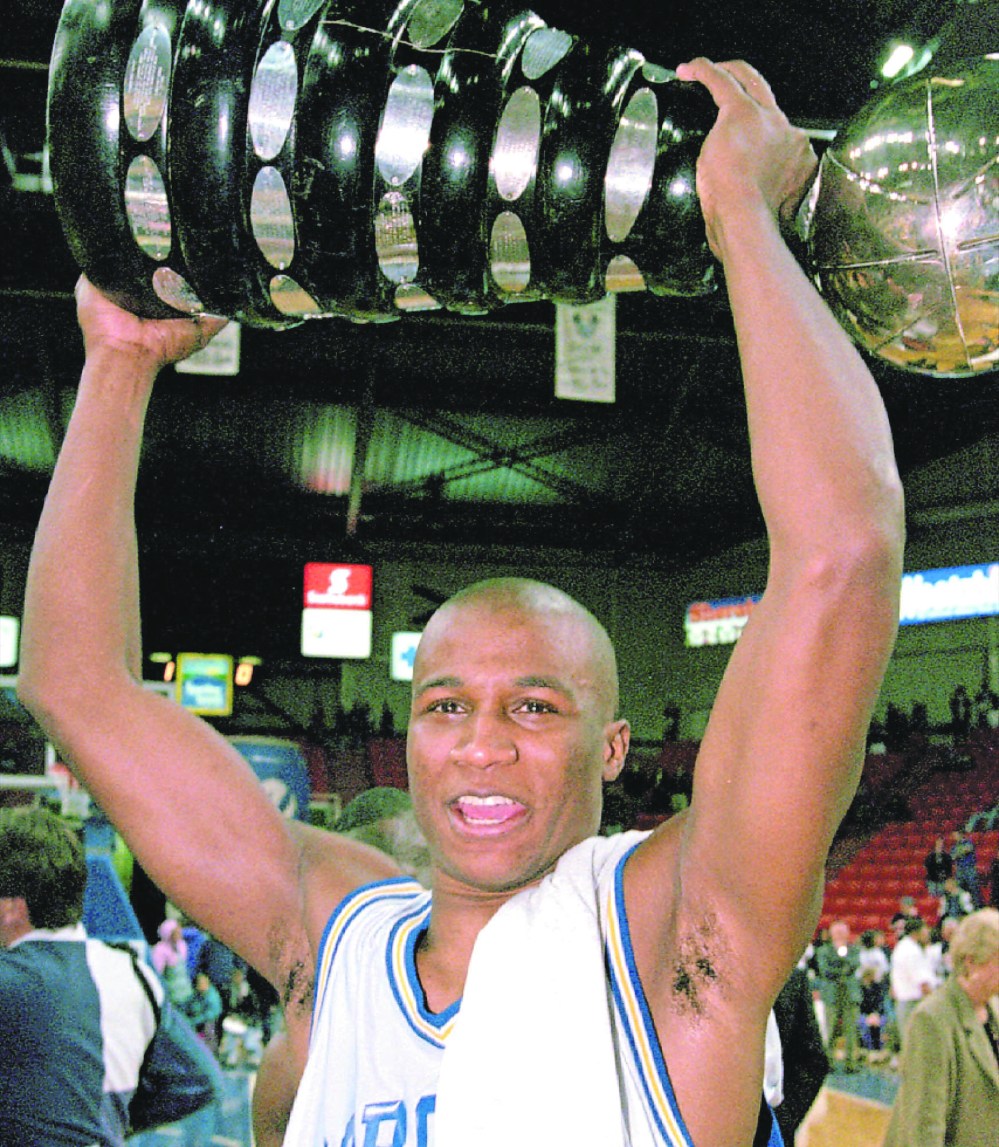
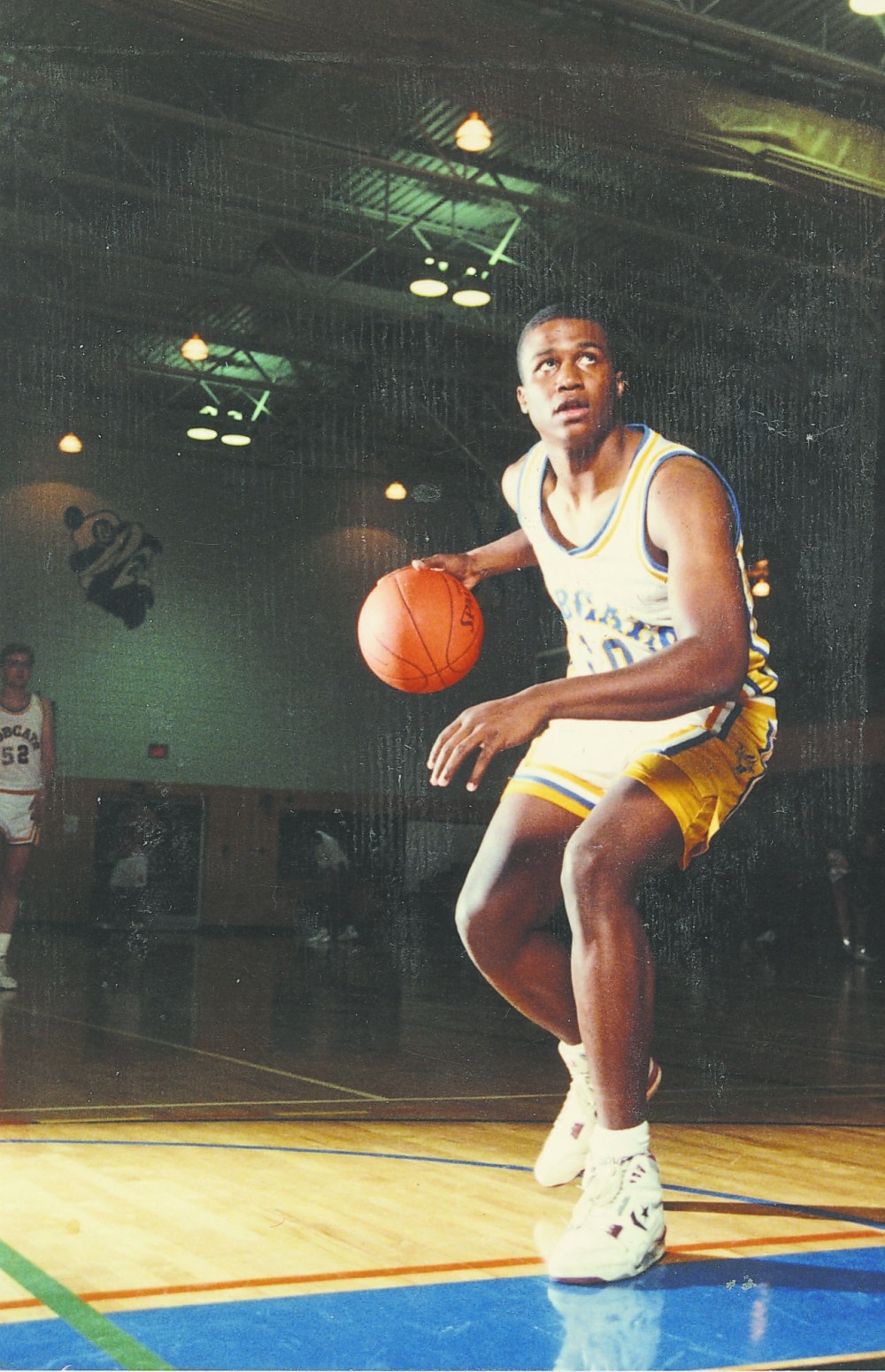
The three-time all-Canadian from Scarborough, Ont., started playing soccer and football at a young age, and said they came naturally to him.
“Then I started to play basketball and I wasn’t good,” said Vassell, 48, via phone interview. “There was all these things like ‘How do you dribble this thing?’ ‘How do you make those layups?’
“There was a guy who came from New York, Mark Reid. He had flair, he was dribbling between his legs, behind the back and doing all these things I thought were pretty good. It looked like Harlem Globetrotter stuff. I was like ‘I need to learn how to do that.’
“Then I just started to obsess with the game.”
The Brandon University Wall of Famer continued to describe his relationship with the game that way.
And he won’t mince words about his thoughts on the importance of winning. He considers that 1996 national title a monumental one, the most important part of his university career.
“It would have completely changed everything to do with how I looked back on my time in Brandon,” Vassell said of possibly coming up short of a banner.
“I would have second guessed almost everything I did, because there had to have been something I could have done that would have allowed us or didn’t do that didn’t allow us to win a championship, because every year we had a talented team.
“If we didn’t win one, it would have been devastating.”
Vassell learned how hard he was willing to fight to win pretty quick.
He went to the newly opened Mother Teresa Catholic Secondary School in Grade 9, as part of the only class. He said that made for some tough years on the hardcourt, especially with a lack of seniors to look up to.
But by his last year, Vassell was the top-ranked player in Canada and his team was No. 1 in Ontario. They captured a Toronto District Colleges Athletic Association title in 1991.
“We didn’t have any tradition,” Vassell said. “Because we were the only class, we established our own.”
With a world of Canadian universities and American colleges at his fingertips and a big decision to make for his post-secondary career, Vassell chose patriotism. He was already a member of the junior national team.
“I noticed there were players in the class before me that went to the States and they came back and it was not a good experience for them. Some people came back after one semester,” Vassell said.
“I had a lot of patriotism towards the country and I thought it would have been good to be here and just be all that I can be.”
Vassell’s emergence as a star in the Greater Toronto Area coincided with the Bobcats famous national championship three-peat from 1987 to 1989 under coach Jerry Hemmings. Naturally, the program was high on his list.
“Jerry, who’s a fantastic recruiter, he would religiously be in contact with me. He would make the calls, he would send me hand-written letters and ask how I was doing. He heard I did well the last tournament, or ‘I heard you lost a tough one.’ But he always knew,” Vassell said.
“I felt that I had a good connection with him, then it was just the stories of Johnny Carson and (Whitney) Dabney, Patrick Jebbison, Patrick being from Toronto and all the guys that were there from the GTA.
“Those were the guys that were huge and it just seemed like a very fun style of play for one, and the guys on the team all seemed very interesting to be around. … They seemed to have a history of guys I would have liked to have been around.”
Of course, his start in the Wheat City was two years removed from the “Powerhouse on the Prairies” days. Vassell said it felt natural, reminding him of the start of high school, but this time with an elite coach and some lofty expectations.
“The funny thing with that was upon meeting (five-time all-Canadian) Johnny Carson. I thought I was ready for the high expectations, but I didn’t have a clue,” Vassell said.
“I don’t have to get better, I have to get a lot better to live up to the standards. Unless we won a championship, Johnny made it clear that I wouldn’t be remembered.”
Vassell spent the next five years making his name known on a national scale. He was the national rookie of the year and represented Canada at the World University Games twice.
The second time, 1995 in Japan, is what he recalls as the highlight of his entire basketball career: He carried the Canadian flag for the opening ceremony.
“When you grab the flag and you’re walking, it was like ‘Wow,’” Vassell said. “Full stadium, people cheering and just leading the way, for me that was one of the greatest feelings I had. Ironically, it’s one of the things I don’t even have a picture of.
“Outside of the picture in my brain, there’s no evidence of the experience, but it’s definitely a great honour that I had.”
Remember, this is the tournament MVP that helped bring BU its fourth national title. Only two schools in the country have more.
Vassell recalled being ranked No. 1 in Canada at some point in each of his seasons, but just never being able to get the job done at nationals.
Then in 1996, BU beat Toronto 80-72 in the semifinals and gave Vassell one more shot.
In his interview that aired at the outset of the national final broadcast, Vassell made one powerful statement.
“I feel I deserve a national championship,” he told TSN. “I’ve had good teams, I’ve played with good teams all five of my years, it’s just we haven’t won. A lot of people feel, ‘He’s a choker’ or whatever.
“But I feel that we have to win.”
That final certainly wasn’t the six-foot-four forward’s best game in a Bobcat uniform. He finished with 12 points and a number of big plays in the second half, but battled foul trouble after a both some questionable decisions and soft calls.
His final few university plays were a steal and score against Alberta all-star Greg Devries, then another steal, finding guard Wayne Taylor to stretch the lead to 68-57.
Then with five minutes left, Vassell left — stunned — after Devries drew his fifth foul on an egregious flop. All-Canadian Shawn Gray came up with a massive block, but fouled out soon after.
“The funniest part about that is I wouldn’t change a thing, because out of my five years I thought that team was the least talented team that we had,” he added.
“But it was the best team that we had, meaning we worked so well together. We had everybody buy into what we were doing. If Jerry said ‘Jump five times,’ we would jump five times. We had total confidence in each other, we believed at both ends of the floor that we had each others’ back and we worked exceptionally hard.”
Devries heated up, cutting the lead to 71-68 with under two minutes left before Demetrius Floyd made one of the greatest plays in Bobcat history, crashing the offensive glass from the three-point line and hammering home a put-back dunk.
Brandonite Jason Scott, who started the game but was frequently referred to by the commentators has having come off the bench, iced with a pair of free throws in the final minute, and Brandon emerged with a 79-72 win.
“If Shawn Gray was going to get fouled out, an all-Canadian, if you would have told me he wouldn’t have been on the floor and we would win a national championship I would have said ‘No way,’ Vassell said. “But we did.”
“I was just able to sit back and watch all these guys that at the start of the season were doubting themselves,” he added.
“If you told me at the beginning of the season that we were going to depend on Jason Scott to play defence on one of the top scorers in the league, then go back down the other end and knock down some tough shots, I would have been surprised.”
Vassell displayed a wide array of emotions during those final five minutes — he recalled it being significantly longer, and it surely must have felt that way — from tears to absolute elation at the final buzzer.
“My friends always bug me about it. I was crying because I just invested five years of that’s what I wanted. That’s what it always came down to for me was to win a championship,” Vassell said.
“I wasn’t even the factor, but it happened and I don’t think I could have felt any better.”
That made it easier to move on to the next chapter, and Vassell has fond memories of his playing days at BU.
“My experience in Brandon, overall, was at a time in my life where it was really formidable years of growth, going from a boy to a man,” he said. “It has been and will always be one of the most important times of my life.
“Not saying I did everything right, because I definitely did not, but that experience and the people definitely has set a standard that I’ve tried to live by and impact the lives of others as a result of the things I’ve experienced there.”
Spain was next. Vassell kicked off his European professional career that fall and it didn’t take long for him to learn just how different the game was, let alone a totally different culture.
He always felt that his stout offensive numbers — around 24 points per game at BU — were simply a result of his role in an efficient offensive system. He didn’t have to be, “The guy.”
With 45 seconds left in his third pro game, he found out that was exactly who he had to be. He received a pass and his entire team moved away from the basket, leaving him in a one-on-one situation and waving him on to score.
“The person that was defending me, I could see his breathing changed and his intensity changed. He’s slapping the floor and he’s really pumped,” Vassell said.
“I went and I scored the basket and we were up one. The other team calls a timeout I go (to the bench) and I’m pissed. I’m saying ‘What the hell are you guys doing, what play was that?’
“The guys that spoke English said ‘That’s why you’re here. You have to score. At the end of the game, that’s your job, that’s why you’re here.’”
“I learned right then and there that that’s very different, rather than you execute a play and whoever’s open gets the shot and you crash the boards as hard as you can,” he added.
“There, it was ‘No, you’re Michael Jordan, you got to score. Have fun.’ That was the biggest transition. I then had to transform my game where I would start to dribble more and be a better one-on-one player or my professional career would have been as successful.”
Vassell stayed home the following fall for the birth of the eldest of his three daughters, Justice. He was playing for the now defunct Winnipeg Cyclone, but wanted to go back overseas and landed a spot with a struggling Icelandic team late in 1997. He carried them on a 13-game winning streak, reaching the league championship series.
Then the team asked him to be a player-coach, which he found was remarkably difficult when you’re also the team’s top scorer.
He found a compromise and guided that squad to a league title as an assistant coach/player in 2000, then got Icelandic citizenship so that he could be treated as a domestic player across the continent. He had stops in Finland, Sweden, Switzerland and Portugal before returning to Iceland to ultimately wrap up his pro career in 2007.
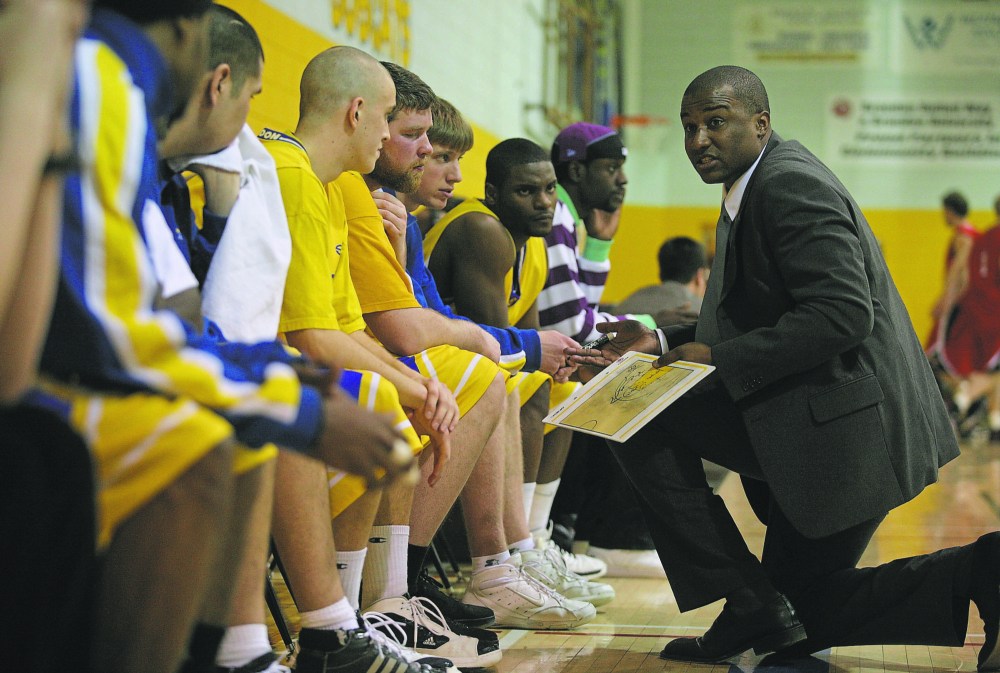
The transition back to coaching was a natural fit: The situation at his alma mater was anything but normal.
BU told Hemmings it was replacing him at the end of a year-long sabbatical in 2004. That kickstarted a revolving door of coaches, with Vassell being handed the reins in 2008. The team was a year removed from what stands as its last national final appearance, a 52-49 loss to Carleton in 2007.
In his mid-30s at the time, with a wife staying back in Ontario and second daughter born, Vassell recalled Brandon as a much different place to live.
The game was also not at the level he was used to, and he had to rethink offensive systems and coaching philosophies.
“By my second year I started to get a better feel, but I was disappointed with the level we were playing,” Vassell said.
“We had Dany Charlery, who was an incredible player, and I felt like I wasn’t able to utilize him. He was still all-Canadian, but I felt I didn’t utilize him as well as I could have. It was really a good experience from that standpoint as a coach.”
Vassell resigned in 2010, before BU hired current coach Gil Cheung.
“There were just a few things that weren’t settling in with Brandon University staff that weren’t sitting well with me. At the end of my two years, I felt it was probably best to move on,” Vassell said. “Just butting heads with a couple of the staff members.
“It wasn’t good.”
So he went back to Toronto and started a prep school and prep league, with the goal of encouraging more elite teenage players to stay in Canada instead of leaving their families for big-name United States schools.
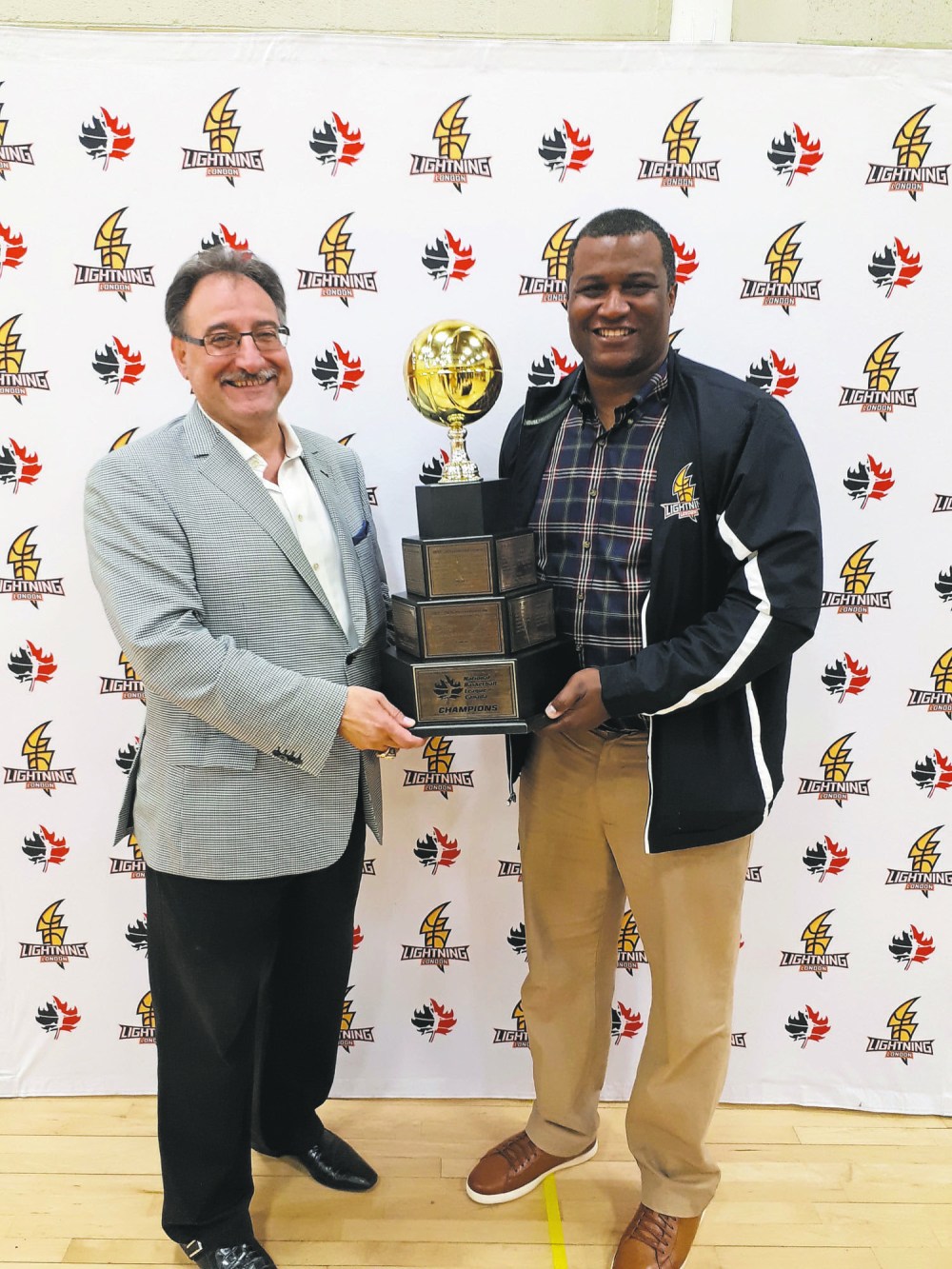
Vassell got back into the post-secondary game with Niagara College in 2014. Three years later, Niagara’s National Basketball League team let its coach go and needed someone to close out the season after the college campaign was over. Vassell took it on, then wound up in a permanent job with the defending champion London Lightning.
He said it was another big adjustment, this time in the other direction.
“You’re coaching pros and it’s like ‘Oh my gosh, the systems I know now aren’t going to work because they’re too primitive,’” Vassell said.
“They can do things I haven’t seen in over 10 years since I was playing. That was a difficult transition, but what I did know how to do was break down things a lot better. I just kept everything as simple as possible and because they had the skills to be able to make plays out of simple actions, it worked for us.”
He guided the Lighting to their second straight championship.
“It felt extremely good, because I invested a lot of myself in that year,” said Vassell, who made the 90-minute commute each way from Niagara all season.
He then saw just how tough it is to maintain success at that level.
Players started asking for more money and bigger roles, and his roster didn’t look nearly the same come fall of 2018. London started the season 4-4, and Vassell was fired.
“The owner and myself, it was weird. Our relationship seemed to have changed and I didn’t really understand why. I didn’t think I was going to get let go, but it was obvious there were some things that had to have been changed,” Vassell said.
“It was a very difficult, stressful season. Our first game was November 23, and I got let go December 10. I can say that from September to the day I got let go, there was just every day was a journey. Every day there was something happening that was like ‘What the heck is this?’ I’d think ‘It’s not going to get any worse than this,’ then something happened that just blew my mind.
“Something had to give, so the owner, instead of taking ownership of his part, it was easier just to say ‘It’s all Keith’s fault. Let’s move on to something different.’”
Vassell responded by starting the academy he currently runs, BP1, which is on hold due to COVID-19.
He enjoys being a technical director as it combines all the facets of the game he’s passionate about, from skill development to physical and mental conditioning.
Vassell draws from his experience of fighting to make the national team every summer, knowing that what got him there last year, “wasn’t going to be good enough to make the team this year.”
“As I look back over my years, I’ve done all of it. I’ve been a skill trainer, a personal trainer, a head coach, I’ve played at every level, so I have a relatability with these kids, regardless of what their goals are,” Vassell said.
To sum up what basketball means to the Bobcats legend and Manitoba Basketball Hall of Fame inductee (2011), he simply considers it “Life changing.”
“Some of my (high school) friends didn’t end up going to college. When I got back like, ‘What are you up to?’ thinking they’d spent the year as productively as I did, they didn’t,” Vassell said.
“I wasn’t the greatest student ever, but I was in university because of basketball. I graduated university because I didn’t want to not be eligible for basketball. I’ve travelled the world, I’ve been to every continent and seen easily over 20 countries because of basketball.
“The way that I see cultures or people was definitely influenced because of my experience of meeting Italians, people from France, Hispanics, all these places I had been have influenced the way I relate to people.”
» tfriesen@brandonsun.com
» Twitter: @thomasmfriesen