
Worrell laid foundation for Bobcat dynasty
Brandon University alumni series
Advertisement
Read this article for free:
or
Already have an account? Log in here »
We need your support!
Local journalism needs your support!
As we navigate through unprecedented times, our journalists are working harder than ever to bring you the latest local updates to keep you safe and informed.
Now, more than ever, we need your support.
Starting at $15.99 plus taxes every four weeks you can access your Brandon Sun online and full access to all content as it appears on our website.
Subscribe Nowor call circulation directly at (204) 727-0527.
Your pledge helps to ensure we provide the news that matters most to your community!
To continue reading, please subscribe:
Add Brandon Sun access to your Free Press subscription for only an additional
$1 for the first 4 weeks*
- Enjoy unlimited reading on brandonsun.com
- Read the Brandon Sun E-Edition, our digital replica newspaper
*Your next Free Press subscription payment will increase by $1.00 and you will be charged $20.95 plus GST for four weeks. After four weeks, your payment will increase to $24.95 plus GST every four weeks.
Read unlimited articles for free today:
or
Already have an account? Log in here »
Hey there, time traveller!
This article was published 10/07/2020 (2150 days ago), so information in it may no longer be current.
The Brandon University men’s basketball dynasty had to start somewhere.
LaVern “Lew” Worrell didn’t know it at the time, but he was one of the first brushstrokes on Jerry Hemmings’ four-part masterpiece that now hangs at the Healthy Living Centre.
No, he didn’t suit up for that famous Canadian Interuniversity Athletic Union — now U Sports — title game in 1987 or the three Bobcats national championship victories that followed. And he’ll be the first to tell you he wasn’t a star like teammate Jude Kelly or five-time first-team all-Canadian John Carson.
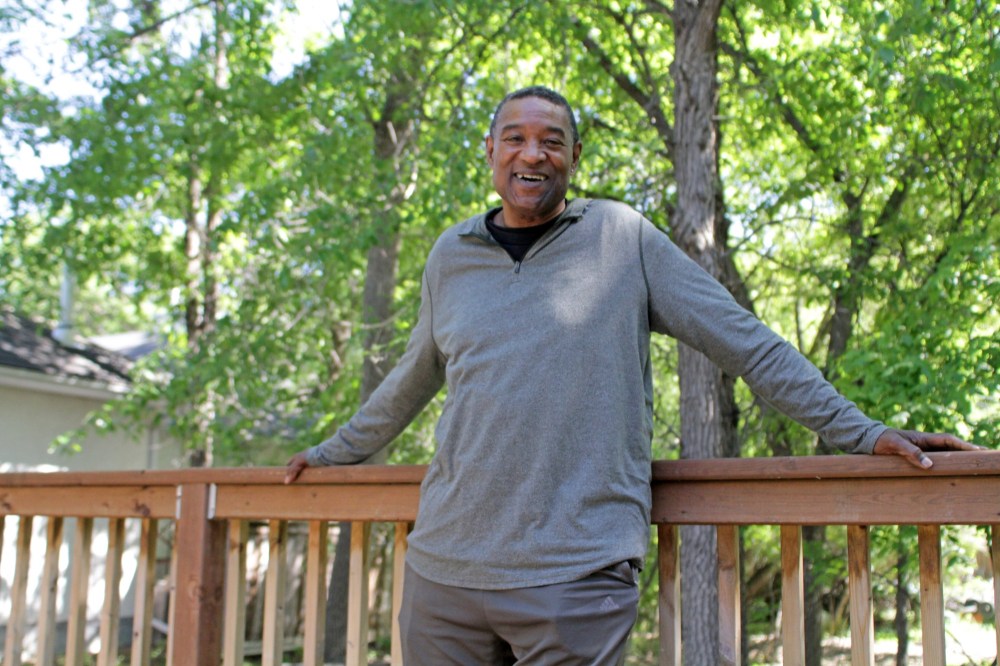
But after joining the Bobcats with Dave Price as Hemmings’ first two recruits in 1975, he stayed through thick and thin, leaving BU in a better place than he found it five years later.
“If you like winning, you figure out what you got to do to win and you make sacrifices to win. I definitely figured out some things and one of the things I saw happening is that with programs and university programs, especially looking at what was happening in the states, teams were successful when people stayed,” the Winnipeg native said.
“In some ways I do feel like Dave and I kind of started things. In many ways I felt Brandon’s always been my team, my dynasty. Because of the camaraderie I had with the people I played with and what I feel was an important step in making people happy and staying there.
“I stayed. I wanted to win and I liked coming into Winnipeg and going ‘Yeah, yeah, I know you want me to come in … well it’s this thing where I like coming in and kicking your ass.’ In some ways I felt like I got shunned here, so I like coming in and kicking your ass.”
Hemmings brought Worrell west after a stellar high school career at St. John’s. It began as a multi-sport athlete, playing defensive back for the Tigers and balancing basketball with hockey in the winter for a while.
He hung up the skates on his own terms, then had coach Bill Wedlake — who went on to become athletic director at the University of Winnipeg and assistant coach of Team Canada — make the decision for him to leave football in the past in Grade 11.
It wasn’t easy leaving the chance to play for the defending Winnipeg High School Football League champion, but Wedlake saw potential in the six-foot-one guard/forward.
Looking back, Worrell realizes how lucky he was to play for not one, but two Manitoba basketball icons.
“(Wedlake) was so organized. And he ran great practices,” Worrell said.
“A great fundamental coach: He gave me a left hand: he made sure I had a left hand. I’ve been coaching for 30-plus years and that’s one of the things I make sure happens right away.
“He gave me ideas and philosophies that I still use. I still use his press break.”
Back then, most top high school players stayed home to play for the University of Manitoba or U of W. But Worrell didn’t like the style either team played, recalling the Wesmen adopting NCAA Division I coach Jerry Tarkanian’s mentality.
“His idea was unless you can hit 100, don’t even come,” Worrell said. “It was hurry-up offence. Hurry up and shoot because I want to be on offence and we’re going to outscore you.”
Worrell got a totally different perspective on the game during his summers. He had a grandmother who lived in Philadelphia and he’d spend his summers visiting her and learning lessons on the black top.
“I got the crap beat out of me, everything was ‘I got a lesson for you Canuck, come here Canuck,’” Worrell said. “I cut my teeth doing that.
“I went to Brandon, and it was the same mentality. I enjoyed my time out there and it was such a neat experience. It felt like home.
“… It was funny, the first time I drove out for tryouts, as I turned onto Portage (Avenue) going down by Headingley, John Denver’s ‘Thank God I’m a Country Boy’ plays. Like, ‘Oh my, what am I getting into?’”
That 1975-76 season, the Bobcats lost in the Great Plains Athletic Conference semifinals to Manitoba, which captured the national title. BU came up short in GPAC the following few seasons, but raised their first conference banner his final season.
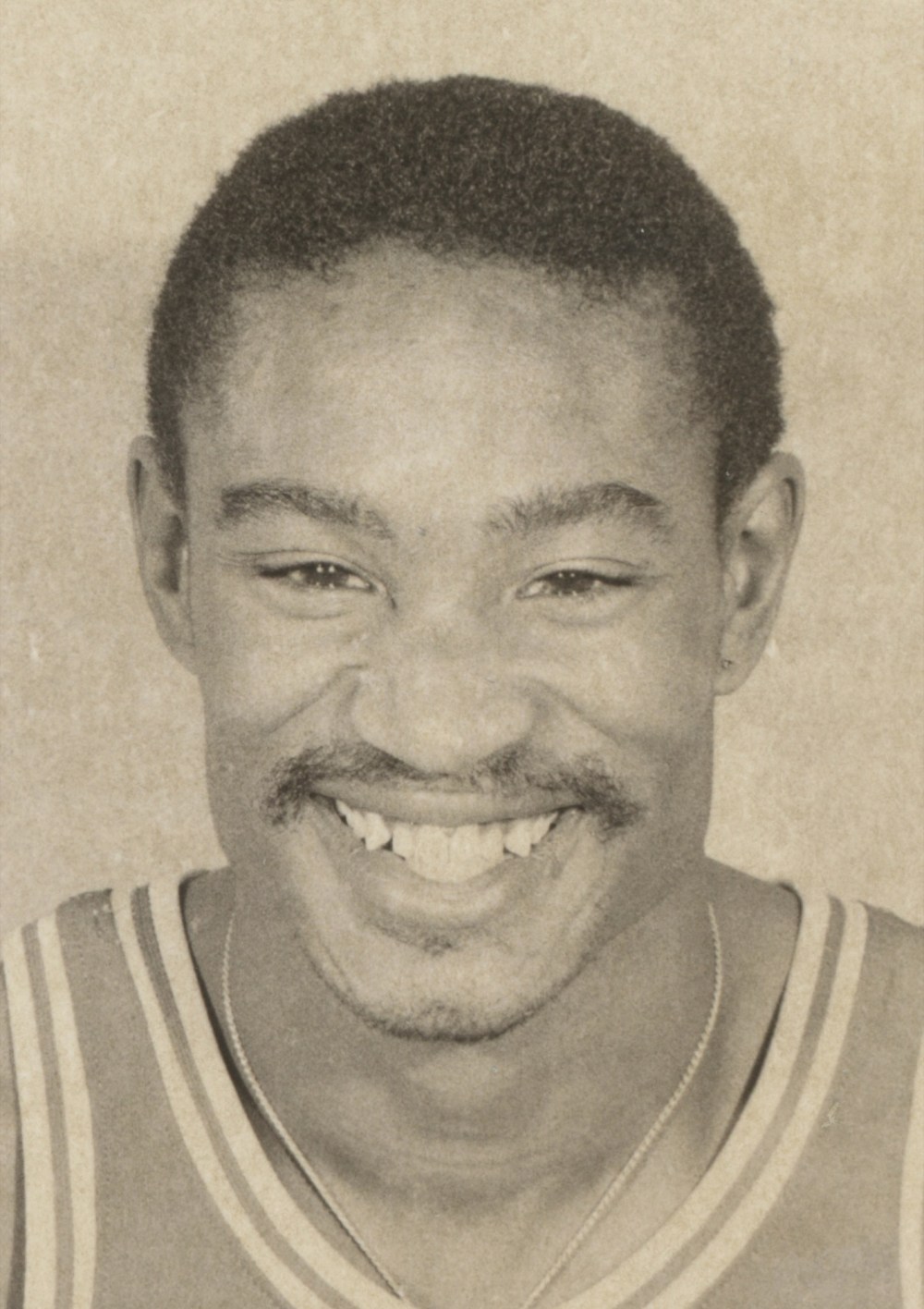
Worrell saw a steady increase in playing time as his game grew through the first four years, which culminated in Brandon’s first-ever national quarterfinal appearance.
“One of the things that you learn is how much you want it and how much you’re willing to work to … make sure you get to that point and get past that point. For me, very important,” said Worrell, who found out there was a price tag for greater success.
He already started focusing more on school when he switched into the education program in his third year, then saw Brandonite Don Jackson transfer from Winnipeg and a future star arrive in Jude Kelly. Worrell went from a prominent role to the third or fourth guy off the bench.
He was BU’s captain at that point, but knew the talent in the room and set his pride aside. Not that it’s an easy thing to do by any stretch.
“Losing my playing time was a huge kick in the ego. You sit down and question, ‘Why am I here? Is this worth it?’ That was a huge learning (moment),” Worrell said.
“As far as my experience, my total experience at Brandon was far greater and better and good. I learned so much from it.
“… It was a very close-knit group. Even though I wasn’t getting the time … I was really feeling the connection because we were us.”
It turns out small-town teams can active big-city dreams when no one cares who gets the credit. The Bobcats eked out a 91-90 national quarterfinal win over York University, then bounced Winnipeg 85-81 to get to the final.
Worrell recalled a remarkable block by Jerry Abernathy in the dying seconds to get Brandon through the quarterfinal, and said the group was confident it could rise up to those big moments.
“Ain’t no stopping us now,” he said, quoting the team’s theme song off unofficial team DJ Kelly’s mixtape. “Everybody had that attitude.”
As fate would have it, Victoria stopped them, 73-65.
“I was the captain, so I had to accept the second-place trophy. I remember it like it was yesterday and … you’re pissed. You’re still processing and I remember halfway going, ‘Remember, you got to smile,’” Worrell said.
“It was tough. It was definitely harder for me because it was my last year. Looking at everybody else, knowing ‘We’re here now and we’re going to get right back here.’ The attitude was ‘We’re here. We have arrived.’
“No one ever expected us to get there from Brandon. When I left St. John’s High School, people laughed at me going to Brandon. So coming back and saying, ‘Yeah, whatever,’ it was nice.”
Worrell certainly left a strong impression on his BU teammates, as did his late mother, Redena Elsie Hinton, who was the Bobcats’ “surrogate mother” on the road, cutting their hair and taking them to church on weekends in Winnipeg.
“He took me under his wing and told me what to do and what not to do. Me being a young guy there, I didn’t listen to him all the time even though I knew he was right,” Kelly said via phone interview.
“Lew was always a team-first guy and it takes great courage and strength to step back from a role you’re used to playing and cheering on your teammates.
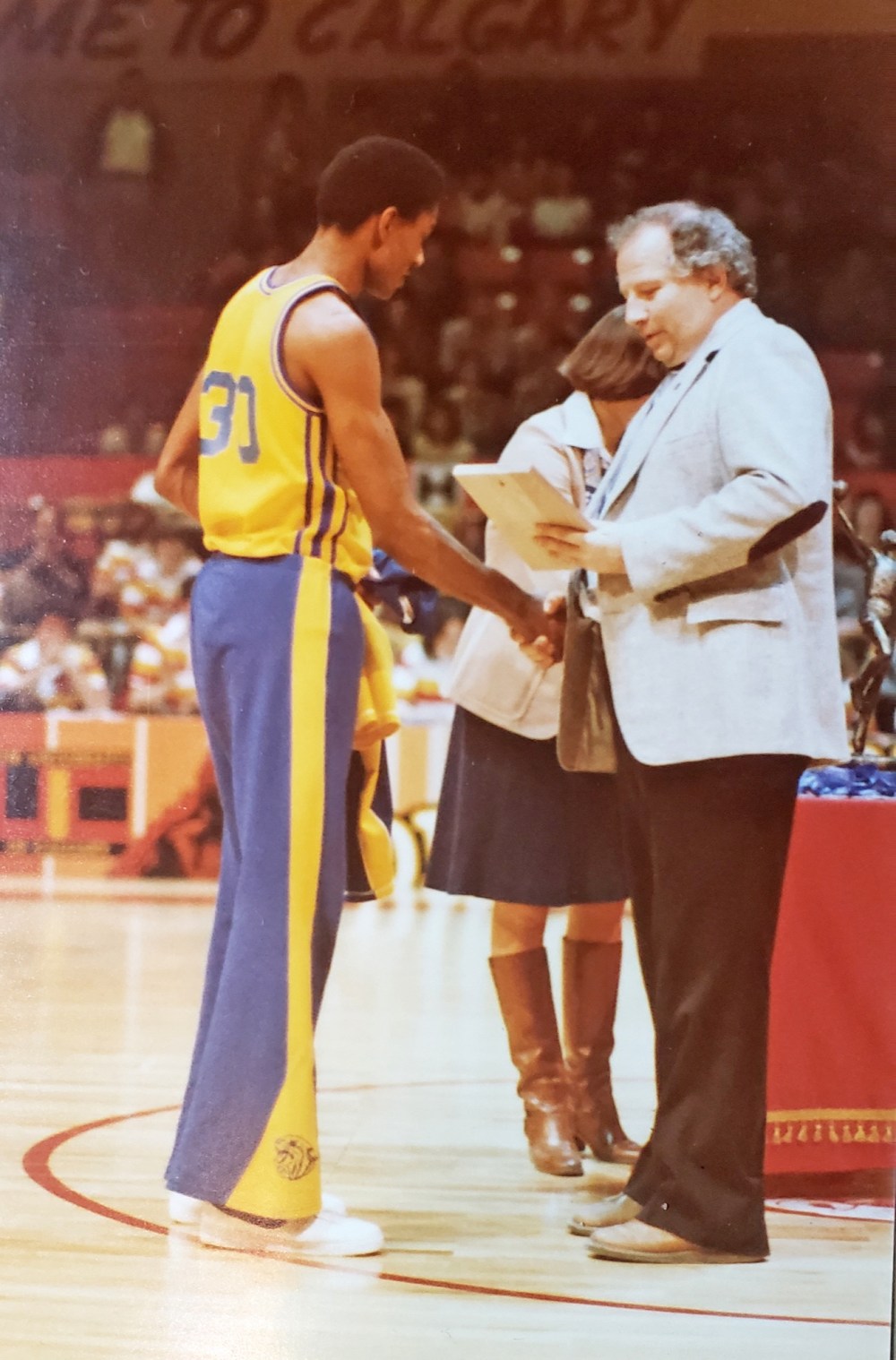
“I learned from Lew that it’s a team game. It’s always been a team game but before that I was interested in individual accolades. Seeing Lew accept that role willingly, working hard in practice to make me better, make us better, I really learned a good respect for him.”
After graduating from BU, Worrell felt he needed more experience before diving into teaching full time. He moved to Calgary in 1980 and spent four years working in a program for children with autism. When he moved back to Winnipeg, a former foe in Grant Park Pirate Mike Babb recruited him to coach the junior varsity boys’ basketball team at Churchill High School.
Worrell didn’t have a teaching job yet, but got his foot in the door and ended up teaching and coaching there for 19 years.
Babb, who ran the varsity boys’ program before shifting to Sisler and handing the reins over to Worrell in 1993, certainly enjoyed the fruits of his labour.
“(The players) really learned to respect the game. I think they learned the right skills and I definitely benefited from coaching the kids he coached,” said Babb, a Manitoba High Schools Athletic Association Hall of Fame member.
“They came out with good skills, good attitudes. He expected them to be committed and expected him to work hard and I benefited as the varsity coach from that.”
Worrell guided the Bulldogs to a AAA provincial title in 1997, sticking around until 2003 when he shifted to Elmwood High School. He met his now wife of 15 years, Susie Gale-Worrell, at that time, and decided it best to stick to the lighter JV schedule to spend more time with her.
That’s not to say he’s light on the athletes though.
“(I was) blessed by having two pretty good coaches for most of my time. There are definitely things I do to follow them,” Worrell said.
“When I was in Brandon, Jerry phoned my mother and sat me when I missed a night class — a friggin’ night class — I’m thinking, ‘How did you even know?’
“Being in a school, I emphasize that you’re a student-athlete. Student first,” he added.
“I really want people to understand that you are privileged to get to play a game. Respect that privilege. Be good to the game … and the friends you make now, the acquaintances and the enemies will last a lifetime — so make more friends.”
Hemmings certainly gained a friend in Worrell, who quietly helped him recruit Winnipeg talent to the Wheat City. Most notably, he helped bring in all-Canadian guard Joey Vickery after watching the former Wesmen standout in a senior men’s game.
“I was just amazed,” Worrell said. “He had gone on an academic probation and was playing senior men’s and I’m thinking, ‘You should not be playing here,’ just from the way he played.”
Worrell set up a meeting between Vickery and Hemmings, then had to fill the coach’s spot when a snowstorm closed the highway.
Worrell stayed true to BU blue long after his final game as a Bobcat — a wild one-point win in the team’s post-nationals trip to France — playing senior men’s ball with fellow BU alumni.
Among others, his team consisted of Jan Bujan, Price, Earl Roberts and a handful of St. John’s guys.
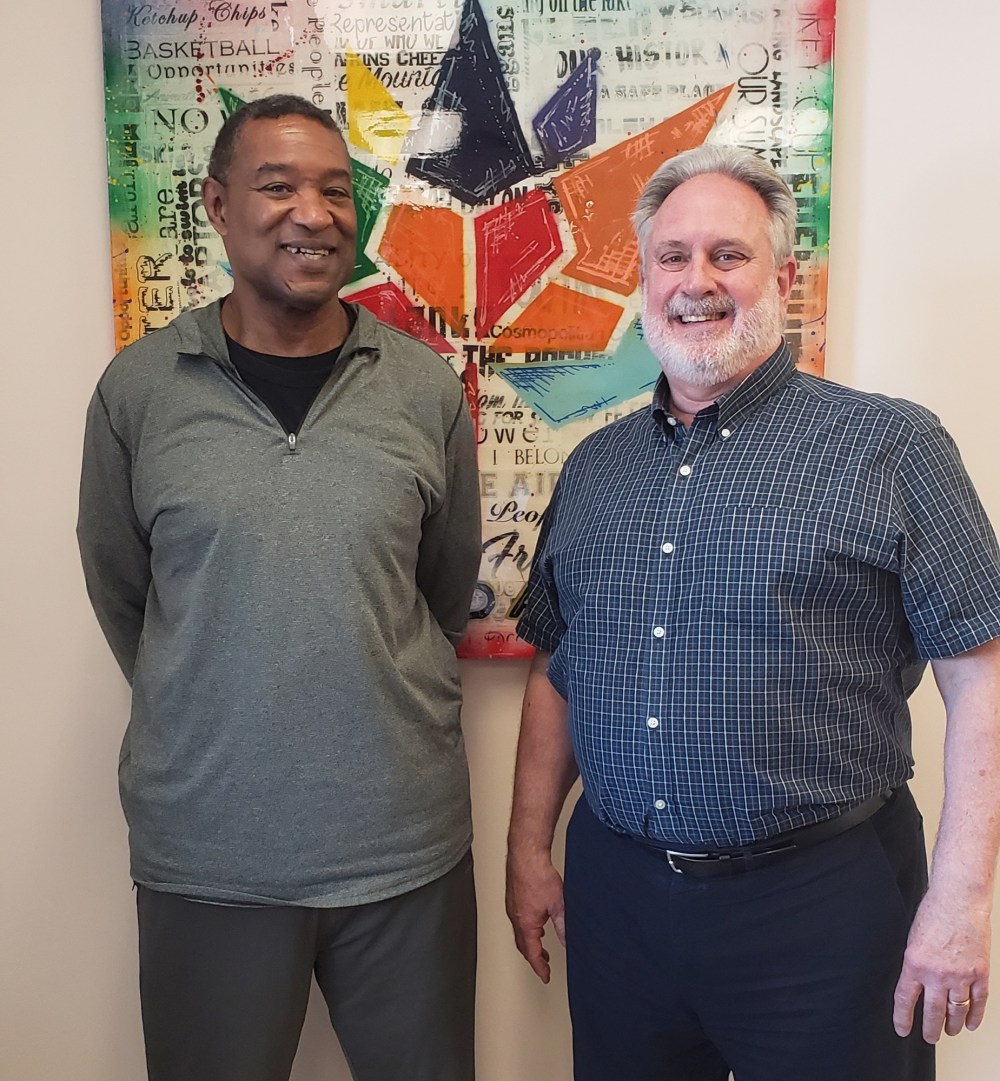
Worrell wishes players still had the same loyalty to their communities.
“In high school sports with everybody going back and forth over the borders, that sense of community is not the same way. When I was at St. John’s, people grew up wanting to be successful at St. John’s, not go win somewhere else,” he said.
While Worrell gave up most sports besides basketball, he did continue to play rugby through high school and a long time after.
That’s an understatement.
He suited up as a wing forward in senior men’s games until suffering torn ligaments in his knee at 48.
Now 63 and retired from teaching since January 2019, he sees his time in Brandon as instrumental in shaping his future.
“Brandon was a great place. I will recommend it to anybody and I do all of the time,” he said. “It’s a great place to have a family, there’s just so many things that were good about the university and the people.
“For me, I really did a lot of growing up and my experience there taught me things about myself too. It taught me how much I wanted to win.”
He’s still involved in basketball and looks back on five decades around the game with fond memories.
“It teaches life. If you have a shot … let’s say you have a free throw and another minute you have another free throw, that first free throw is going to impact the second one,” Worrell said.
“You have to learn from everything, be mentally disciplined and that’s one of the things that really helped.
“(Basketball) was a means to enlighten others into some of the privileges and joys we are granted here, because we’re so blessed.”
» tfriesen@brandonsun.com
» Twitter: @thomasmfriesen