
Bobcats last gasps at glory highlighted 2000s
Advertisement
Read this article for free:
or
Already have an account? Log in here »
We need your support!
Local journalism needs your support!
As we navigate through unprecedented times, our journalists are working harder than ever to bring you the latest local updates to keep you safe and informed.
Now, more than ever, we need your support.
Starting at $15.99 plus taxes every four weeks you can access your Brandon Sun online and full access to all content as it appears on our website.
Subscribe Nowor call circulation directly at (204) 727-0527.
Your pledge helps to ensure we provide the news that matters most to your community!
To continue reading, please subscribe:
Add Brandon Sun access to your Free Press subscription for only an additional
$1 for the first 4 weeks*
- Enjoy unlimited reading on brandonsun.com
- Read the Brandon Sun E-Edition, our digital replica newspaper
*Your next Free Press subscription payment will increase by $1.00 and you will be charged $20.95 plus GST for four weeks. After four weeks, your payment will increase to $24.95 plus GST every four weeks.
Read unlimited articles for free today:
or
Already have an account? Log in here »
Hey there, time traveller!
This article was published 31/01/2021 (1921 days ago), so information in it may no longer be current.
New millennium, same Bobcats. So it seemed.
When the year 2000 came along the Brandon University men’s basketball team was still finding ways to win, appearing in its 14th straight Canadian Interuniversity Athletic Union — now U Sports — championship.
But after two silver medals and a fifth-place finish, the Bobcats string of consecutive trips to the big dance stopped at 16 in 2003. Coach Jerry Hemmings was asked to take a sabbatical, then told he’d be replaced the following season.
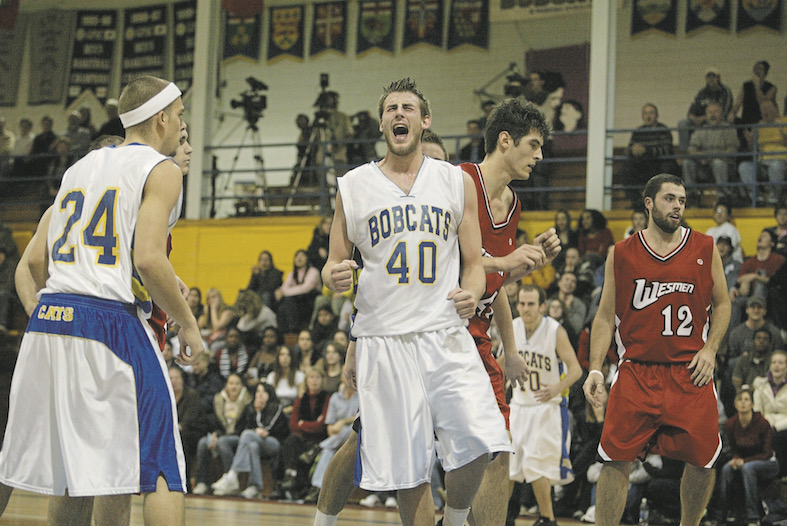
The coaching carousel that ensued cast a shadow on the rest of the decade. Barnaby Craddock and Keith Vassell were the only head coaches to hold the job more than a season. However, the team still stood among the best in the nation over that stretch.
Brandon made one last appearance in the gold-medal game in 2007, losing the lowest-scoring final in tournament history 52-49 to Carleton. Then Brandon went 20-2 but finished third in Canada West and didn’t receive a wildcard for nationals.
With four all-Canadians and the nation’s top defensive player, this lineup would certainly fill the Healthy Living Centre stands today (if COVID-19 wasn’t a thing, of course).
STARTERS
Earnest Bell
Six-foot-six forward from Louisville, Ky.
Played from 1999 to 2001
Earnest Bell might top the list of best Bobcats without a national ring. The American college transfer suited up for BU in 1999 and brought the team to back to the national final. He came within one point in 2000, then lost in overtime in 2001, averaging 19.4 points per game in his two-year stint. He also hauled down 8.7 rebounds per contest and averaged a double-double in his six CIAU tournament matches. He’s the last two-time all-Canadian in program history to date, with a second-team selection in 2000 and first-team nod the following year.
Gil Cheung, former player and current head coach: “I think it starts with Earnest Bell.
“I believe he led our team in scoring, rebounding, assists, steals, blocked shots, field-goal percentage and free-throw percentage … The scary thing he’s probably better in today’s basketball game. It didn’t seem like that long ago but the game was really different.”
Charlton Weasel Head: “What made Earnest Bell special was his tenacity to compete and know we could win games. Any gym we stepped in, we were going to win that game. Just having that fire from him offensively gave us that extra spark.
“He could score at any time, any position, anywhere on the court and gave us that confidence. He had high intensity being a defender and was very quick with his hands … Very engaging and a fierce competitiveness to lead us as a team.”
Adam Hartman: “He always came back after playing pro in the summers to train. When I was staying in Brandon and a lot of the guys went home he was a guy I got to play … all summer.
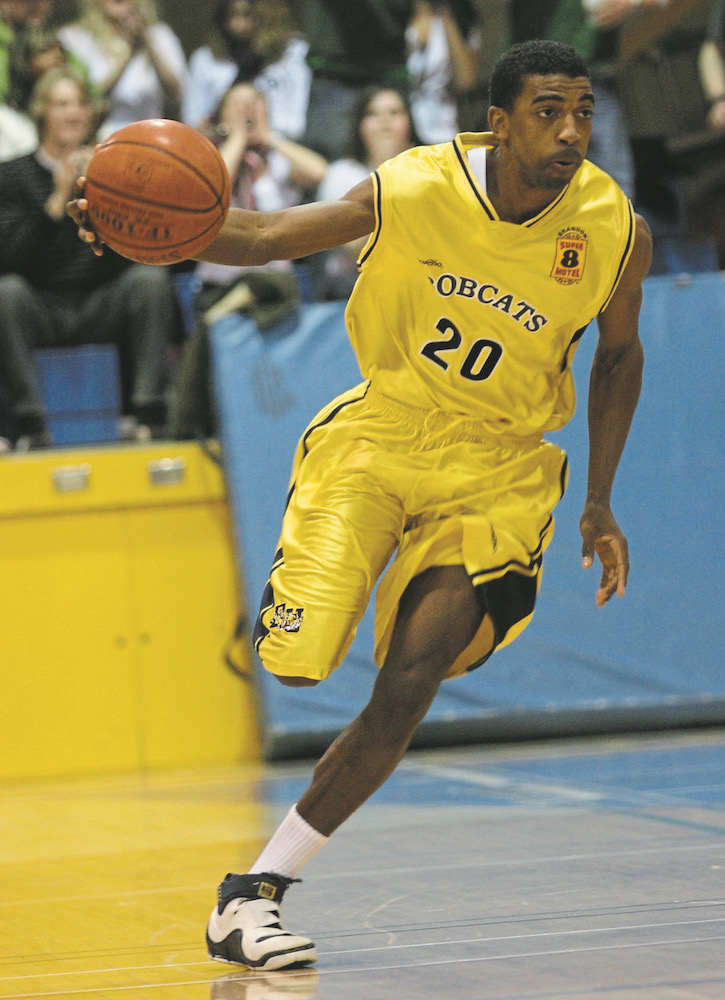
“He’s a big guy, athletically and talent-wise could kind of do anything on the floor … He was ultra-skilled and ultra-competitive and overall an extremely talented player.”
Cheung: “He was 6-6, 220 and the best hands I’ve ever seen. He’d go up and catch everything and go dunk everything. A step in from the three point line he was great. He had the best second jump. There’s always guys in the country, the conference who can jump out of the gym … he’d jump, land and be right back up where he was the first time.
“Off the court he was a better guy. He always took care of me and was a great guy in the community, loved coaching the kids but on the court was just that mismatch.”
Yul Michel: “I saw the highlights of Earnest Bell, he has to be on the starting five no matter what. He was just a complete player. He was shooting the three, he was defending, he had a mid-range. Earnest was just a dog.”
Cheung: “I never once went into a game in the two years with him thinking ‘We don’t have the best player.’”
Dany Charlery
Six-foot-two guard from St. Lucia
Played from 2005 to 2010
Dany Charlery’s name is, and will stay, firmly etched in the Canada West record books. Charlery sits second with 272 steals and sixth at 1,942 points. He’s a second-team all-Canadian (2007) and four-time Canada West all-star. His career ended not with a bang, but a quiet whimper as BU experienced its first losing season since the 1970s, but he was a bright spot from his first start to his 106th — a nearly untouchable conference record.
David Larkins, Sun reporter from 2003 to 2011: “Dany had a way to score everywhere, all over the court. He was athletic, he could dunk on you, he could get to the rim. But then he had elbow game, hit mid-range jumpers and just had a number of things he could do to you.”
Hartman: “Dany was extremely explosive, an incredibly athletic player but not like anyone I’ve seen he used that athleticism but played with such control. He was so smooth. Usually with athleticism comes with playing at 100 per cent all the time and with Dany he had a very different rhythm and flow to his game.
“He’d be a guy that was so silent with his game because he could score from everywhere … we always laughed because there’d be so many games where you didn’t really notice Dany … then you check the box score and he’s got 30 points.”
Cheung: “Dany could really score and was really athletic. Great mid-range game and it seemed like the brighter the lights, the bigger Dany would play … He could really score and was a sneaky defender. He was great on the ball, had really good hands and could get out in transition and go from there.”
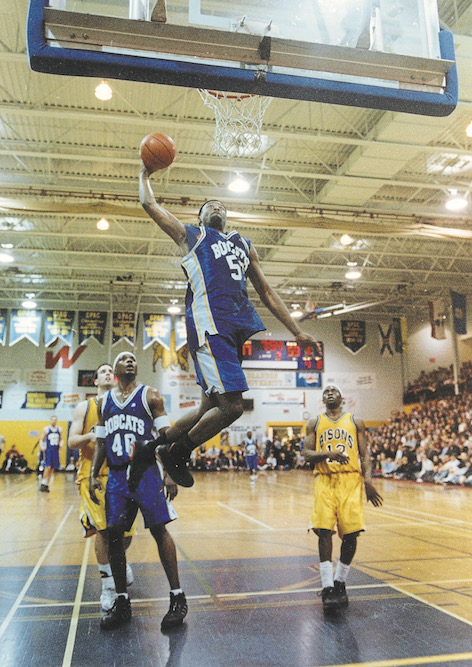
Michel: “Dany Charlery’s a complete player. He can shoot the ball, he can put the ball on the floor and he’s underrated because he can defend too. He always played above the rim and he had at least 15 points per game.”
Larkins: “Dany will always have a special place in my heart because he was also just a really good person. He was an exceptional talent but never, ever a guy who would have carried himself that way. He was always the most modest and humble of players and really a pleasure to be around.
“I’d put him as my number one.”
O’Neil Gordon
Six-foot-three guard from Toronto
Played from 2001 to 2005
O’Neil Gordon spent four seasons with the Bobcats, steadily increasing his offensive output each year. After averaging 7.5 ppg off the bench for the 2001-02 Canada West champs, the ultra-athletic guard wound up posting a career-high 15.9 ppg with 6.9 rebounds per game as he earned second-team all-Canadian status in 2004-05. He followed up his university career with three professional seasons in Germany and just recently retired from three-on-three basketball, in which he competed all over the world with a number of former U Sports stars.
Larkins: “O’Neil was one of the most athletic guys that you would ever see, just jumps out of the gym. He had a real connection with Yul Michel, who I would also throw in there. Attacking alley-oops and having that type of chemistry on the court was unreal … He’s probably 6-3 tops, but one of the best leapers I’ve very seen in U Sports.”
Michel: “He was so athletic and fast. His athleticism was out of this world, it was crazy. He jumped out of the gym and he gave us a different energy.”
Hartman: “O’Neil Gordon actually has improved up until his later 30s. When I played with him he was hands down, no doubt about it, the most athletic guy on the floor, doesn’t matter what team. He was extremely fast, he’d jump for steals better than anyone I’ve seen and jump passing lanes to go get highlight reel dunks. He was a guy you’d come to the gym to try and watch.”
Cheung: “If he knew what he knows about basketball now back when he was playing, he probably could have made a great living playing basketball.
Hartman: “His jump shot was not as good as it is now, his jump shot was probably the thing that needed work but it didn’t matter because guys could close out short on him and he’d get in the middle of the paint against anybody.”
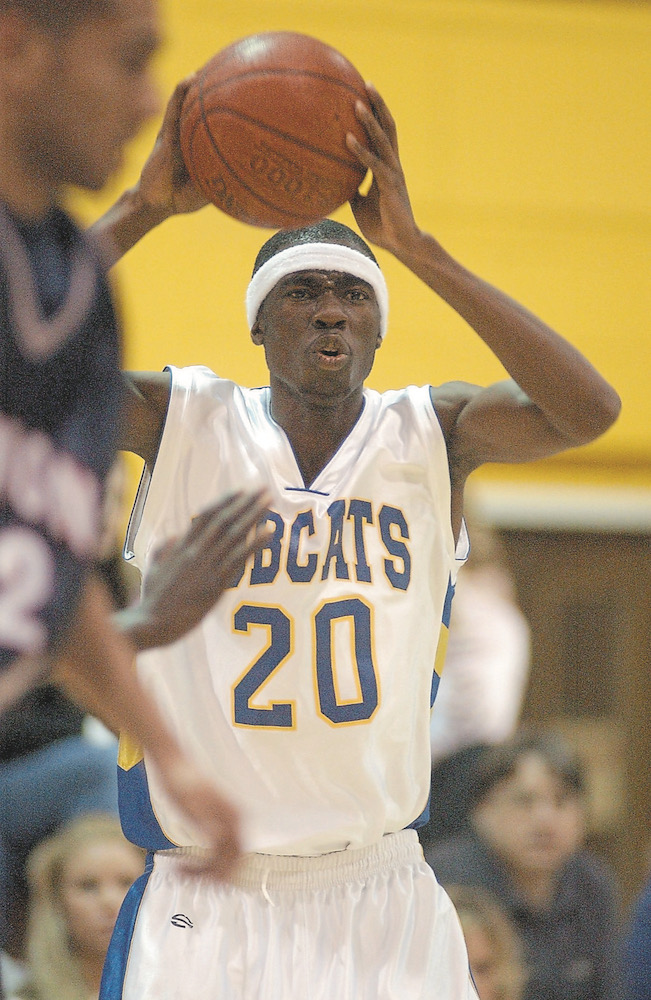
Cheung: “He was one of those guys who was way ahead of his time too. He’s a 6-3 point guard but I’ve never seen a guy end line to end line as fast as him. He’s a freak in transition. Before COVID in February — he helps out our team and he was 40, three weeks younger than I am — our guys would throw him alley-oops and he’d go up and get them.”
Yul Michel
Six-foot-one guard from Montreal
Played from 2003 to 2008
Yul Michel took a chance moving to Brandon when Jerry Hemmings recruited him off a Montreal blacktop. He learned English and Bobcat basketball simultaneously, growing into an elite point guard. He went from averaging 15 ppg his third year to accepting and embracing a defensive role. He earned Canada West’s defensive player of the year award in 2007 and the national honour in 2008.
Hartman: “What made Yul special: Yul was lightning quick, Yul was an incredible competitor. Yul could defend anybody on ball like no other … On top of that it was all of his intangibles. Yul was so competitive and so talented but he also sacrificed part of his game. Nothing mattered more than coming together and winning a basketball game.”
Michel: “I’m a pass-first point guard. Everything those guys needed me to do, I would be able to do it. They’d have to tell you but I think the way I approached the game, I think as a leader I was leading by example on both sides of the court. Part of my plan was every time to show the players you were willing to do anything to win. If the ball’s on the floor, I was showing my teammates I was going to dive for the ball to get the extra possession and put us in a position to win.”
Hartman: “He could get by anybody in the paint, he could run an offence extremely well, he would score in transition like nobody I’d ever seen with that right-handed scoop layup. he’d only ever use his right hand on a layup but it didn’t matter.”
Larkins: “First off, he was a lockdown defender. Then his court vision was top-notch. Would he go and get you 30? Nope. But if you wanted a great point guard, he’s your guy. He shot 38 per cent from three in his final year. His senior year got him 15 a game.
“The only knock on him was he didn’t really shoot it well and teams would sag off on him but he was quick, had tremendous vision and could always find the open man.”
Hartman: “He was the motor of teams that went 20-2 two years in a row, national final, defensive player of the year, great point guard, great IQ, did things sometimes you see point guards just don’t have, he had it.”
Adam Hartman
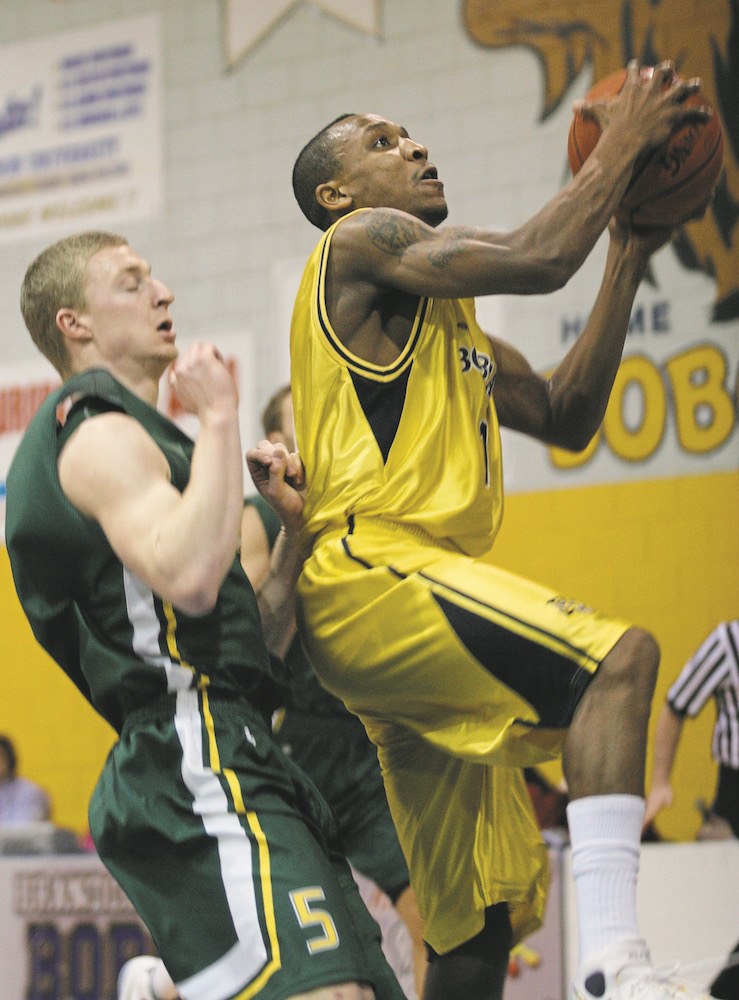
Six-foot-four forward from Virden
Played from 2003 to 2008
Adam Hartman joined the Bobcats in 2002 and Hemmings asked him to redshirt. With an extra year to develop — and it wasn’t an overnight process — Hartman became a leader both in the locker room and on the scoreboard. He jumped from 4.3 ppg in 2004-05 to 16.6 ppg the following year. Then he developed a three-point shot, drilling 47.1 per cent of his looks from beyond the arc in the silver-medal season. He averaged a team-high 17.1 ppg in his final year and was named a second-team Canada West all-star for the second time.
Michel: “The thing people don’t understand about Hartman is he’s the ultimate competitive guy. Hartman, he doesn’t take no for an answer. He redshirted his first year and what he became as a player was because his attitude was ‘They underestimate me, so I’m going to prove them wrong.’ That was his mentality.”
Hartman: “I always felt like I had something to prove and I think I did that.
“With this group, especially if you got Yul and O’Neil who don’t shoot the ball as well and Dany and Earnest who do and can play all over, I’m a guy that instead of a 5 where he’s stuck in the block and clog it up for Yul and O’Neil, I can score in many different ways and make great decisions and can make their teammates better.”
Larkins: “I would throw Hartman in there. Hartman’s career sort of came out of nowhere. He was a local dude who put in the work and got the opportunity. By his fourth or fifth years, he was an indispensable member of those teams and we always joked that he had the senior men’s game. He wouldn’t flash out at you, but so consistent. He knew his spots on the floor and shot it really well for his career. He shot 47 per cent in his senior year. I would put him in there. It took him a while to get his footing on that team and get his opportunity, but when he did his final three years he was indispensable for that team.”
Cheung: “To go from a redshirt local kid to a conference all-star is a huge step … If we told him COVID was done and there’s an open gym tomorrow, he’d be the first one in the gym.”
BENCH
Tyrone Smith
Six-foot guard from Toronto
Played from 2000 to 2002
Tyrone Smith came to BU and took over the starting point guard job after Charlton Weasel Head graduated in 2001. He nearly averaged a double-double with 10.2 points and 9.9 assists per game as the Bobcats won their lone Canada West in their first year as a full member of the conference.

Weasel Head: “Tyrone made me a whole lot better my second year because I had to guard him in practice.
“He could defend any guard in the nation. He could score, he could take the ball to the hoop. He had this drive in himself that made him the leader he became … Tyrone was the type of player that stepped up his game all the time.”
Hartman: “Tyrone Smith was an incredible point guard … It’s 1A, 1B, I’m going 1A with Yul.”
Chad Jacobson
Six-foot-one guard from Brandon
Played from 2005 to 2007
Chad Jacobson played three years at Minot State before redshirting at BU in 2004-05. He started nearly every game he played in blue and gold, averaging 13.5 ppg and shooting 38.1 per cent from three.
Hartman: “Chad Jacobson was an incredibly good shooter. He was a sniper. But unlike some players who are out to shoot, Chad could do a lot more than just shoot. He shot off the ball very well, shot with the ball very well, used screens very well, could handle the ball well. We didn’t need him to often because we had quality point guards but he could bring up the gall against pressure.”
Michel: “Ultimate warrior … (Jacobson and Taylor Cherris-Wilding) are the best shooters I ever played with in Brandon.”
Hartman: “Chad is more than just a shooter but he was a hell of a shooter.”
Mario Joseph
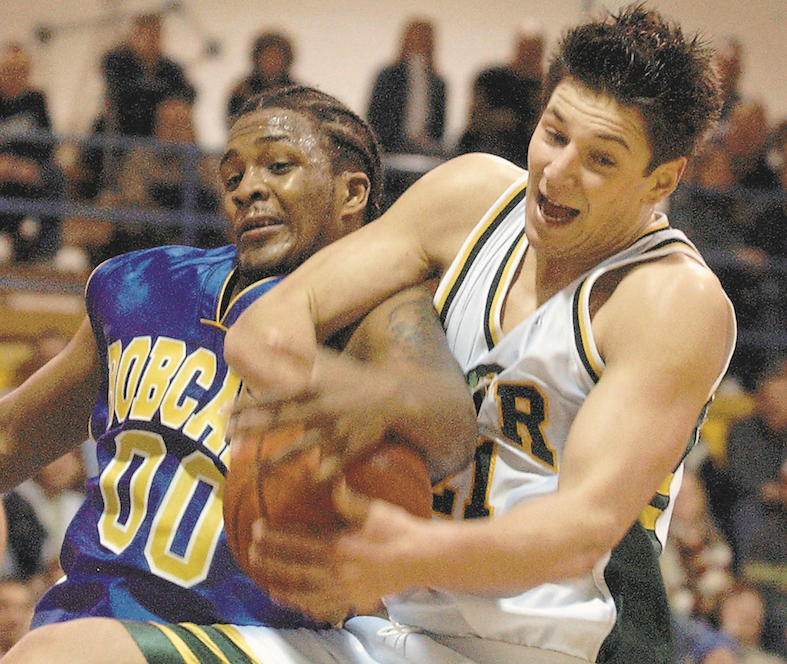
Six-foot-three forward from Montreal
Played from 2003 to 2005
Mario Joseph came to BU with Michel and Robens Josephat and had two solid seasons before transferring to the Université de Quebec a Montreal (UQAM), where he transitioned to assistant coach and now head coaches. Joseph averaged 9.6 ppg his first year, 14.4 his second and was a steady presence on the boards.
Cheung: “Mario right now is probably 6-4, 320 pounds. Mario when he played was 6-4, 240. A year or two before that Mario was 195 and was a freak athlete. He got here and was heavier but we played him as a small-ball four with Les Berry.
“He was Charles Barkley, that’s exactly who he was. Charles Barkley who could shoot a three.”
Larkins: “Also another guy who could step out and shoot it a little bit.”
Michel: “He’s almost the same as me but him, basically everything you needed from him to do to win a game, he was about to do it too. If he sacrifices his points, he’s going to sacrifice his points for the team to win.”
Nickosey Quick
Five-foot-10 guard from Montreal
Played from 2001 to 2003 and 2007-08
Cheung: “He was, I would say, besides Earnest Bell, the second best player I ever played with.
“We were playing Regina and it’s close, maybe a two-point game and he steals it with maybe 35 seconds left … he takes off. I’m running behind him and I want the ball to hold it and make the safe play … you hear Coach Hemmings like ‘Oh shoot he’s gone, he’s not holding up. I can hear Coach Hemmings with his southern drawl like ‘Lay it in, lay it in.’ Well he goes up … two hands, two feet and just hammers it on this kid. The gym is packed and he goes up and dunks the crap out of this thing.
“He’s walking back and we’re all like ‘Holy shit.’ They call a timeout and he’s like ‘I’m from f—ing North Carolina. That’s how we do it in North Carolina.’”
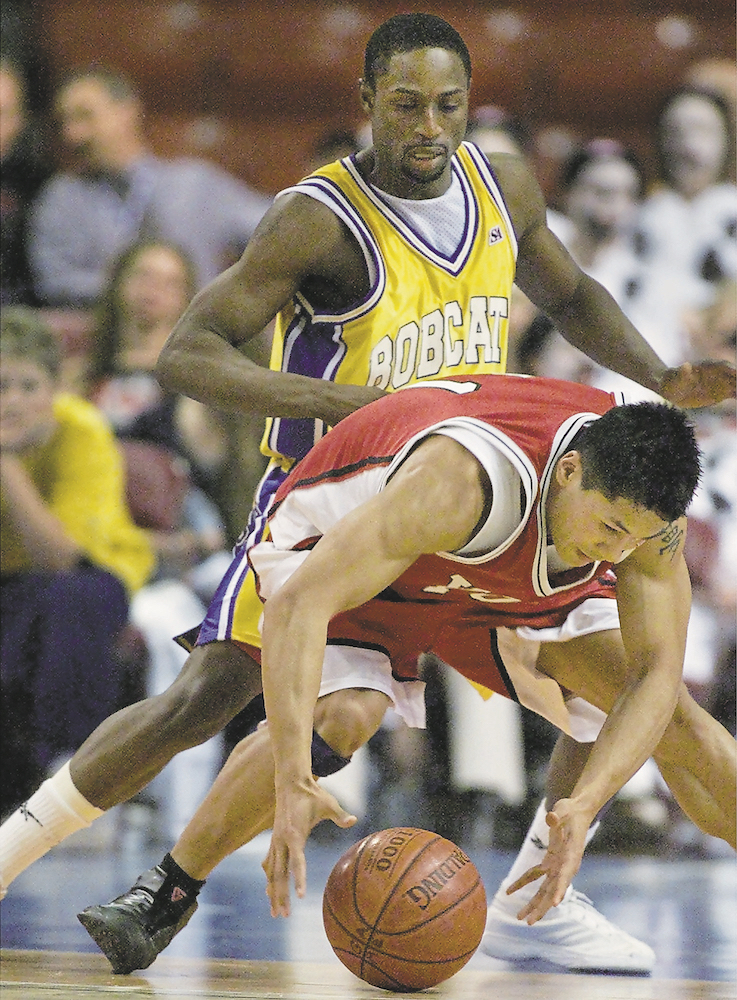
Mustafa Cetin
Six-foot-nine centre from Edmonton
Played from 2002 to 2004
Mustafa Cetin nearly averaged a double-double as a Bobcat rookie. The big man put up 11.6 ppg and 9.0 rpg in 2002-03 and also shot 38.9 per cent from three, nailing 21 triples on the season. He moved inside more the following season, posting 12.4 ppg as BU finished third in Canada West and won the consolation side at nationals.
Hartman: “He was like six-foot-nine, he was 320 pounds and he was mobile. He could move the ball, shoot the three, post up.
“He was just a huge basketball player and kind of a matchup problem. He wasn’t in the greatest shape, if he had gotten in way better shape he’d have been able to do more but talented player, doesn’t get brought up much but could be on my list.”
» tfriesen@brandonsun.com
» Twitter: @thomasmfriesen