
Serbian FA chief questioned by police over fan mafia links
Advertisement
Read this article for free:
or
Already have an account? Log in here »
We need your support!
Local journalism needs your support!
As we navigate through unprecedented times, our journalists are working harder than ever to bring you the latest local updates to keep you safe and informed.
Now, more than ever, we need your support.
Starting at $15.99 plus taxes every four weeks you can access your Brandon Sun online and full access to all content as it appears on our website.
Subscribe Nowor call circulation directly at (204) 727-0527.
Your pledge helps to ensure we provide the news that matters most to your community!
To continue reading, please subscribe:
Add Brandon Sun access to your Free Press subscription for only an additional
$1 for the first 4 weeks*
- Enjoy unlimited reading on brandonsun.com
- Read the Brandon Sun E-Edition, our digital replica newspaper
*Your next Free Press subscription payment will increase by $1.00 and you will be charged $20.95 plus GST for four weeks. After four weeks, your payment will increase to $24.95 plus GST every four weeks.
Read unlimited articles for free today:
or
Already have an account? Log in here »
Hey there, time traveller!
This article was published 28/02/2021 (1942 days ago), so information in it may no longer be current.
BELGRADE, Serbia – The president of Serbia’s Football Association was on Sunday questioned by police in connection with recent arrests of several members of a soccer fan group accused of murder, kidnapping and drug trafficking.
Serbian media said Slavisa Kokeza was quizzed over his links to leaders of the Partizan Belgrade supporters’ group who were arrested earlier this month in what officials say is a major crackdown against soccer’s links with organized crime.
Kokeza reportedly refused to answer questions and also refused a lie-detector test during the questioning.
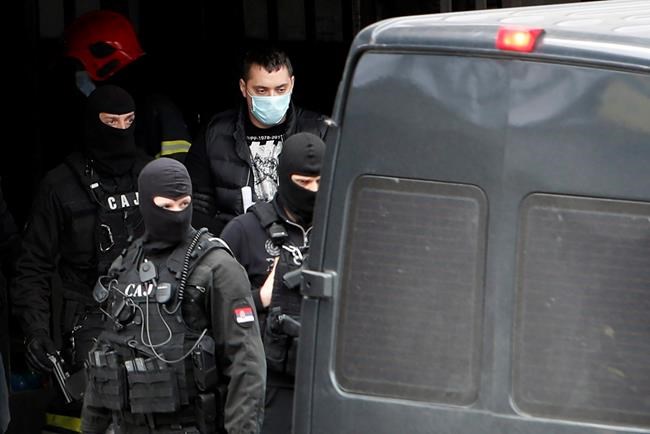
Details from the police investigation leaked to the media include alleged killings by group members of their rivals, including decapitations and torture in a special “bunker” at the Partizan stadium in the Serbian capital.
Populist Serbian President Aleksandar Vucic, who has often boasted about his youth as a radical supporter of Partizan’s rival Red Star Belgrade, said Saturday that some of the “shocking” details of the investigation will be made public next week and that children will be warned not to watch.
Vucic has suggested that the fan group members wanted to kill him although his 23-year-old son was frequently photographed with its members in recent years.
Vucic’s opponents say the arrests appear to have been made for show because it is widely accepted that the regime has for years maintained close links with soccer group leaders.
Serbia has a history of tolerating hooliganism that often resulted in violence and outbursts of nationalism at stadiums. During the Balkan wars in the 1990s, many of them joined notorious paramilitary groups linked to war crimes against other national groups in the former Yugoslavia.
Last week, European soccer governing body UEFA opened a disciplinary investigation after AC Milan’s Zlatan Ibrahimovic was subjected to racist abuse during a Europa League match against Red Star in Belgrade.
With the return of nationalists to power in Serbia nine years ago, far-right soccer supporters were often seen at pro-government rallies promoting a nationalist political agenda. In exchange, analysts say, the hooligans have been allowed to pursue their illegal business activities.
More than a dozen prominent figures from the country’s soccer supporters’ groups have been murdered in recent years. Most have perished in gangland-style killings.
___
More AP soccer: https://apnews.com/hub/soccer and https://twitter.com/AP_Sports