
Ukrainian skeleton racer at Olympics says his helmet tribute to fallen athletes won’t be allowed
Advertisement
Read this article for free:
or
Already have an account? Log in here »
We need your support!
Local journalism needs your support!
As we navigate through unprecedented times, our journalists are working harder than ever to bring you the latest local updates to keep you safe and informed.
Now, more than ever, we need your support.
Starting at $15.99 plus taxes every four weeks you can access your Brandon Sun online and full access to all content as it appears on our website.
Subscribe Nowor call circulation directly at (204) 727-0527.
Your pledge helps to ensure we provide the news that matters most to your community!
To continue reading, please subscribe:
Add Brandon Sun access to your Free Press subscription for only an additional
$1 for the first 4 weeks*
*Your next subscription payment will increase by $1.00 and you will be charged $20.00 plus GST for four weeks. After four weeks, your payment will increase to $24.00 plus GST every four weeks.
Read unlimited articles for free today:
or
Already have an account? Log in here »
CORTINA D’AMPEZZO, Italy (AP) — Vladyslav Heraskevych showed up for the Milan Cortina Olympics with a new helmet, one featuring the images of some fellow Ukrainian athletes.
They were all killed in Russian attacks.
And Heraskevych wanted to offer a tribute. The International Olympic Committee, he said, won’t let it happen.
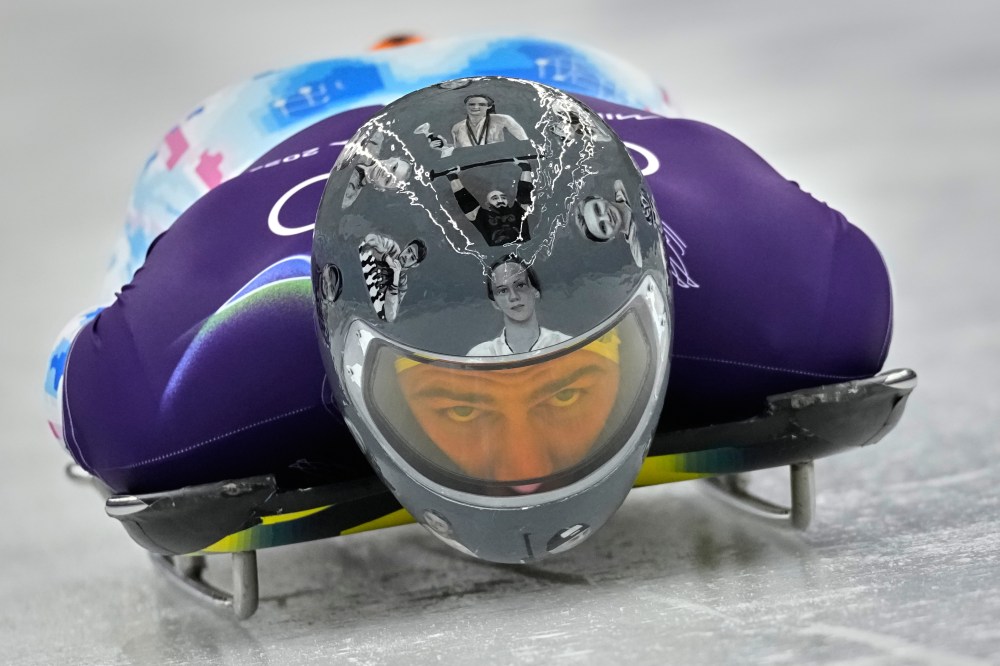
The men’s skeleton medal hopeful — who finished fourth at last year’s world championships — was hoping that the IOC lets him wear the helmet in competition later this week. He went through training on Monday with the helmet, awaiting an IOC ruling on if it would be allowed on race day.
He got that ruling Monday night. The IOC said no, he said, citing a rule against political statements during the Games.
“We didn’t violate any rules, and it should be allowed for me to compete with this helmet,” Heraskevych told The Associated Press before announcing he got word from the IOC. “I cannot understand how this helmet hurt anyone. It’s to pay tribute to athletes and some of them were medalists in the Youth Olympic Games. That means they’re Olympic family. They were part of this Olympic family, so I cannot understand they would find a reason why not.”
Even Ukrainian President Volodymyr Zelenskyy weighed in on Heraskevych’s quest, with a post on his Instagram page saying that he wanted to thank the slider for “reminding the world the price of our struggle.”
“This truth cannot be awkward, inappropriate or called political action,” Zelenskyy wrote, adding “this is exactly what reminds everyone about the global role of sport.”
Figure skater Dmytro Sharpar, a onetime Youth Olympic Games teammate of Heraskevych, is on the helmet, as are boxer Pavlo Ishchenko, hockey player Oleksiy Loginov and others. Some, he said, were killed on the front lines; at least one died while trying to distribute aid to fellow Ukrainians.
“I didn’t know all of them,” he said. “But I knew a lot of them.”
Later Monday, the IOC told AP that Ukraine’s sliding federation had not asked for permission to wear the helmet. About an hour later, Heraskevych said an IOC representative came to tell him that the helmet violated what’s called Rule 50 of the Olympic Charter. That rule, in part, states that “no kind of demonstration or political, religious or racial propaganda is permitted in any Olympic sites, venues or other areas.”
The IOC did not announce its ruling Monday night. Earlier in the day, it said it was waiting for Ukraine to ask permission to use the helmet and then would evaluate the case.
Heraskevych has not shied away from voicing his opinion about the war; he spoke out last fall about how some athletes from Russia were given neutral status to compete in these Olympics.
Heraskevych, a flag bearer for Ukraine at last week’s opening ceremony, displayed a sign after his fourth and final run of the 2022 Beijing Olympics saying “No War in Ukraine.” Days after those Games ended, Russia invaded his country and the war has waged since.
There had been a question at that time of whether the IOC might consider Heraskevych’s act at that time a violation of Rule 50. But the IOC said shortly after that race there would be no repercussions over what Heraskevych did in Beijing, saying it was “a general call for peace.”
Heraskevych hoped the same would ring true this time as well.
“For me, it will be very important to pay tribute to these athletes,” Heraskevych said. “We have to show also the huge price of Ukraine’s freedom.”
___
AP Olympics: https://apnews.com/hub/milan-cortina-2026-winter-olympics