
Here’s how Cortina’s ice tech, dubbed curling’s Michael Jackson, prepares the Olympic ice
Advertisement
Read this article for free:
or
Already have an account? Log in here »
We need your support!
Local journalism needs your support!
As we navigate through unprecedented times, our journalists are working harder than ever to bring you the latest local updates to keep you safe and informed.
Now, more than ever, we need your support.
Starting at $15.99 plus taxes every four weeks you can access your Brandon Sun online and full access to all content as it appears on our website.
Subscribe Nowor call circulation directly at (204) 727-0527.
Your pledge helps to ensure we provide the news that matters most to your community!
To continue reading, please subscribe:
Add Brandon Sun access to your Free Press subscription for only an additional
$1 for the first 4 weeks*
*Your next subscription payment will increase by $1.00 and you will be charged $20.00 plus GST for four weeks. After four weeks, your payment will increase to $24.00 plus GST every four weeks.
Read unlimited articles for free today:
or
Already have an account? Log in here »
CORTINA D’AMPEZZO, Italy (AP) — The Winter Games’ thirst for viral moments is ushering Mark Callan, the head ice technician for curling, into the global spotlight.
Social media users have dubbed the sturdy, silver-haired Glaswegian “the Michael Jackson of curling.” That’s after official Olympic accounts pushed out videos of the moonwalk-like shuffle he performs while misting the ice between matches at the Milan Cortina Games.
If his gait is a bit bizarre, it’s also the result of decades spent creating championship-grade curling ice, a pursuit that necessitates a command of environmental, mechanical and athletic know-how.
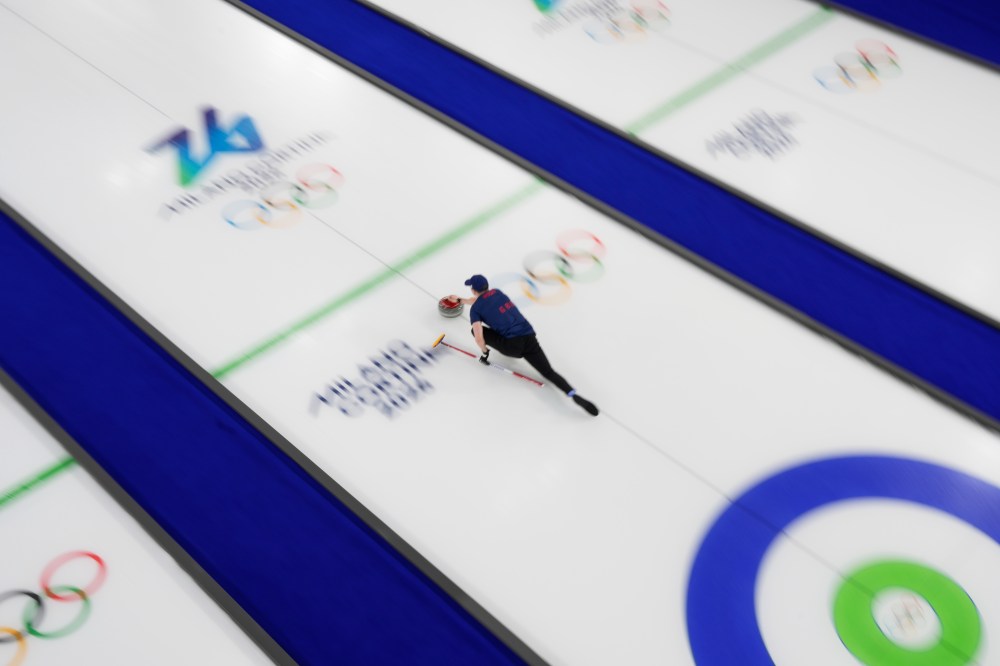
Callan has perfected the practice of “pebbling” — spritzing de-ionized water from the Dolomites onto the ice to create the signature stony formation that differentiates a curling surface from a skating rink.
“The viral thing has been a bit of a surprise,” Callan said during round-robin play. “Everybody has a different style of pebbling, bit like driving a car. I find that doing the moonwalk — or the shuffle, if you like — it keeps me stable.”
Athletes rely on Callan’s pebbles to curl the granite stones they fling across the ice. When they miss, as the mighty Canadians did in mixed doubles, he’s the first guy they blame.
“Ice techs are an easy target,” he said. “We always say that after every single game with mixed doubles, you have two new friends and two new enemies. People who win are your friends. People who lose are your enemies.”
Building sheets layer by layer
The four ice sheets at the center of Cortina’s curling venue are Callan’s glacial oeuvre — one that World Curling trusts only about 20 others to replicate.
The process starts in the mountain streams of the Dolomites. By the end of these Games, 20,000 liters of Italian water will have been purified and then misted by Callan onto the four concrete slabs, one layer after another.
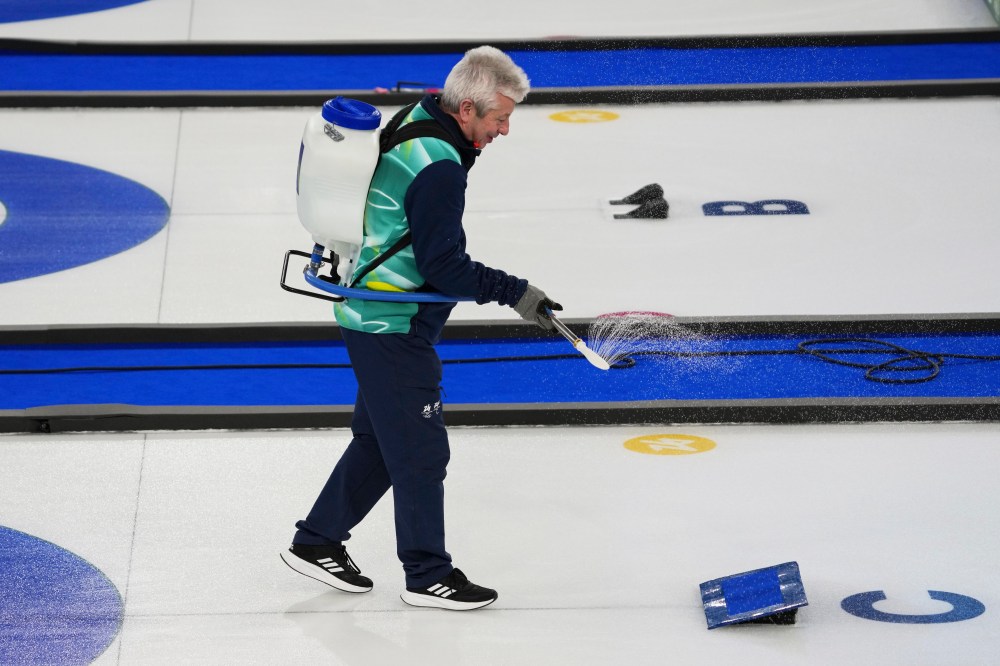
Upon landing, each droplet instantaneously freezes because of pipes that are funneling 7,000 liters (1,849 gallons) of below-freezing glycol beneath the concrete per minute. White paint and various markers are sandwiched between ice layers to give the court its sheen and structure.
When layering the ice, Callan uses different nozzles so that pebbles of various sizes populate the sheet. Smaller ones are at the bottom while larger ones lie on top, waiting for wear-down by players’ broom sweeps.
Each curling match produces a snowflake of sorts: a pebble formation that is unique, shaped by the irreplicable action of players’ brooms. Intense sweeping melts certain patches down, making them faster and changing their curl. Part of the sport is “reading the ice,” or analyzing which parts of the court are faster or slower, straighter or curlier.
During the match, Callan and his team monitor a dozen ice thermometers, the temperature of the stadium, the humidity and the “dew point” of the ice. That’s the temperature at which frost, which Callan calls a “killer” for curling stones, begins to form. Each measurement must be kept within strict parameters and requires consistent tweaking as spectators, weather conditions and lighting threaten to mess up the fine balance.
Between matches, Callan and his team get to work, scraping the ice before he starts pebbling once more.
“In the good old days of curling, water quality was so poor that if you tried to pebble the ice, there was so much rubbish in it, chemicals in it, it wouldn’t freeze,” Callan says. “In the last 15-20 years, technology has really come into the sport, and ice techs have had to really go and develop with it.”
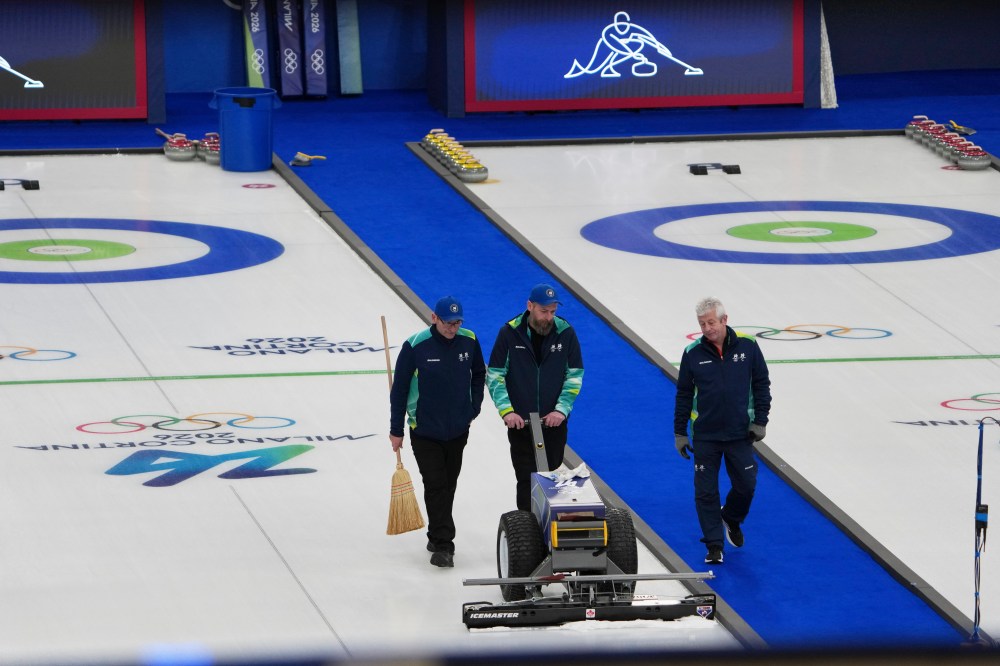
Ice techs say they are easy targets
The task is brutal. The ice tech team works for 17 hours a day, every day, for 18 scheduled days of curling. It’s the longest-running sport in the Winter Olympics.
“There’s so much going on, and so much happening, that you kind of live in adrenaline,” Callan said. “Once it’s done, you crash.”
Greg Ewasko is a Canadian ice tech for whom getting to the Olympics has been a “lifelong dream.” He said, “We put our heart and soul into making the ice.”
He said it was “very upsetting” that Brett Gallant of Canada’s mixed doubles blamed the team’s failure to qualify for the semifinals on the ice conditions. Ewasko has worked the ice for many Canadian and world championships.
“They are used to playing on my ice,” Ewasko said. “Some days all the magic shows up and everything is good and everybody thinks you’re the greatest. Then there’s some days that some stuff just doesn’t show up. Unfortunately for them, the ice was a little bit straighter than what they’re used to.
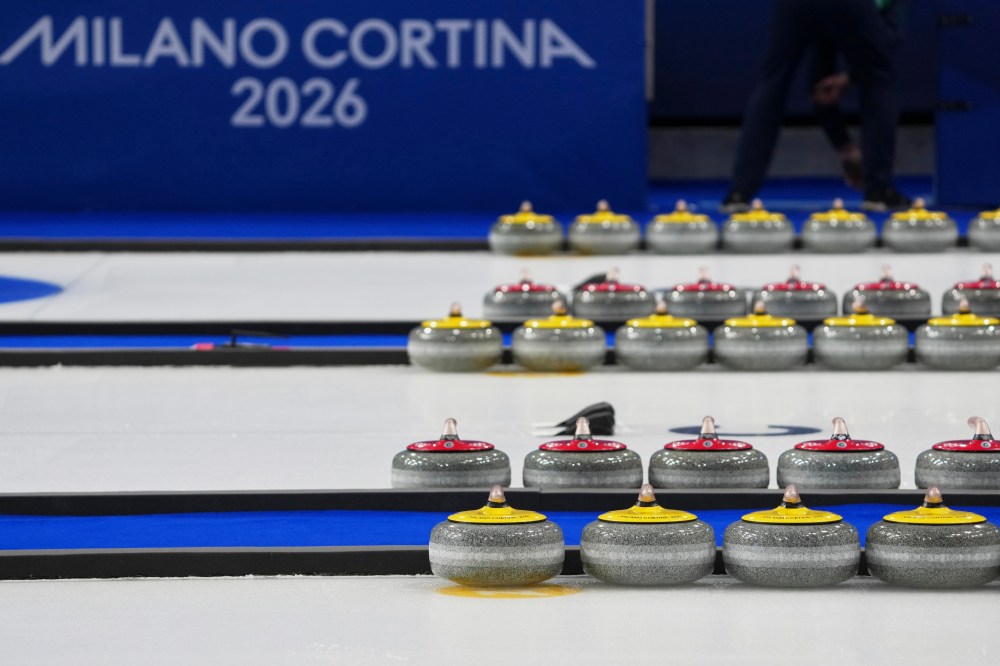
“If we could have all winners, then there’d probably be no complainers.”
___
AP Olympics: https://apnews.com/hub/milan-cortina-2026-winter-olympics