
Olympians toe line between solidarity and sacrifice. Ukrainian banned over helmet the latest example
Advertisement
Read this article for free:
or
Already have an account? Log in here »
We need your support!
Local journalism needs your support!
As we navigate through unprecedented times, our journalists are working harder than ever to bring you the latest local updates to keep you safe and informed.
Now, more than ever, we need your support.
Starting at $15.99 plus taxes every four weeks you can access your Brandon Sun online and full access to all content as it appears on our website.
Subscribe Nowor call circulation directly at (204) 727-0527.
Your pledge helps to ensure we provide the news that matters most to your community!
To continue reading, please subscribe:
Add Brandon Sun access to your Free Press subscription for only an additional
$1 for the first 4 weeks*
*Your next subscription payment will increase by $1.00 and you will be charged $20.00 plus GST for four weeks. After four weeks, your payment will increase to $24.00 plus GST every four weeks.
Read unlimited articles for free today:
or
Already have an account? Log in here »
CORTINA d’AMPEZZO, Italy (AP) — In the moments before the men’s super-G, ski racer Dmytro Shepiuk paused to consider the yellow sticky note he held snugly in his glove.
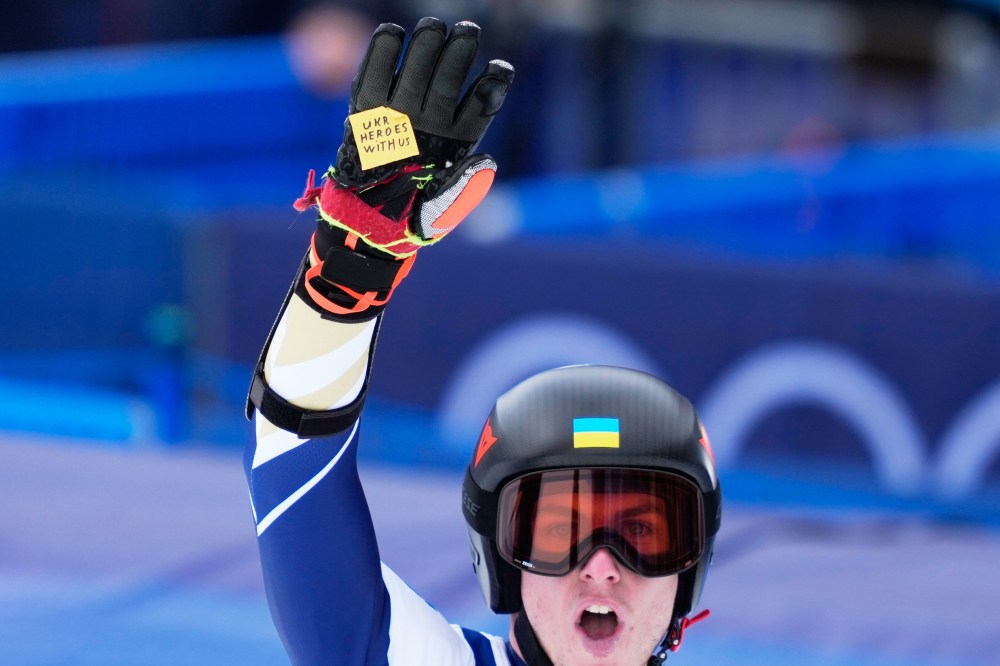
The note was that important. Once the 20-year-old reached the bottom of the grueling course, he held his glove aloft featuring the message: “UKR heroes with us.”
It was Shepiuk’s way of showing support of fellow Ukrainian Vladyslav Heraskevych, the skeleton athlete who insisted on wearing a helmet that pays tribute to athletes and coaches killed in the war with Russia. The International Olympic Committee banned Heraskevych from competing at the Milan Cortina Games, ruling the helmet breaks rules against political statements in competition.

“It’s not easy for us to compete and represent Ukraine at a high level in such difficult circumstances,” Shepiuk said in an interview with The Associated Press a few hours later. “But we Ukrainians are strong, like our country, and we will do everything possible to perform at the highest level.”
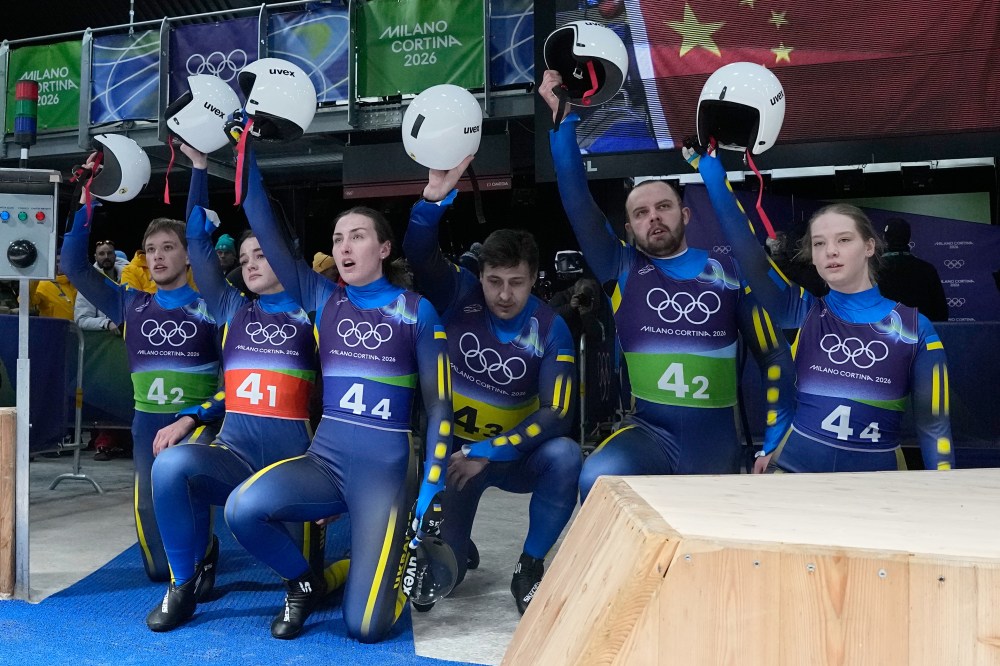
The fallout reverberated around the world, as Ukrainian and international leaders made clear their disappointment in the IOC. Olympians like Shepiuk, meanwhile, expressed admiration of Heraskevych and found small ways to dissent. They stopped short of provocative protests that could risk their own disqualification.
That response illuminates a bind that Olympic athletes, especially from war-torn countries or minority communities, can find themselves in at the Games: Use their momentary Olympic fame as a platform or stay focused on the competition for which they spent years training and made countless sacrifices.
Heather Dichter, an associate professor of sports history at De Montfort University in Leicester, England, said she wondered if more athletes would speak out after the Olympics.
“I suspect they fully support him but don’t want to jeopardize their own chance,” she said. “Most athletes who qualify for the Olympics only ever compete in one Olympic Games. We forget that the Usain Bolts, Lindsey Vonns and Michael Phelpses are the exceptions.”
Olympic dream or political statement?
In the end, Heraskevych knowingly chose disqualification over compliance with rules he believed unjust. The choice is not common for athletes who have spent their entire lives training, sacrificing and dreaming for their Olympic moment, and whose loved ones have been by their side supporting them the whole time.
Heraskevych said his mother, his grandparents, friends and relatives had urged him to back down.
“They really worry about it,” he said. “Many people tell me not to do it and I proved my point. But as I said, I can’t betray these athletes.” His principles were roundly complimented by fellow athletes. When it comes to actions, though, it’s up to each athlete.
“He stands on whatever he believes in and that’s one thing you see from him year after year,” said Dan Barefoot, an American skeleton athlete.
“I respect Vlad so much, and really admire him, but I’m really just here to focus on my races,” said Jared Firestone, an Israeli slider. “Hearing about it before made me a little emotional for him, but unfortunately it’s not in our hands.”
Shepiuk said he was caught in a bind, wanting to display dissent without compromising all he’d worked so hard for. So, while warming up before his race Wednesday, he was preparing to write something underneath his bib number but his coach said the note might be easier.
He wrote it, tucked it beneath his ski pole and hoped it wouldn’t fly away as he glided down the mountain at more than 100 kilometers per hour (62 mph). He finished 7.84 seconds behind winner Franjo von Allmen of Switzerland, but it didn’t matter — just getting that note down was enough.
“I would say I give 60% importance to the race and 40% to the message,” he said. At the end of the day, “it’s important to compete, because I’m an athlete.”
For Ukrainian athletes, just getting here is its own battle
Growing up in the Zakarpattia region of Ukraine, Shepiuk would walk a few kilometers to Dragobrat, a mountain where skiers could set up a slalom course and train for free.
A day he will never forget is when the full-scale war with Russia began. He said he was competing at the Ukrainian championships.
“It all started suddenly. It started when bombs were flying toward cities close to me,” Shepiuk said. “It was overwhelming — my parents and I didn’t even understand what to do or how to react.”
He tried to keep training.
“But it was extremely difficult to focus on sport during the first two years,” said Shepiuk, who will also compete in the Olympic giant slalom and slalom. “Now it’s a little easier, but especially today and yesterday, it’s been very hard.”
That’s because he’s been thinking about Heraskevych, whom he just recently met. After racing with his sign, Shepiuk said his new friend reached out and expressed gratitude.
“He’s a very strong person and I respect him a lot,” Shepiuk said. “He’s already a champion for us.”
History has been kind to athletes like Heraskevych
Heraskevych now joins a small group of Olympic athletes who have stood alone in enormous sacrifice. Perhaps the most well known incident came in the 1968 Mexico City Olympics when Black Americans Tommie Smith and John Carlos raised their fists on the medal stand to protest racial injustice. They were sent home.
Just two years ago, at the last Olympics, Afghan refugee Manizha Talash was disqualified from the first Olympic breaking competition after she wore a cape that said “Free Afghan Women” during her pre-qualifier battle.
All became iconic in some way for their choice. Heraskevych could join them.
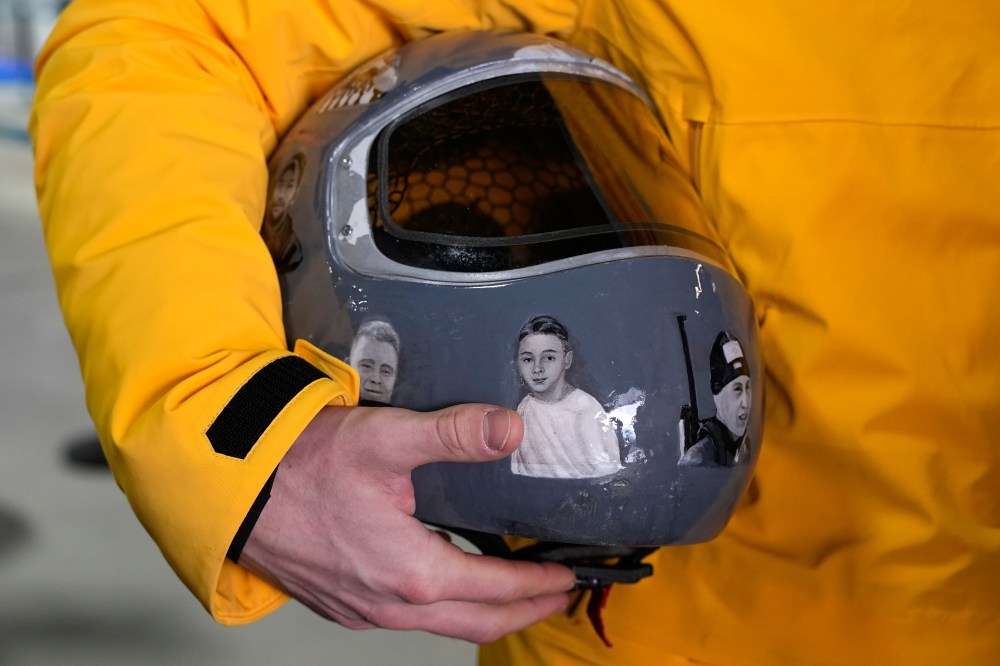
“Historically, the IOC has tended to come out as the entity that has not taken the right course of action at the time and that has inadvertently made these incidents into bigger stories,” Dichter said. “By taking this action they now have massive photo stories with the helmet close up — and in a way that’s what happened with Carlos and Smith.”
___
AP Writer Kamila Hrabchuk in Kyiv contributed to this report. Graham reported from Bormio, Italy.
___
AP Olympics: https://apnews.com/hub/milan-cortina-2026-winter-olympics