
Finland’s Elian Lehto one of several skiers to find creative paths to fund skiing and make Olympics
Advertisement
Read this article for free:
or
Already have an account? Log in here »
We need your support!
Local journalism needs your support!
As we navigate through unprecedented times, our journalists are working harder than ever to bring you the latest local updates to keep you safe and informed.
Now, more than ever, we need your support.
Starting at $15.99 plus taxes every four weeks you can access your Brandon Sun online and full access to all content as it appears on our website.
Subscribe Nowor call circulation directly at (204) 727-0527.
Your pledge helps to ensure we provide the news that matters most to your community!
To continue reading, please subscribe:
Add Brandon Sun access to your Free Press subscription for only an additional
$1 for the first 4 weeks*
*Your next subscription payment will increase by $1.00 and you will be charged $20.00 plus GST for four weeks. After four weeks, your payment will increase to $24.00 plus GST every four weeks.
Read unlimited articles for free today:
or
Already have an account? Log in here »
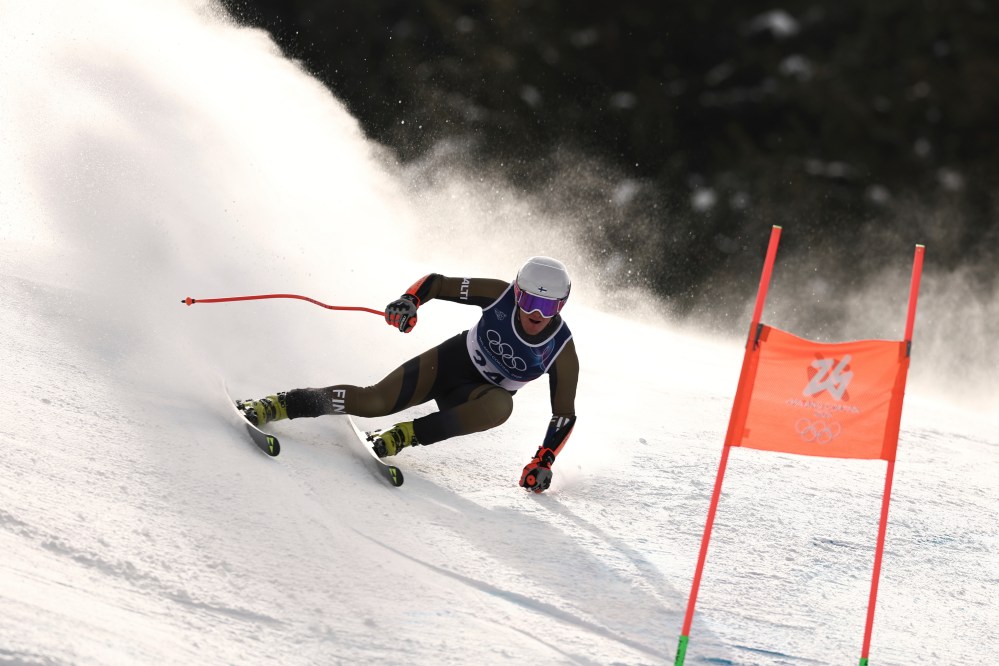
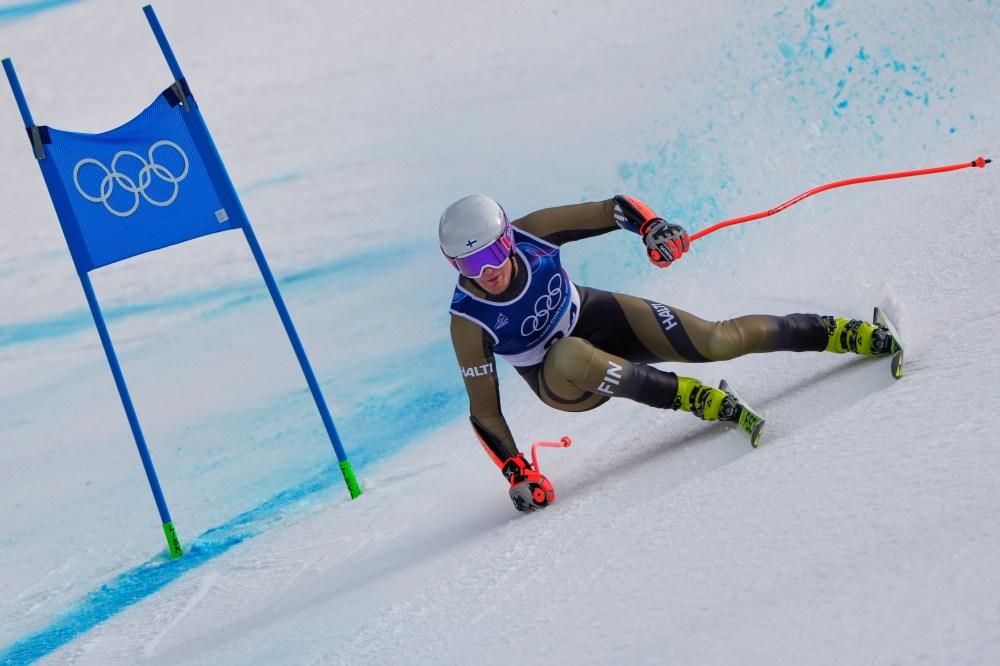
BORMIO, Italy (AP) — Downhill racer Elian Lehto competed for the blue and white of Finland at the Milan Cortina Games. To get here, he owes a bit of thanks to the red and white of Switzerland, too.
He was taken under the wing of Franjo von Allmen, Marco Odermatt and the rest of the Swiss team as he trained and traveled with them. The agreement with the powerful ski nation was a cost-saving measure for Lehto and his home country.
Lehto is one of several ski racers in Bormio to work their way to the Olympics not through their nation’s pipeline but by any means necessary. Fulfilling ski-racing ambitions, whether it’s on a second-tier circuit, World Cup level or at the Olympics, takes plenty of time, resources and money.
There are program options, too, such as Global Racing, which offers a bridge to develop skiers into elite racers, and the Untitled Ski Team, a collection of athletes who pool their resources.
“For many smaller nations, access to high-level training environments and resources is limited compared to the larger teams,” explained Markus Waldner, the race director of the men’s World Cup. “And for athletes who still want to pursue their dreams without being part of their national team, programs like this provide a crucial alternative.”
Partnership with the Swiss
Joining the Swiss has been a beneficial partnership for Lehto. He receives the same sort of access to resources as von Allmen, winner of three Olympic golds in Bormio, and Odermatt, who will try to defend his Olympic GS title in the giant slalom on Saturday.
Make no mistake: This isn’t a free ride.
The 25-year-old Lehto pays his fair share. His first camp with the Swiss was going to cost in the vicinity of $50,000. At the time, he had about $25 in his bank account. He had people help fund him.
“I took a gamble on myself,” Lehto said.
Two months later, on Dec. 15, 2022, he scored his first World Cup points in Italy, with a 20th place showing in the downhill. Lehto said the Finnish Olympic Committee and Finnish federation are now helping defray some of the costs. Lehto, who finished 20th in the downhill, 25th in the super-G and ninth in the team combined, said he is grateful but added he tries to bring the value to the Swiss team.
“They don’t have do it and I never try take it for granted,” he said.
Jan Zabystran of the Czech Republic trains with the German team. Before that, he relied on his parents, who were able to watch him in Bormio. They couldn’t make it to the 2018 Pyeongchang Olympics (too far) or four years later to Beijing (COVID-19).
“It’s really cool that they can be here,” Zabystran said. “If they didn’t pay and take me to competitions since I was 12 or 13 years old I would not have been able to compete.”
Global Racing pathway
Global Racing was launched by Paul Epstein in 2013 as a way to help out lower-tier FIS racers. It’s grown into something much broader, with racers joining his team who maybe don’t have big federations backing them or who are possibly looking for a path to return to their national team.
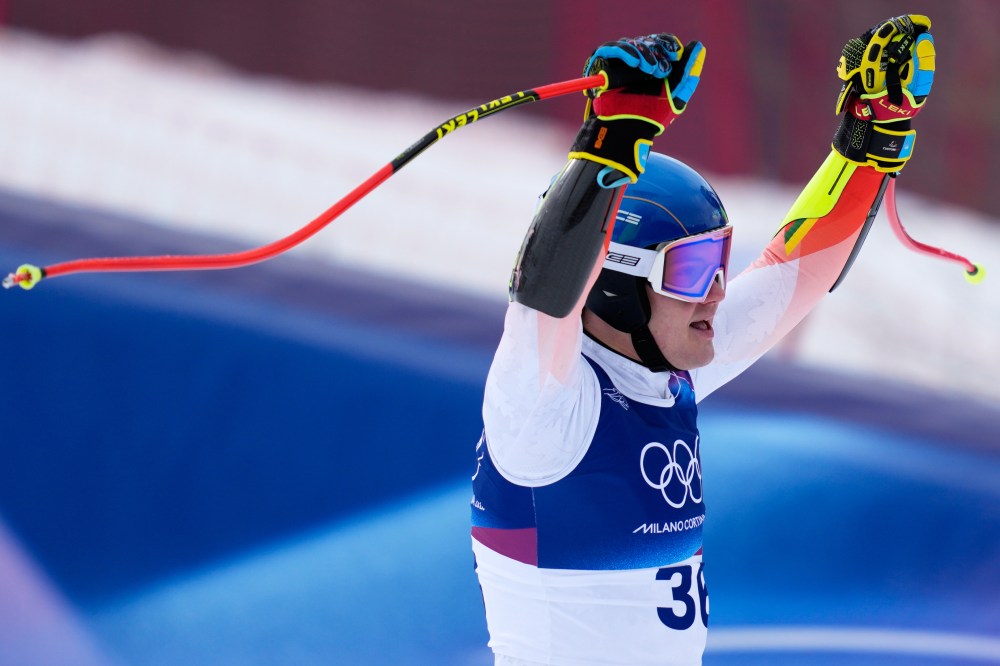
Epstein has five racers competing in Bormio. The list includes Belgium’s Sam Maes, Denmark’s Christian Borgnaes, Estonia’s Tormis Laine, Australia’s Harry Laidlaw and Lithuania’s Andrej Drukarov, who was 31st in the super-G.
They operate on a conservative budget, staying at Airbnbs and cooking together, but it’s an expensive endeavor.
Consider: To rent training time on the hill in, say, Colorado, is around $1,500, plus the expense of a lift ticket. The program is a way for racers to stay in the game longer.
“I felt that a lot of guys were quitting before their prime,” Epstein explained. “A male racer, their prime is between 27 and 30. You saw guys quitting at 18, 19, 20 years old.”
The financial obligation provides a good motivation, too.
“When they’re responsible for flipping the bill, everything changes,” Epstein said. “If they’re going choose to be on the team and pay that kind of money for an entire season, they’re as motivated as any World Cup guy in the world.”
Among the Global Racing recent alumni is Stefan Luitz, a German with 10 World Cup podium finishes. He joined them for a few seasons before the 33-year-old retired. Epstein’s also had racers return to their national squad after a stint with his program.
“Things like that are a big success,” Epstein said. “That’s why I started Global Racing and it’s still that way – the premise of supplying something that doesn’t really exist.”
Namely, an opportunity.
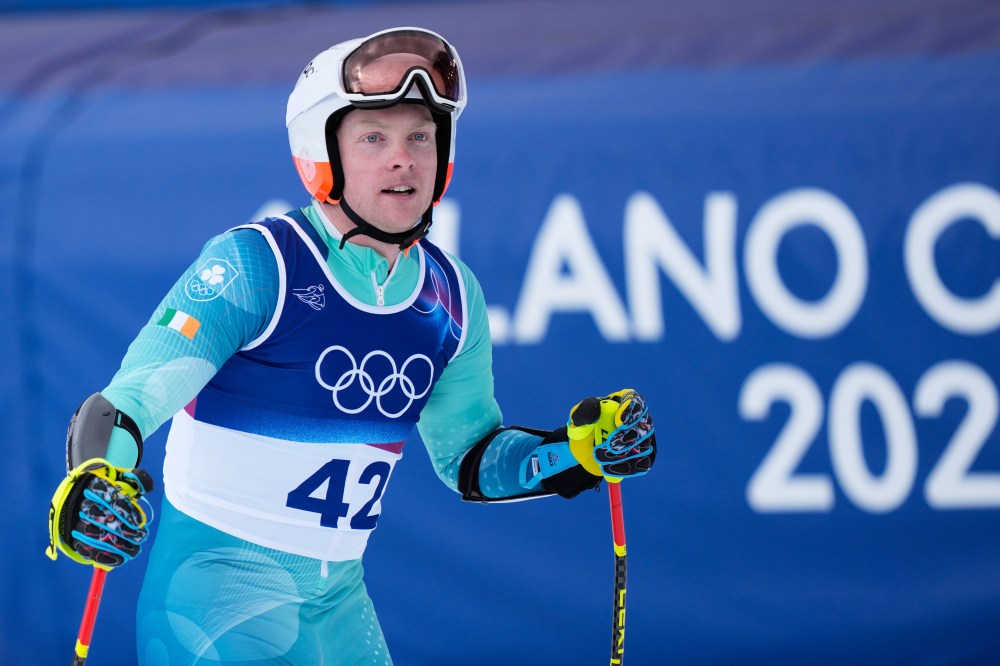
Like the Untitled Ski Team, which provides coaching, a chef, logistics and physio support for athletes from smaller nations. It assisted Irish ski racer Cormac Comerford, who’s preparing for the giant slalom and the slalom after racing in the speed events.
“It’s a really well-run team,” Comerford said. “Everybody’s pushing really hard.”
___
AP Olympics: https://apnews.com/hub/milan-cortina-2026-winter-olympics