
Milan Cortina’s wide footprint reshapes the Olympic experience
Advertisement
Read this article for free:
or
Already have an account? Log in here »
We need your support!
Local journalism needs your support!
As we navigate through unprecedented times, our journalists are working harder than ever to bring you the latest local updates to keep you safe and informed.
Now, more than ever, we need your support.
Starting at $15.99 plus taxes every four weeks you can access your Brandon Sun online and full access to all content as it appears on our website.
Subscribe Nowor call circulation directly at (204) 727-0527.
Your pledge helps to ensure we provide the news that matters most to your community!
To continue reading, please subscribe:
Add Brandon Sun access to your Free Press subscription for only an additional
$1 for the first 4 weeks*
*Your next subscription payment will increase by $1.00 and you will be charged $20.00 plus GST for four weeks. After four weeks, your payment will increase to $24.00 plus GST every four weeks.
Read unlimited articles for free today:
or
Already have an account? Log in here »
MILAN (AP) — The head of Haiti’s ski federation, Thierry Montiller, spent over four hours driving mountain roads from Bormio, near the Swiss border, where his downhill skier is competing in the Milan Cortina Winter Olympics, to Tesero in Val di Fiemme for his cross-country skier’s 10-kilometer race on Friday.
And he’s headed back to Bormio on Saturday, another 220 kilometers (140 miles), for the giant slalom race.
“Yes, it is a major difficulty to have such distances,’’ he said.
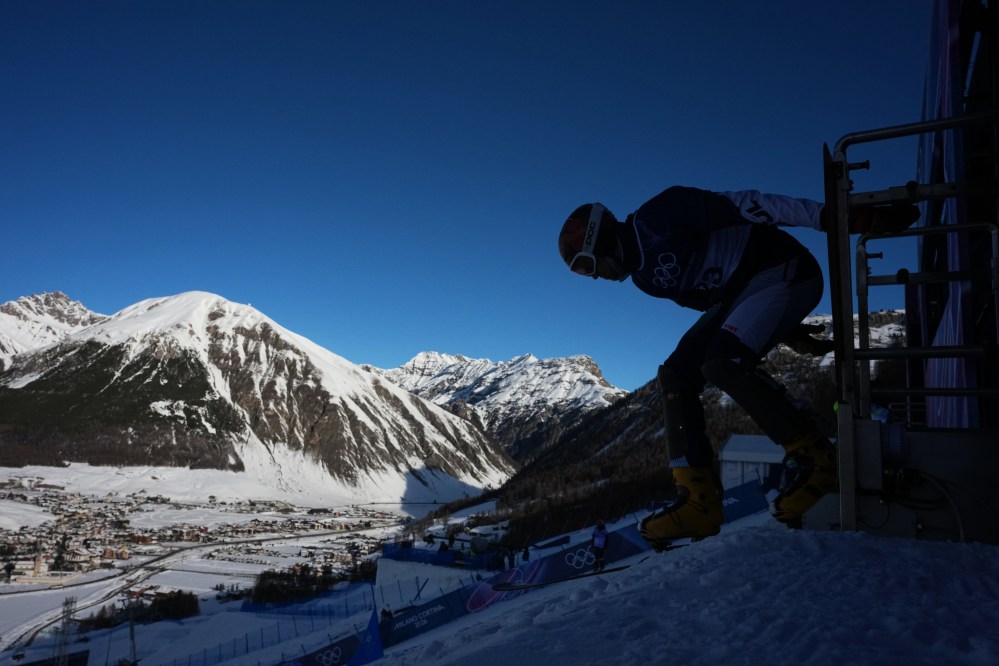
Winter Olympics have often had city and mountain clusters, but these Games spread the mountain clusters over a much wider area, and the distance to the city is considerably farther. In total, competitions are taking place in a 22,000 square kilometer (8,500 square mile) swath of northern Italy, making this the most spread-out in Winter Games history.
Reviews so far are mixed and, at very least, this model will take some getting used to. There are advantages: avoiding massive public investment in venues that get little use after the Games; easier access for locals; and distributing tourists’ dollars across the region. Still, after the first week, it seems that not everyone is a fan.
Bob Grover came from Portland, Oregon, to stay in Cortina for two weeks. He remembers going to the 2010 Games, where all the Alpine events were in Whistler and ice events in Vancouver — less than two hours apart. Not so in the Alps, where downhill sports are at different locations.
“It’s like, why isn’t it all in Cortina?” said Grover, 64, who owns a landscaping business. “Maybe they split it up so more of Italy could get the benefit. I understand the economic impact of that, so I won’t complain. But I’d like to go to more events.”
His wife, Theresa Kirsch, 63, lamented that the tradition of male downhill skiers cheering on their female teammates, and vice versa, in these Games would entail an 8-hour round-trip drive.
U.S. snowboarder Red Gerard had 11 days between his first two days of Olympic competition and was eager for a change of scenery. His sister arranged a celebratory meal with a Michelin-starred chef for 55 people in his extended family and guests, but it meant driving 3 1/2 hours to Milan, where they spent a couple of days, before returning to Livigno “to put his game face on.”
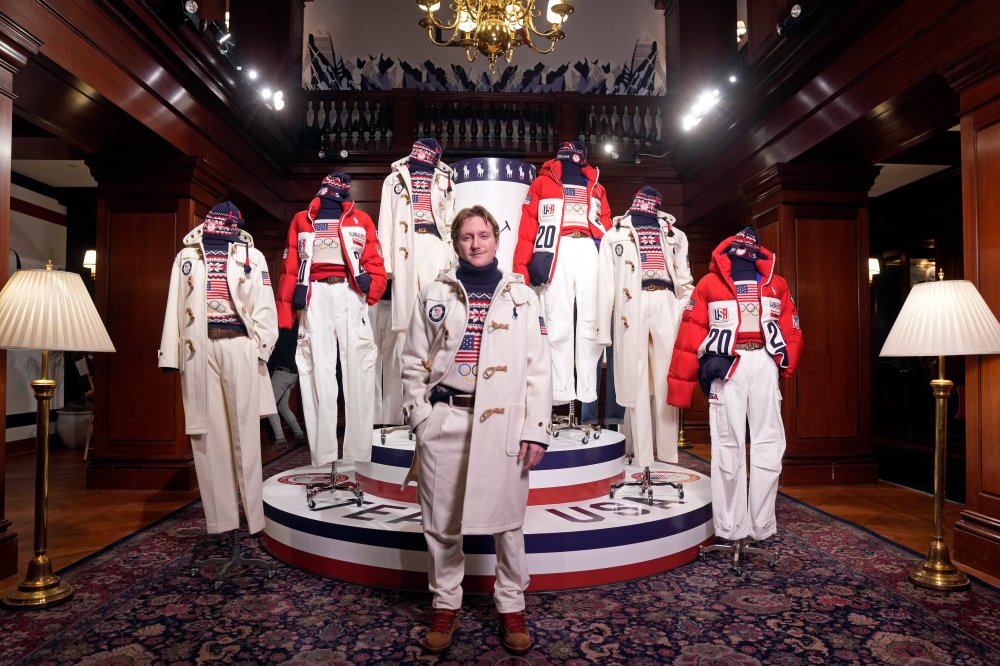
“Sometimes, I wish I was in Milan,’’ said Gerard. “It’s just a little harder to get the full Olympic experience. … It just takes a little more work.’’
A chance to embrace the open road
The Olympic universe better get used to this model, because that’s the way it will be going forward.
The 2030 Winter Games will hold snow events in the Alps, the closing ceremony in Nice and speed-skating abroad. The 2034 Games will be in Utah, as opposed to Salt Lake City in 2002, when the medals plaza was held in the state capital each evening. The 2038 Winter Games will span the entire nation of Switzerland, without city anchors.
For some fans, the dispersion of venues has proven an opportunity to get on the road and see off-the-beaten-path locations in a country where, in many places, overtourism has become a problem. That’s especially true if money or time (or both) are of little concern.
Tyler Thostenson, 36, and his mother expect to spend up to $20,000 for their 12-day itinerary from Milan to Livigno, stopping for lunch in St. Moritz, Switzerland, before winding their way to Cortina for curling. Next stop: Milan, for speed skating and U.S. men’s hockey.
This is their fourth Olympics. While the 2014 Sochi Games and 2018 PyeongChang Olympics provided single mountain clusters, they have embraced the Milan Cortina adventure.
“We’re lucky that we have a rental car, so we can actually stop in some of the smaller villages, and not just look out of a frosted-up bus window or train. It’s been nice to explore more of the countryside,’’ Thostenson said.
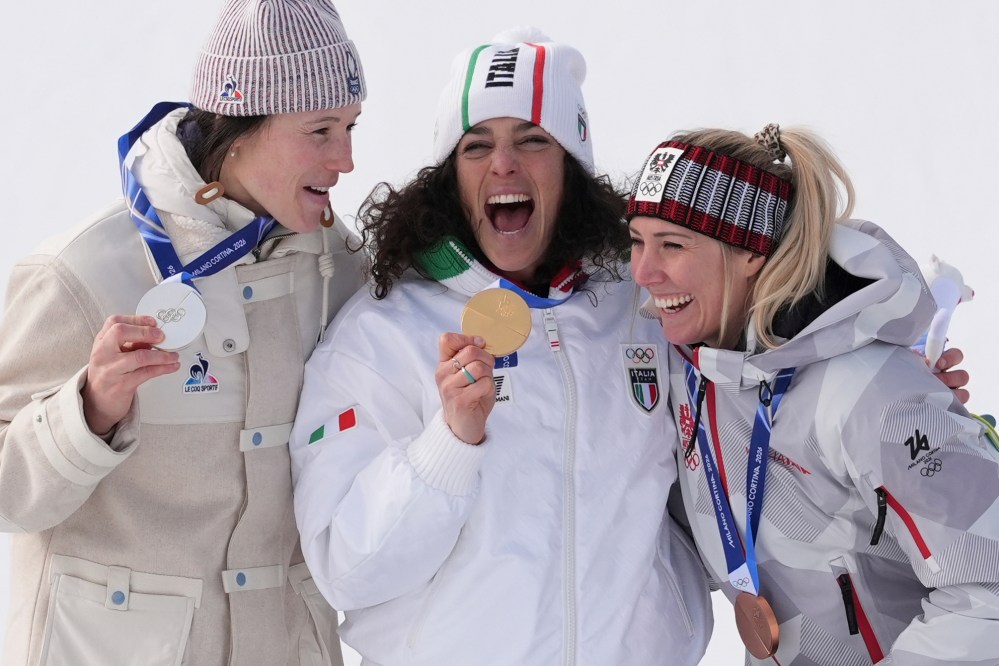
International Olympic Committee President Kirsty Coventry praised the model on Friday, after spending two days in Cortina d’Ampezzo, where she saw Italian standout Federica Brignone win a gold medal in the super-G.
“Yes, it’s a little spread out, but the feeling of the Games is for me very magical,’’ Coventry told reporters in Milan. She acknowledged that the 400-kilometer (250-mile) drive to the Dolomites “wasn’t the most comfortable, right? But it was fun.”
An Olympic heart
Unlike in other games, there isn’t a geographic emotional center to the 2026 Winter Games in either Cortina and Milan, since both serve as anchors to five other venues.

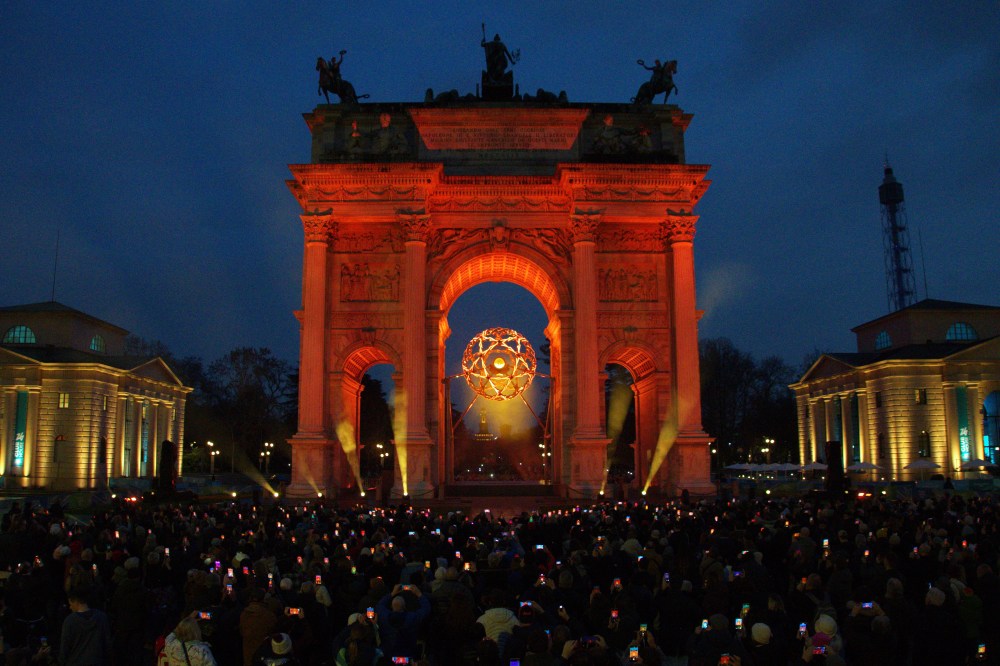
In Milan, where venues are spread along the city’s outskirts and suburbs, the Leonardo da Vinci-inspired Olympic cauldron is the closest thing to a heart for the 2026 Games. It has become a gathering place for sporting fans and curiosity-seeking locals alike; they gather each night not to see sports, but rather a sound-and-light show against the backdrop of a Napoleonic arch.
But there’s been an unexpected benefit: in past Olympic Games, that center has been the plaza where medals were distributed at the end of the day. Since the distances make bringing everyone together impossible, instead, spectators have been granted instant emotional payoff: medal ceremonies immediately after each event.
Kathy McCabe saw the U.S. figure skating team receive its gold medals on Sunday after a thrilling competition at the Assago skating arena. At the 2006 Games, she saw Shaun White win gold in the halfpipe, but not the medal draped over his chest.
“There was a lot more emotion to see the medal ceremony just a few minutes after the Americans won, and to see that raw emotion,’’ said McCabe, producer of the PBS series Dream of Italy. “It was really close and there were some beautiful performances.”
That snow events are held in several mountain towns means athletes, including South African cross-country skier Matt Smith, are removed from the Olympic glitz and happy to have that peace. He appreciates the intimacy in the 1,000-person village of Predazzo.
“I have gained a pukka Olympic experience, and I’m very grateful for it,’’ said Smith, using British slang for “amazing.”
___
Douglas reported from Cortina d’Ampezzo, Italy. Brian Melley in Predazzo, Italy and Jennifer McDermott in Cortina contributed to this report.