
Athlete stories can go untold due to shrinking media presence at Winter Olympics
Advertisement
Read this article for free:
or
Already have an account? Log in here »
We need your support!
Local journalism needs your support!
As we navigate through unprecedented times, our journalists are working harder than ever to bring you the latest local updates to keep you safe and informed.
Now, more than ever, we need your support.
Starting at $15.99 plus taxes every four weeks you can access your Brandon Sun online and full access to all content as it appears on our website.
Subscribe Nowor call circulation directly at (204) 727-0527.
Your pledge helps to ensure we provide the news that matters most to your community!
To continue reading, please subscribe:
Add Brandon Sun access to your Free Press subscription for only an additional
$1 for the first 4 weeks*
*Your next subscription payment will increase by $1.00 and you will be charged $20.00 plus GST for four weeks. After four weeks, your payment will increase to $24.00 plus GST every four weeks.
Read unlimited articles for free today:
or
Already have an account? Log in here »
CORTINA D’AMPEZZO – When Canadian curling coach Scott Pfeifer was a member of the Ferbey Four, the curling team would use the large group of reporters at big bonspiels to fuel rivalries and hype the players and the sport.
“(We’d be) lobbing bombs across the alley to the other teams,” Pfeifer said with a laugh. “I don’t think you see that as much anymore.”
That’s an understatement.
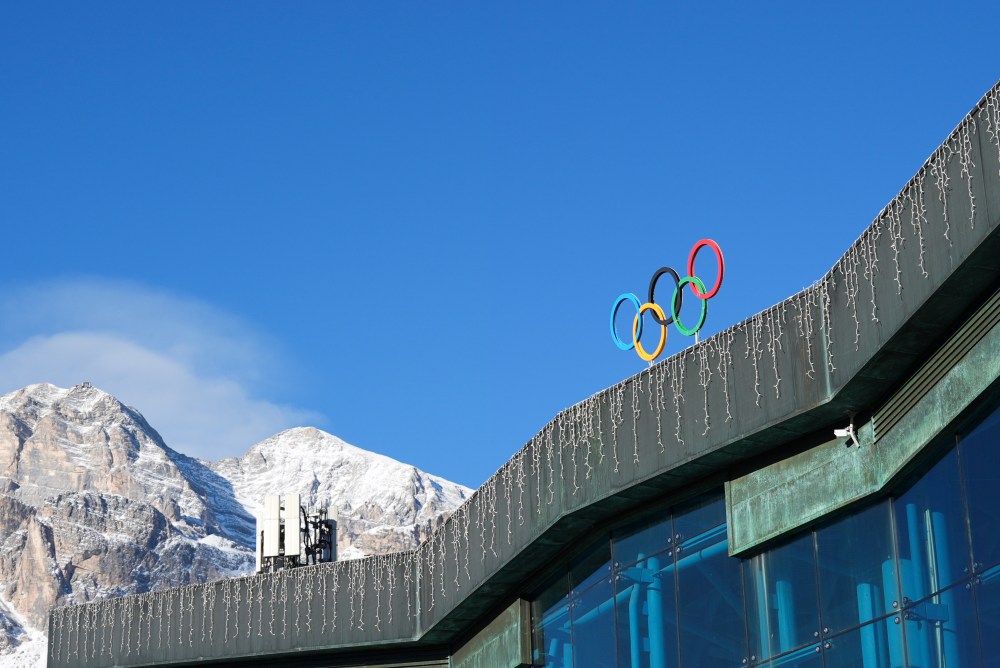
The Canadian media contingent is not what it used to be at the curling rink or at the Winter Games. It’s even more noticeable this year with the Milan Cortina Games the most spread out in Olympic history.
A thinning journalist presence at major sports events has been a media storyline for years due to shrinking newsroom budgets. The global pandemic made remote coverage the norm and not everyone returned to on-site coverage when the sports world got back to normal.
In addition to impacting the depth and quality of reporting, fewer on-site journalists means many amateur athletes are unable to share their stories.
“They’re just not going to get that coverage that they got in previous Olympics and that is sad,” USA Today sports columnist Christine Brennan said Tuesday from Milan. “That’s sad because this is their moment.”
There are about 40 accredited Canadian journalists covering the Games across Italy, a Canadian Olympic Committee spokesman said in a direct message.
That’s up slightly from the 2022 Winter Games in Beijing, which was an outlier due to the pandemic. Media numbers from the 2018 Pyeongchang Games in South Korea were not available, the COC said.
Brennan, who is covering the Olympics for the 22nd consecutive time, recalls how difficult it was to get near athletes in the mixed zone at previous Games over her career.
“The interview area would just be packed,” she said. “I mean, you’d have to elbow your way in.
“Well there’s none of that here. There’s plenty of room for all of us. And so that is certainly noticeable. That’s a big change.”
Rather than cover the Games in person, some outlets have reporters write stories after watching the competition remotely.
“It’s absolutely essential to be on site,” Brennan said. “Certainly that trend of sports sections and news organizations to have people cover events off TV is incredibly troubling. Although I understand the financial constraints.”
Brennan cited an example from the figure skating last week. When American star Ilia Malinin was preparing to begin his skate, she noticed from her seat in the media tribune how “shockingly nervous” he appeared.
She was able to observe some of the interaction with his coaches that wasn’t shown on the broadcast, she said, adding there was lots of colour to be gathered from the scene after his disappointing performance.
“There’s no way I could have reported on it and given my commentary and my opinions on it had I not been in the arena,” she said.
Rather than traditional media, many competitors instead use social media to build their brand or share their stories. Younger competitors have grown up in the social media age and many use those options to their benefit.
“Everybody is a storyteller,” said Canadian Secretary of Sport Adam van Koeverden, a four-time Olympian who won kayaking gold in 2004. “I had a blog in 2008 but I don’t think anybody read it though. It wasn’t a viral story. It was like, if I got 25 readers, I think I’d be thrilled.
“Now if you put something on social media, you might get 2,000 likes and 20,000 people looking at it, or more if you’re (freestyle skiing star) Eileen Gu. That media landscape has changed significantly.”
There are great stories to be had all around the Games, but many go untold simply because there are fewer options available to tell them. Another hurdle is travel, since most reporters aren’t moving between hubs due to the long distance.
“Athletes in other years would have received coverage,” Brennan said. “The athletes who are lesser known, are not receiving that coverage now.”
About a four-hour drive northeast of Milan, Cortina Curling Olympic Stadium has been a beehive of activity for the last fortnight with Canada at the centre of the action.
However, there are usually only three Canadian reporters in the press interview area. On some days, one-on-one sessions are available — a rarity at the Games.
“It would be nice to see a lot more in-person coverage rather than just seeing what you see online or what’s conveyed by certain people,” Pfeifer said in a recent interview. “It’s always good to have more people out there giving a more balanced perspective.”
COC chief executive officer David Shoemaker was asked about the changing media presence at the start of the Games.
“I wish there were more media here in Milan Cortina,” he told reporters. “It’s sort of why I started my remarks by acknowledging the challenges that each of you face, and frankly thanking you for your honest coverage of what we’re doing and what we are trying to do.”
Van Koeverden was a contributor for the CBC at the 2014 Games in Sochi, Russia and the 2018 Games in Pyeongchang, South Korea.
He recalled simply hopping on buses to cover athletes at a wide array of competitions.
“We would plan our day based on where the medal hopefuls were and where the Canadians were,” he said in a recent sit-down chat in Cortina. “But you just can’t hop on a bus and go from Milan to Cortina, or Milan to Val di Fiemme, or over to Livigno.
“I guess that comes with the territory with a more environmentally sustainable Games and a more affordable Games for the organizer. So it’s a lot of changes.”
With files from Canadian Press sports reporter Donna Spencer.
This report by The Canadian Press was first published Feb. 17, 2026.