
If you’ve gotten tired of watching curling, imagine how the athletes feel
Advertisement
Read this article for free:
or
Already have an account? Log in here »
We need your support!
Local journalism needs your support!
As we navigate through unprecedented times, our journalists are working harder than ever to bring you the latest local updates to keep you safe and informed.
Now, more than ever, we need your support.
Starting at $15.99 plus taxes every four weeks you can access your Brandon Sun online and full access to all content as it appears on our website.
Subscribe Nowor call circulation directly at (204) 727-0527.
Your pledge helps to ensure we provide the news that matters most to your community!
To continue reading, please subscribe:
Add Brandon Sun access to your Free Press subscription for only an additional
$1 for the first 4 weeks*
*Your next subscription payment will increase by $1.00 and you will be charged $20.00 plus GST for four weeks. After four weeks, your payment will increase to $24.00 plus GST every four weeks.
Read unlimited articles for free today:
or
Already have an account? Log in here »
CORTINA D’AMPEZZO, Italy (AP) — By the end of the Milan Cortina Olympics, there will have been a total of 147 curling matches crammed into 18 days. That’s why Brad Jacobs is looking forward to some rest.
But first, he has a few things left on his to-do list.
There’s an Olympic semifinal match. Then, if he’s lucky, one for the gold. If not, then one for the bronze.
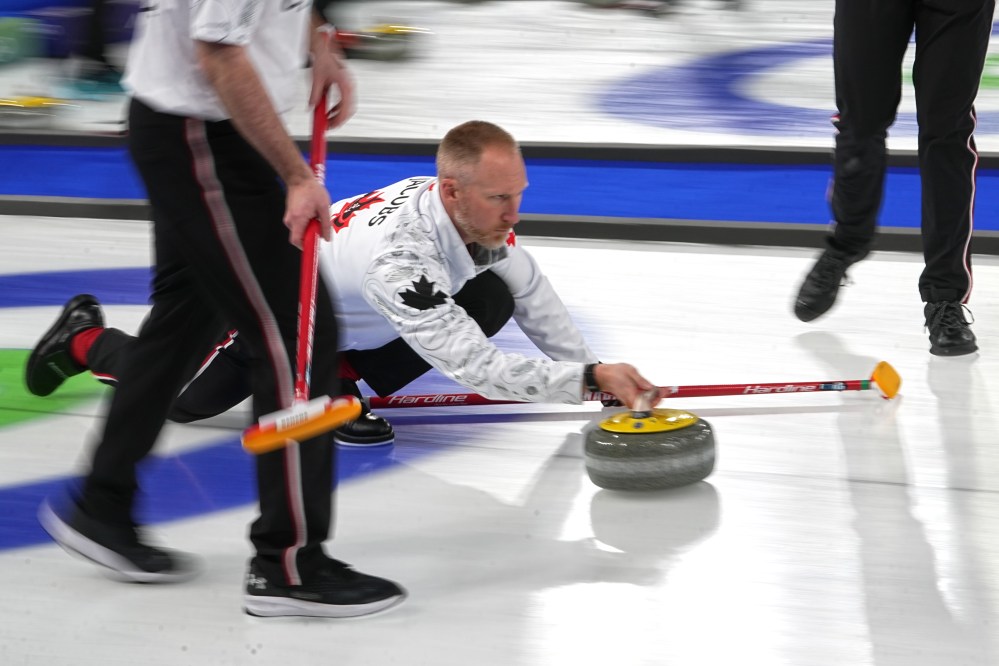
In either case, the Canadian is looking at roughly four to six more hours on the ice before he can relax. Curling matches usually run over two hours, and his team has already played nine matches over the last eight days of the men’s round robin. On top of that, the Canadians have had to maintain a competitive mentality while embroiled in a controversy so significant it prompted World Curling to change — and then change back — the rules midway through the competition.
“It’s quite draining,” said Jacobs, visibly exhausted after Thursday’s loss to Norway. “I think the Olympics is the hardest curling event on the planet. … It can certainly mess with the 6 inches between your ears if you allow it to.”
Athletes coming off the ice — even those less involved in the controversy than the Canadians — say this Olympics has worn them down, physically and mentally. That reflects a near-constant competition schedule that has led to curling’s popular reputation as the Olympic sport that’s always on TV.
The sport that’s always on grows tiring for athletes
Curling is the only sport played every single day of the Games.
In Cortina, it began on Feb. 4, a full two days before the opening ceremony.
Each team will have played every other team before the semifinals, which sets it apart from other Olympic sports. Hockey also has a round robin, but it’s much shorter and limited to small groups rather than the entire field.
Curling’s strenuousness is often overlooked. Curlers need an intense training regimen, dedicated to sustaining them through short bursts of cardiovascular exercise (sweeping) and keeping their legs flexible and strong enough to support the deep lunge position they use when hurling the stone.
They must also keep their minds sharp to be precise in targeting and strategic in a game sometimes referred to as “chess on ice.”
Then, add in the natural fluctuations of the ice conditions, which have a direct effect on the way stones curl and their speed. Each match, curlers must read the ice anew.
Finally, remember that the competition schedule is nonstop.
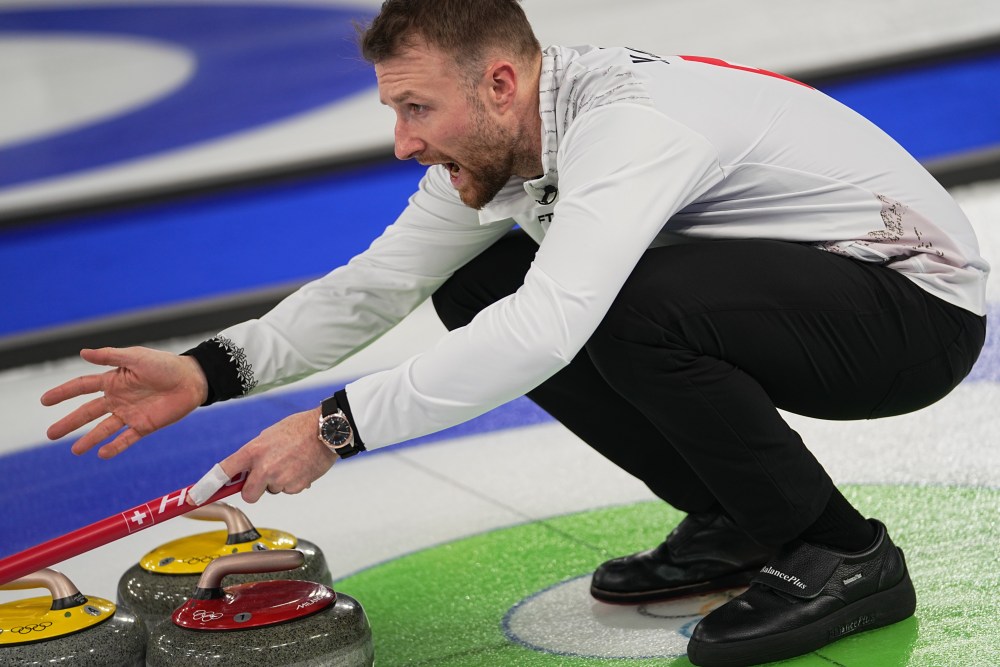
Taken together, all this means that curlers spend hours between matches meeting with teammates to discuss strategy, working out team conflicts, seeing physiotherapists, refueling and psyching themselves up for the next match.
After the Olympics, curlers head for more competition and training
For Yannick Schwaller, the fun is just beginning.
Right after the Games, his team heads for the Swiss championships, where he says it will play 12 more matches beginning Monday.
“That’s going to be tough, but we’re not trying to think about that right now,” said Schwaller, whose team was undefeated in the round robin.
“Of course it’s a grind. If we could choose, there would be a different schedule next week.”
Out of the men’s curling field at the Olympics, Schwaller has spent more time than most on the ice. He’s part of a small group of curlers — including Brett Gallant on the Canadian men’s team, Italians Amos Mosaner and Stefania Constantini, Cory Thiesse on the U.S. women’s team and Brits Bruce Mouat and Jennifer Dodds — who entered this competition having already participated in mixed doubles directly before.
Mixed doubles was “really tough,” Schwaller said. His partner was his wife, Briar Schwaller-Hürlimann, with whom he had a different division of labor — he swept five rocks every end. Now, with the men’s team, he said he sticks to pitching — not sweeping.
Honeymoons and wellness retreats await some lucky curlers
Team Canada switched out Ben Hebert for alternate Tyler Tardi in its last round-robin game Thursday, hoping to give the star player a rest ahead of semifinals and finals.
It’s Tardi’s first Olympics. He already knows he’d support a scaled-down competition schedule. He pointed out how in hockey, Olympic teams play three or four games ahead of the elimination round.
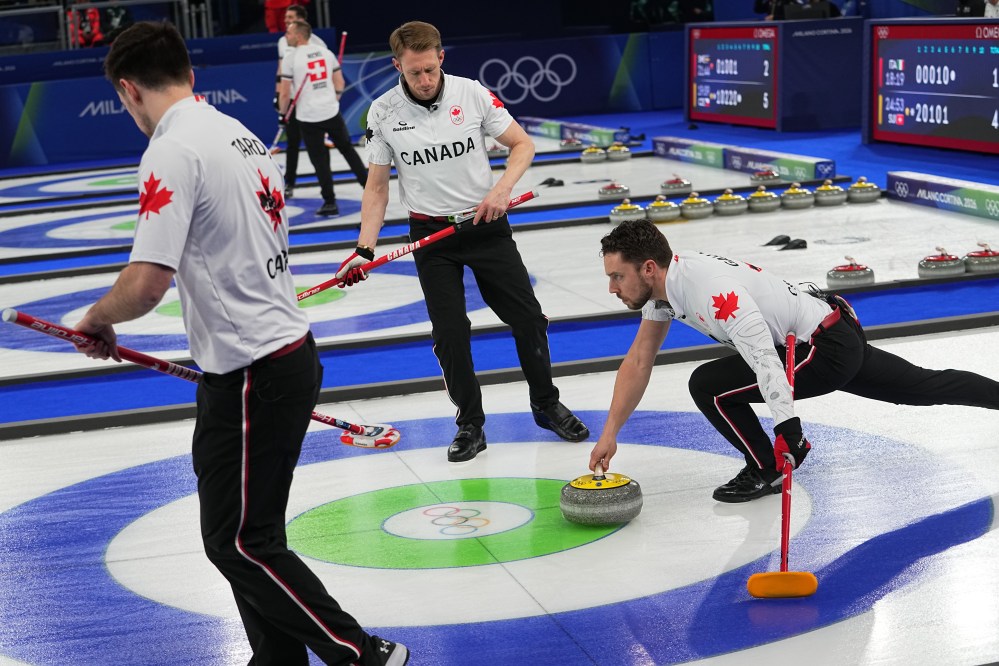
“I kind of envy that, to be honest,” he said.
He’s very much looking forward to his honeymoon in the Bahamas as a chance to relax.
Schwaller is training his sights on the May vacation he’s planned with his wife, when he’ll spend six days focused on wellness at a resort in Germany.
Amos Mosaner, the Italian who won bronze in mixed doubles, looked dejected after his team missed a spot in the semifinals. He said he’ll allow himself “one or two weeks off.”
“It’s not only physically but also mentally you have to recover,” he said. “After that, I (will) come back on the ice — and to the gym — and I will start again.”
___
AP Olympics: https://apnews.com/hub/milan-cortina-2026-winter-olympics