
Pallister’s post-Canada Day comments weren’t helpful in reconciliation
Advertisement
Read this article for free:
or
Already have an account? Log in here »
We need your support!
Local journalism needs your support!
As we navigate through unprecedented times, our journalists are working harder than ever to bring you the latest local updates to keep you safe and informed.
Now, more than ever, we need your support.
Starting at $15.99 plus taxes every four weeks you can access your Brandon Sun online and full access to all content as it appears on our website.
Subscribe Nowor call circulation directly at (204) 727-0527.
Your pledge helps to ensure we provide the news that matters most to your community!
To continue reading, please subscribe:
Add Brandon Sun access to your Free Press subscription for only an additional
$1 for the first 4 weeks*
- Enjoy unlimited reading on brandonsun.com
- Read the Brandon Sun E-Edition, our digital replica newspaper
*Your next Free Press subscription payment will increase by $1.00 and you will be charged $20.95 plus GST for four weeks. After four weeks, your payment will increase to $24.95 plus GST every four weeks.
Read unlimited articles for free today:
or
Already have an account? Log in here »
Hey there, time traveller!
This article was published 10/07/2021 (1889 days ago), so information in it may no longer be current.
“We need to respect our heritage, just as we need to respect one another. Not to find fault, not to tear down, not to highlight every failure, but rather to realize we are a complex country as we are made up of complex people. And so, our failures should not be celebrated, but they should not be repeated, either. There were failures of character on display the other day that need not be repeated. And that are not helpful, and, in fact, are most unhelpful to the struggle for real building and real reconciliation that must be pursued.”
— Manitoba Premier Brian Pallister
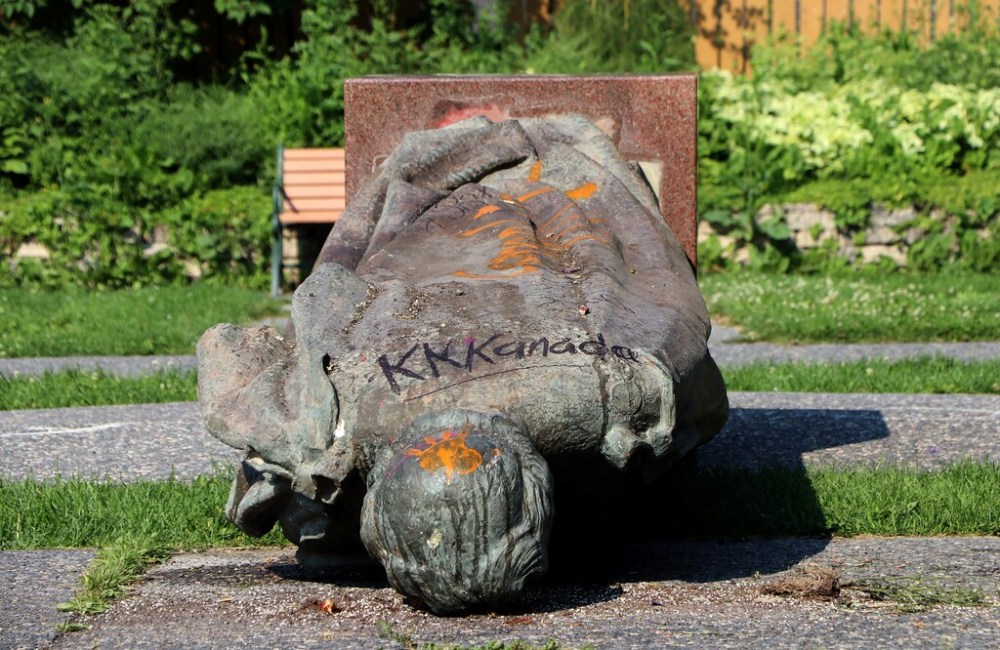
The days that have followed the tearing down of a pair of statues of British queens on Canada Day that once stood at the Manitoba Legislature have been as much a test in leadership character as the event itself was a defining moment our province’s history and our government’s relationship with Indigenous people in this province.
And thus far, I don’t believe our leadership has passed that test — a fact that has made reconciliation even more difficult as the opinions of the pro and anti camps have solidified around partisan and racial lines.
It was truly remarkable to witness how many Canadians from across this country took a more sombre tone for what has historically been a national day of celebration. Following news of the sheer number of unmarked graves of Indigenous children that have been found at former residential school sites in B.C., Alberta, Saskatchewan and Manitoba over the past few months, the cancelling of Canada Day events and the numerous calls for a day of national reflection were appropriate, if not long past due.
As the CBC reported on Canada Day, thousands of people dressed in orange gathered in Winnipeg for two separate rallies — one called “No Pride in Genocide” that started at noon at the Canadian Museum for Human Rights, and another group taking part in the Every Child Matters walk that gathered at Portage and Main and marched toward the Manitoba Legislature.
Toward the end of the second walk, which was held to remember Indigenous children who died at residential schools, the statue of Queen Victoria and a smaller statue of Queen Elizabeth II were pulled down. The head of the Queen Victoria statue was removed and tossed in the Assiniboine River.
These were not isolated incidents either — a statue of Queen Victoria in Kitchener, Ont., was doused in red paint, a statue of Captain James Cook was dismantled and tossed in the harbour in Victoria B.C., and in St. John’s N.L, two buildings and a statue dedicated to the local police force were also vandalized.
It’s worth remembering that Indigenous leaders in Manitoba, including Assembly of Manitoba Chiefs grand chief Arlen Dumas and Manitoba Metis Federation president David Chartrand, expressed their disappointment and sadness over the toppling of the statues, decrying the violence that accompanied what they hoped would have been a day of peaceful protest.
Those protests were meant to highlight the ongoing need for reconciliation efforts and to remember those who were forcefully removed from their families to attend residential schools, such as the one here in Brandon.
To my mind, it is unfortunate the statues came down as they did, but not because of any belief on my part that we should celebrate historical figures who bear responsibility for this country’s historic wrongs. Critics of the reconciliation process are right to suggest there are better ways to remember the shared and problematic history of this land.
But as Chartrand said, the defacement and destruction of public property has had the effect of co-opting the conversation and giving unnecessary soapboxes to those who would rather turn a blind eye to the lessons of that history and instead focus on red herring issues of crime and punishment.
Over the last week, I have seen far too many comments come to my newsroom inbox lamenting the destruction of a pair of old metal statues that glorified royal sanctimony and colonialism. By comparison, scarce few since Canada Day have offered condolences to our Indigenous friends and neighbours.
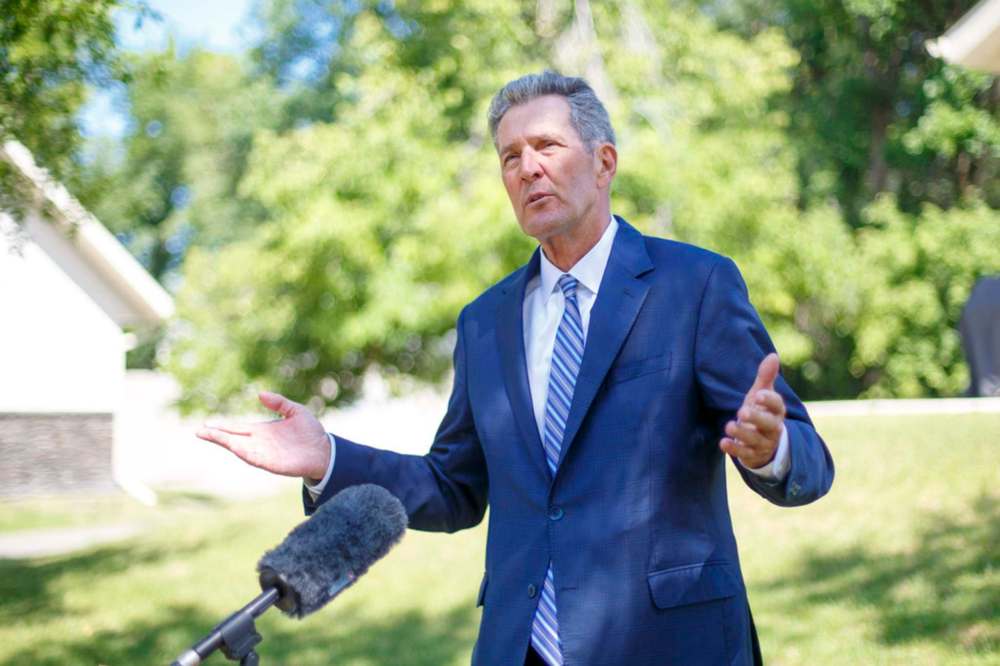
On Wednesday, our premier had the opportunity to seize the moment in the wake of the Canada Day trouble at the Legislative grounds and show some grace. But he didn’t take it. Though he wasn’t wrong to express his unhappiness with the destruction of government property, he missed the chance to look past the actions of a few angry men and women, and reach out to Indigenous communities to offer a new way forward.
Instead, he played to his vocal political base of supporters who see the destruction of public property as a form of homegrown terrorism and Indigenous people as a bunch of ungrateful welfare recipients. He talked of settlers who “came to build” with “dedication and with pride,” and gave patronizing advice about how reconciliation should take place.
Unfortunately, his comments joined the destruction of public property on Canada Day in proving detrimental to ongoing efforts toward reconciliation.
We need cooler heads to prevail.
» Matt Goerzen, editor