
Rural residents suffer from precarious care
Advertisement
Read this article for free:
or
Already have an account? Log in here »
We need your support!
Local journalism needs your support!
As we navigate through unprecedented times, our journalists are working harder than ever to bring you the latest local updates to keep you safe and informed.
Now, more than ever, we need your support.
Starting at $15.99 plus taxes every four weeks you can access your Brandon Sun online and full access to all content as it appears on our website.
Subscribe Nowor call circulation directly at (204) 727-0527.
Your pledge helps to ensure we provide the news that matters most to your community!
To continue reading, please subscribe:
Add Brandon Sun access to your Free Press subscription for only an additional
$1 for the first 4 weeks*
*Your next subscription payment will increase by $1.00 and you will be charged $20.00 plus GST for four weeks. After four weeks, your payment will increase to $24.00 plus GST every four weeks.
Read unlimited articles for free today:
or
Already have an account? Log in here »
Hey there, time traveller!
This article was published 15/01/2022 (1527 days ago), so information in it may no longer be current.
Manitoba’s health-care system appears to be on the verge of implosion, along with the mental and physical health of the many folks who operate that system.
We have been hearing for months now how the COVID-19 pandemic, and the surge of people needing hospital and ICU care, have forced the postponement and cancelation of literally tens of thousands of surgical and diagnostic procedures. Just this week, Doctors Manitoba warned that the estimated backlog now sits at 153,300 procedures, an increase of 1,200 since October’s estimate.
That includes 57,800 surgeries, 52,900 other diagnostic procedures — including endoscopies, mammograms, sleep studies and allergy tests — and 42,500 imaging exams.
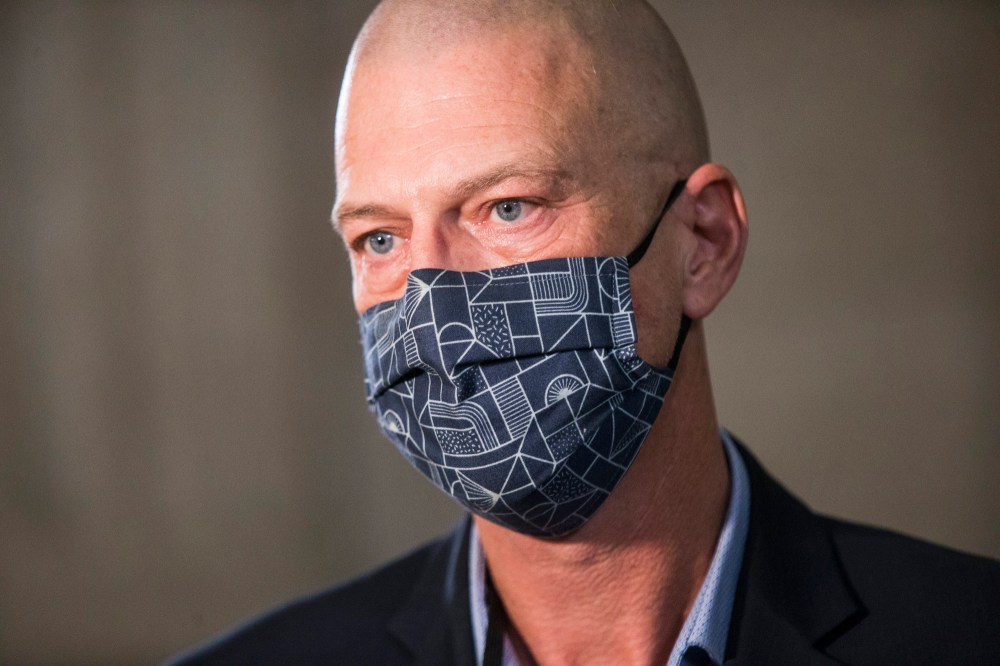
Dr. Kristjan Thompson, the president of Doctors Manitoba and an emergency medicine physician, told media that this estimate merely covers a period before the omicron variant had hit the province late last fall. Doctors Manitoba expects the backlog to jump in the next month.
“Unfortunately, I have never seen it this bad,” Thompson said. “If you are not one of the unfortunate Manitobans left waiting, then you almost certainly have a friend, a family member, a loved one who is waiting in pain, waiting in fear or uncertainty.”
And it’s not only surgery and diagnostic procedures that are falling behind. Health care is experiencing backups, delays and problems throughout the province, including access to hospital beds, emergency-room care, outpatient and medical clinics, and ambulance availability.
Thompson said Thursday that part of the problem is sickness among hospital staff. In emergency rooms alone, like the one he works out of, he is seeing long delays for patients seeking care and admissions. Recall that it was only two weeks ago we reported that at least eight emergency departments in rural Westman were closed or operating at severely reduced availability due to a combination of staffing shortages and physical resource issues.
Last week the Manitoba Association of Health Care Professionals held a press conference to warn the public that rural areas of the province saw more than 17,000 hours where ambulances were out of service and unavailable to assist Manitobans in an emergency last October.
The timing marked a five-year high and unfortunately shows no signs of slowing down due to increasing demand for ambulances and paramedic staffing shortages during this pandemic.
“It’s dire. It’s dangerous. It’s frightening,” MAHCP president Bob Moroz told the Sun.
Paramedics have been asked to work incredible amounts of overtime and callbacks over the last two years during the COVID-19 pandemic, and as a result the sector is now seeing paramedics who are burnt out and experiencing extreme fatigue psychologically and physically.
“We’re hundreds of paramedics short rurally,” Moroz said. “It’s a terrible circle. Our workforce with our paramedics has been far too small for years anyways. We’ve been talking about that for years and we would get dismissed.”
This ambulance shortage is being felt here in Brandon, too. Terry Browett, a Brandon firefighter and president of International Association of Local 802, which represents firefighters and paramedics, said there are multiple times a day when the city has no ambulance coverage.
“In Brandon we are no longer able to provide the ambulance service expected in an urban center,” Browett told the Sun. “We have no ambulances available to [respond] to EMS calls within Brandon multiple times every day due to call volume. We are now responding with these ambulances to Shilo, Souris, [Wawanesa] and Rivers because they have no ambulance coverage due to staffing or transfers.”
The city saw almost 7,000 calls for service in 2021 and transfers to Winnipeg from Brandon have increased 300 per cent.
And the effect is obvious. Just ask 67-year-old Joseph Nault who fell in the Real Canadian Superstore parking lot on a Thursday evening earlier this month, and was left waiting on the ground in -35 C weather for about 40 minutes for an ambulance to transport him to the nearby hospital. There were no ambulances available in Brandon at the time of his accident, and Joseph said he ended up being transported to the Brandon Regional Health Centre by a rig sent to Brandon from Rivers.
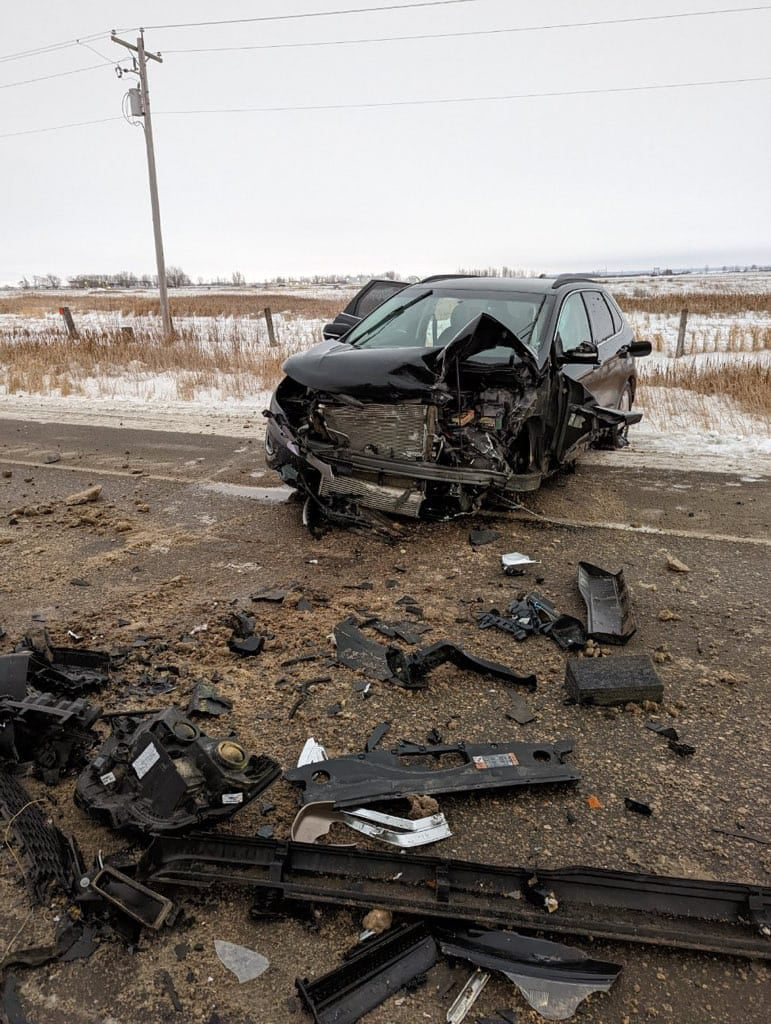
Then there’s the case of a 27-year-old Brandon woman named Karmelle, who was involved in a head-on collision this past Thursday morning. Karmelle was driving on Richmond Avenue East to attend her out-of-town job located east of Brandon, when a vehicle heading in the opposite direction at around 90 kilometres-an-hour swerved into the oncoming lane about a kilometre west of the Provincial Trunk Highway 110 intersection and hit Karmelle’s 2015 Ford Edge head on.
She was extremely lucky in that she merely sustained only cuts and bruises when the front of her vehicle was crushed, and escaped what could have been a deadly collision.
Though paramedics did check both drivers out at the scene, Karmelle was told she should call her husband for transport to the hospital, as apparently she was not high on the priority list for an ambulance call. She was later checked at the hospital — following a two-hour wait in the emergency room — for internal bleeding through an ultrasound machine.
Though the pandemic has not caused all the structural problems within our health-care system, it has certainly exacerbated the cracks and problems within that system.
And further, as omicron now washes through our communities unimpeded by government action, it has made all of us far more aware of just how precarious our system of care in rural Manitoba has become.