
The right kind of election changes
Advertisement
Read this article for free:
or
Already have an account? Log in here »
We need your support!
Local journalism needs your support!
As we navigate through unprecedented times, our journalists are working harder than ever to bring you the latest local updates to keep you safe and informed.
Now, more than ever, we need your support.
Starting at $15.99 plus taxes every four weeks you can access your Brandon Sun online and full access to all content as it appears on our website.
Subscribe Nowor call circulation directly at (204) 727-0527.
Your pledge helps to ensure we provide the news that matters most to your community!
To continue reading, please subscribe:
Add Brandon Sun access to your Free Press subscription for only an additional
$1 for the first 4 weeks*
- Enjoy unlimited reading on brandonsun.com
- Read the Brandon Sun E-Edition, our digital replica newspaper
*Your next Free Press subscription payment will increase by $1.00 and you will be charged $20.95 plus GST for four weeks. After four weeks, your payment will increase to $24.95 plus GST every four weeks.
Read unlimited articles for free today:
or
Already have an account? Log in here »
Hey there, time traveller!
This article was published 26/07/2023 (1192 days ago), so information in it may no longer be current.
It’s a decision that brings Manitoba elections into the 21st century, striking the right balance between convenience, technology and security.
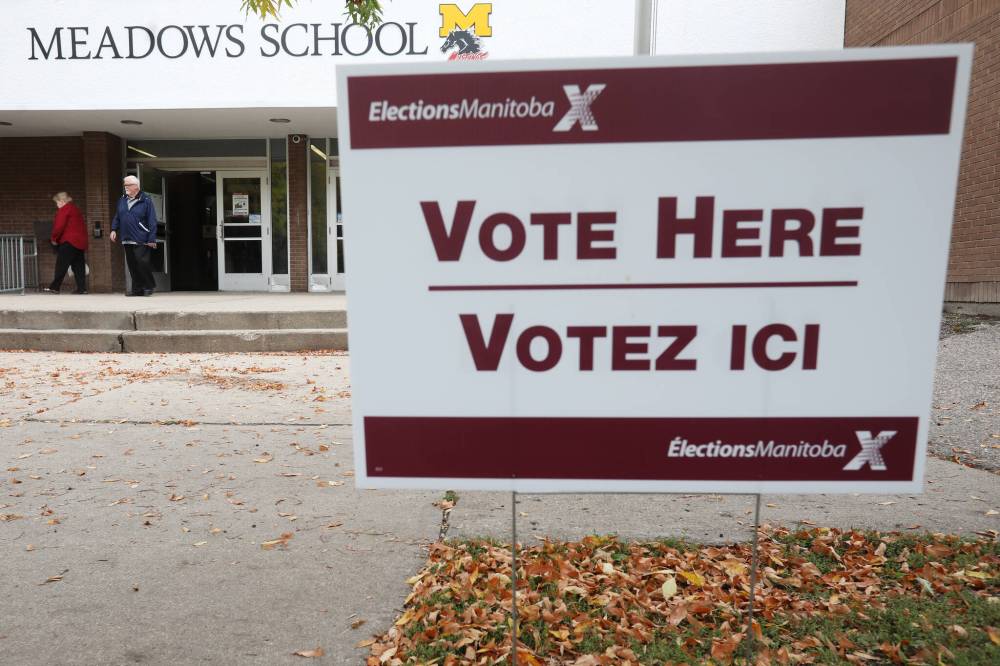
When Manitobans vote in the Oct. 3 provincial election, they will notice a number of changes that should make voting quicker and more convenient.
For starters, voters will be able to vote at any polling place in their electoral division on election day, instead of having to go to one specified location. During advance voting, they will be able to vote at any advance poll location in the province.
Other innovations include the use of laptop computers and scanners to scan voter information cards and find voters on the voters list. That will make the process far more efficient than the tedious manual search and verification process we all endured in past elections.
In addition to printers at each voting location for printing ballots on demand, there will also be vote-counting machines to scan marked ballots and report results after polls close.
The Elections Manitoba website says: “Vote-counting machines, also known as tabulators, scan and record ballots and then provide a count at the end of the night.” It explains that voters will mark their paper ballot behind a privacy screen, put their marked ballot in a “secrecy sleeve,” and then give it to the voting officer. The ballot will then be inserted into the vote-counting machine without anyone seeing the voter’s selection.
The counting machine will scan the ballot, record the selection and save an image of the ballot.
After the polls close, each vote-counting machine will produce a printout showing the number of ballots cast, the number of votes each candidate received and the number of rejected and declined ballots. According to Elections Manitoba, “Only authorized election officials can access the results and only after the polls have closed on election day.”
In order to protect the integrity of the voting and counting processes, the counting machines will not be connected to the internet. Beyond that, each ballot will contain security features to ensure that the counting machines can only accept genuine ballots issued by Elections Manitoba.
The paper ballots scanned by the vote-counting machines will be retained for recount purposes, meaning that officials will always be able to manually count the ballots cast, if necessary.
Collectively, these measures represent a solid effort to modernize Manitoba’s election processes, and could result in higher levels of voter turnout. That said, our neighbour to the west is going even further in its effort to streamline its electoral processes.
The Saskatchewan government is currently considering changes to its election laws in order to make it easier for residents of that province to vote in future elections. Like Manitoba, the proposed changes include the use of digital voters lists and vote-counting machines, but there a couple of other proposed changes that have not yet been adopted here.
Advance voting and election day voting in Saskatchewan would be combined into an “election week” for voting throughout the province. There would also be an expanded mail-in voting option, and a “vote anywhere” process that would enable any voter from any constituency to cast their vote anywhere in that province.
The digital voters list, vote-counting machines, expanded mail-in voting and “voting week” innovations will all be used in three byelections occurring in Saskatchewan this summer, while the “vote anywhere” feature is still under consideration for implementation in the province’s 2024 general election.
The “voting week” and provincewide “vote anywhere” features being considered in Saskatchewan are also worth considering here in Manitoba. While some could be concerned that the “vote anywhere” feature could be vulnerable to hacking because it would require an online connection to transmit each vote from the riding it was cast to the riding it would be counted, the preservation of the paper ballot overcomes that concern.
Balancing security with convenience is an ongoing challenge in this technological age, particularly in the context of elections. The innovations being implemented here in Manitoba are a good first step toward streamlining our electoral process without endangering the integrity of the system.
At a time when we are often quick to criticize government agencies for bad decisions, this is an occasion when Elections Manitoba got it right.